
Hungary’s Billion-Forint Scandal: How 29 Companies Linked to the Ruling Elite Held Over €2.5 Billion in State Funds
BUDAPEST — Hungarian prosecutors have taken control of a sprawling corruption investigation involving 29 companies closely tied to the country’s ruling elite, after uncovering that more than 1,000 billion forints (approximately €2.56 billion) in public funds were held in their bank accounts. The case, which centers on allegations of embezzlement and mismanagement within the Hungarian National Bank (MNB) and its affiliated foundations, has reignited concerns about systemic corruption under Prime Minister Viktor Orbán’s government.
The Legfőbb Ügyészség (Hungary’s Chief Prosecutor’s Office) announced on April 22, 2026, that it had assumed direct oversight of the investigation from the National Bureau of Investigation (NNI), citing “prolonged inaction” in identifying suspects. The move comes after the Állami Számvevőszék (State Audit Office) filed a criminal complaint in January 2025, alleging that funds from the MNB’s PADME foundation and its subsidiaries were mismanaged or diverted. Despite the complaint, no individuals had been formally charged in the 15 months since the investigation began.
At the heart of the scandal is the discovery that 29 companies with ties to Hungary’s ruling Fidesz party—collectively referred to as “NER-közeli cégek” (companies close to the National Cooperation System, or NER)—held vast sums in their accounts. While the exact breakdown of these funds remains under investigation, the scale of the deposits has raised alarms about the potential misuse of public money. The case has drawn comparisons to previous corruption scandals in Hungary, where state funds were allegedly funneled through opaque networks of foundations and private entities.
The MNB Foundation Network: A Web of Opaque Financial Dealings
The Hungarian National Bank’s foundations, particularly the PADME foundation, have long been a focal point of controversy. Established in 2014, these foundations were ostensibly created to support economic research, education, and cultural projects. However, critics have accused them of operating as vehicles for channeling public funds to politically connected individuals and entities. The PADME foundation, in particular, has been linked to high-profile figures, including Matolcsy Ádám, the son of former MNB Governor György Matolcsy.
According to the State Audit Office’s 2025 complaint, the PADME foundation and its subsidiaries engaged in “irresponsible financial management,” with hundreds of billions of forints unaccounted for. The complaint highlighted suspicious transactions, including large shipments of goods to Dubai linked to Matolcsy Ádám, though he has denied any wrongdoing, claiming his income derives from “legal sources.” The audit also raised concerns about the foundation’s lack of transparency, noting that its financial records were often incomplete or inaccessible to public scrutiny.
The recent seizure of the investigation by the Chief Prosecutor’s Office suggests a shift in momentum. Fazekas Géza, a spokesperson for the prosecutor’s office, told Hungarian media that the decision to seize over the case was driven by the NNI’s failure to develop progress. “The police had more than a year to identify suspects, but no tangible results were achieved,” Fazekas said. “In exceptional cases like this, the prosecutor’s office has the authority to intervene when it believes an investigation is not advancing as it should.”
Legal Experts See Potential for Breakthrough—If Political Pressure Eases
Legal analysts and anti-corruption advocates have welcomed the prosecutor’s office’s intervention, viewing it as a potential turning point in a case that has languished for over a year. Laczó Adrienn, a prominent Hungarian attorney specializing in corruption cases, told Klubrádió in a recent interview that the prosecutor’s office possesses the expertise to pursue the investigation effectively—but only if political interference is minimized.
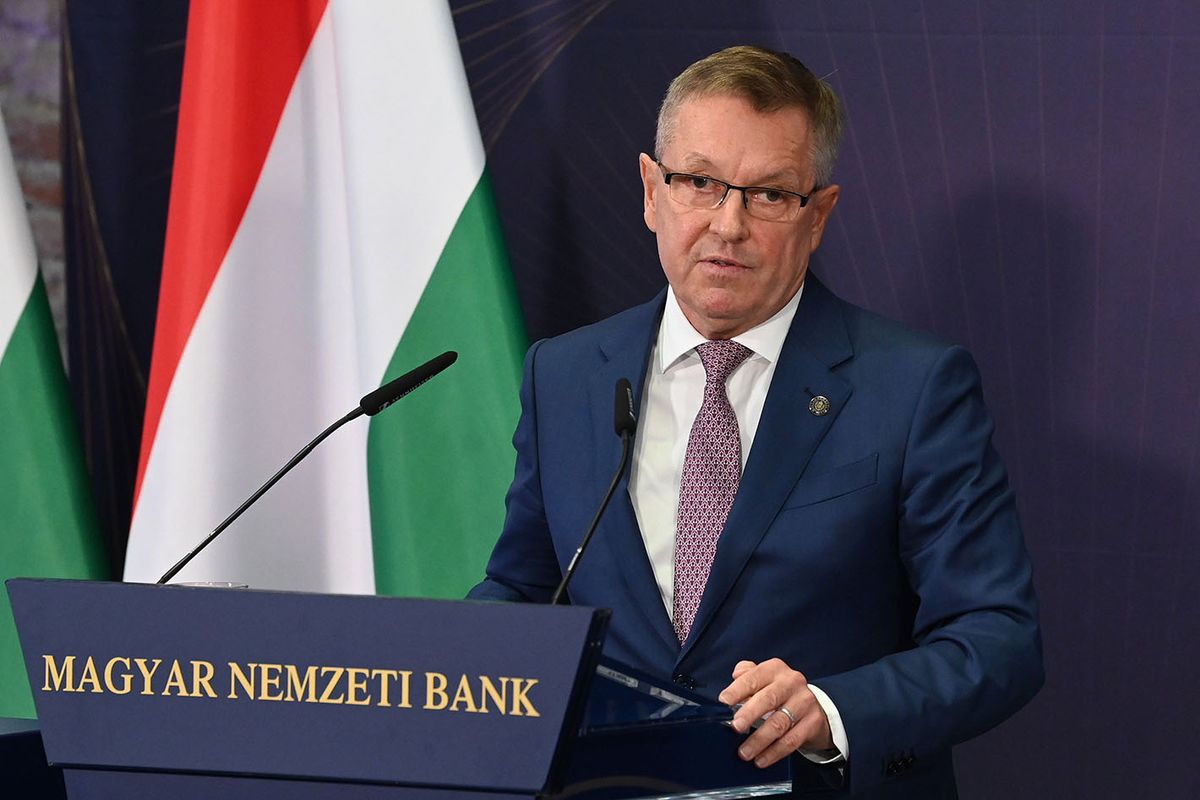
“The prosecutor’s office is full of highly skilled legal professionals who know how to handle complex financial crimes,” Laczó said. “But until now, they’ve been muzzled. If this political restraint is lifted, there’s real potential for these investigations to move forward, especially in cases involving the MNB and its foundations, where significant assets appear to have vanished.”
Laczó’s comments reflect broader concerns about the independence of Hungary’s judicial system under Orbán’s government. The European Union has repeatedly criticized Hungary for undermining the rule of law, including through the politicization of the judiciary and law enforcement. In 2022 and 2023, the EU froze €22 billion in cohesion funds earmarked for Hungary, citing concerns over corruption and the lack of judicial independence. While some funds were later released after Budapest implemented limited reforms, critics argue that systemic issues remain unresolved.
The current investigation could test the limits of Hungary’s legal system. If prosecutors succeed in securing indictments, it would mark one of the most significant corruption cases in the country’s recent history. However, the involvement of high-profile figures—including Matolcsy Ádám, whose father served as MNB governor until 2024—raises questions about whether the case will be allowed to proceed without political interference.
What Happens Next? The Road Ahead for Hungary’s Corruption Probe
The Chief Prosecutor’s Office has not disclosed a timeline for the investigation, but legal experts expect the process to unfold in stages. The first priority will likely be identifying individuals who can be formally charged with embezzlement, money laundering, or other financial crimes. Given the complexity of the case, prosecutors may also seek to recover misappropriated funds by freezing assets or pursuing civil forfeiture proceedings.
For the Hungarian public, the case has reignited frustrations over the perceived impunity of the ruling elite. Transparency International’s 2025 Corruption Perceptions Index ranked Hungary 72nd out of 180 countries, highlighting persistent concerns about graft and the misuse of public resources. The current scandal, with its staggering financial scale, has only deepened those concerns.
International observers are also watching the case closely. The European Commission has repeatedly urged Hungary to strengthen its anti-corruption measures, and the outcome of this investigation could influence future decisions on EU funding. If prosecutors secure convictions, it could signal a rare victory for accountability in Hungary. Conversely, if the case stalls or is dismissed, it may reinforce perceptions of a justice system beholden to political interests.
As the investigation unfolds, the next critical milestone will be the first formal charges. The Chief Prosecutor’s Office has indicated that it will provide updates as the case progresses, though no specific date has been set for a public announcement. For now, the 1,000 billion forints held in the accounts of the 29 NER-linked companies remain frozen, a stark reminder of the stakes involved in Hungary’s fight against corruption.
Key Questions About the Scandal
What is the NER, and why are these companies described as “NER-közeli”?
The National Cooperation System (NER) is a term used to describe the political and economic network established under Prime Minister Viktor Orbán’s government. “NER-közeli” (NER-close) companies are those perceived to have close ties to the ruling Fidesz party, often benefiting from state contracts, subsidies, or regulatory favoritism. Critics argue that these companies operate within a system that prioritizes loyalty to the government over transparency and fair competition.
How did the Hungarian National Bank’s foundations become involved in this scandal?
The MNB’s foundations, including PADME, were created to support public-interest projects such as economic research and education. However, investigations have revealed that these foundations often lacked proper oversight, with funds allegedly diverted to private entities or used for purposes unrelated to their stated missions. The State Audit Office’s 2025 complaint specifically accused the PADME foundation of “irresponsible financial management,” including the disappearance of hundreds of billions of forints.
What role does Matolcsy Ádám play in the investigation?
Matolcsy Ádám, the son of former MNB Governor György Matolcsy, has been linked to the PADME foundation’s financial dealings. The State Audit Office’s complaint noted that large shipments of goods were sent to Dubai under his name, though he has denied any wrongdoing, claiming his income is derived from legitimate sources. While he has not been formally charged, his involvement has drawn significant media attention due to his family’s political connections.

What are the potential consequences for Hungary if corruption charges are proven?
If prosecutors secure convictions, the consequences could be far-reaching. Domestically, it could lead to greater public pressure for judicial reform and anti-corruption measures. Internationally, it could impact Hungary’s standing within the European Union, particularly regarding access to EU funds. The EU has already frozen billions of euros in cohesion funds due to concerns over corruption and the rule of law, and further revelations could lead to additional sanctions or conditionalities.
How does this case compare to previous corruption scandals in Hungary?
This case shares similarities with previous scandals, such as the “Eldorado” case in the early 2010s, where EU funds were allegedly misused for personal gain, and the 2018 “Lex CEU” controversy, which involved accusations of political interference in academic freedom. However, the scale of the current investigation—with over €2.5 billion in question—makes it one of the largest corruption probes in Hungary’s recent history. Unlike past cases, which often resulted in limited accountability, the involvement of the Chief Prosecutor’s Office suggests a more aggressive pursuit of justice.
What This Means for Hungary’s Future
The outcome of this investigation could have profound implications for Hungary’s political and economic landscape. For years, Orbán’s government has faced criticism for centralizing power, weakening democratic institutions, and enabling corruption. If prosecutors succeed in holding high-profile figures accountable, it could mark a turning point in the country’s struggle against graft. Conversely, if the case collapses or is dismissed, it may reinforce perceptions of a justice system that serves the interests of the ruling elite.
For ordinary Hungarians, the scandal is a reminder of the high cost of corruption. The 1,000 billion forints at the center of the investigation—equivalent to roughly 3% of Hungary’s annual GDP—could have funded critical public services, infrastructure projects, or social programs. Instead, the funds appear to have been siphoned into a network of opaque financial dealings, leaving taxpayers to foot the bill.
As the case progresses, the Chief Prosecutor’s Office has pledged to provide regular updates. The next major development is expected to be the announcement of formal charges, though no timeline has been set. For now, the frozen funds remain a symbol of both the scale of the alleged corruption and the potential for accountability—if Hungary’s legal system is allowed to function independently.
Have thoughts on this developing story? Share your views in the comments below, and don’t forget to follow World Today Journal for the latest updates on this and other global news stories.