

The intersection of raw political power and the artistic lens has found a provocative new expression in the work of Canadian photographer Christopher Anderson. Known for a career spent navigating the world’s most volatile conflict zones, Anderson has shifted his focus toward the intimate and often jarring internal dynamics of power, most notably through his 2025 series of portraits featuring the inner circle of Donald Trump at the White House.
Anderson’s approach is deliberately subjective, rejecting the traditional “invisible” role of the photojournalist in favor of a style where the photographer’s perspective is an active participant in the image. This philosophy is encapsulated in his own ambition: “I want my photos to scream my point of view.” By stripping away the veneer of official diplomatic portraiture, Anderson captures the “crude” and deeply personal realities of those operating at the highest levels of the U.S. Government.
This pivot from the external chaos of war to the internal tensions of the White House marks a significant evolution in his three-decade career. His latest publication, Index, serves as a comprehensive retrospective of this journey, tracing his transition from documenting global warfare to analyzing the psychological architecture of political authority.
The Subjective Lens: Challenging Photojournalistic Neutrality
For decades, the gold standard of international reporting has been objectivity—the idea that the camera is a neutral observer. Anderson explicitly challenges this notion. His work is not intended to be a transparent window, but rather a curated reflection of the subject as seen through his specific emotional and intellectual filter.
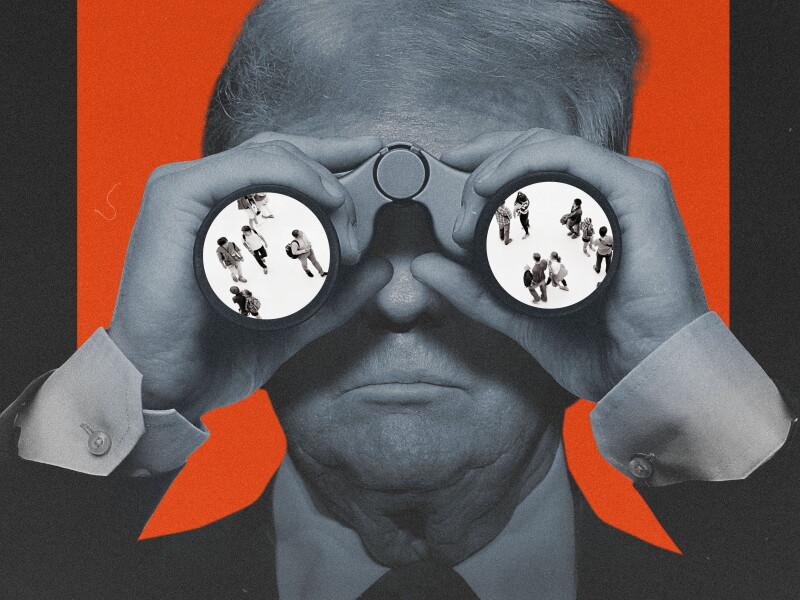
In his 2025 portraits of the Trump administration’s close aides, this subjectivity manifests as a refusal to sanitize the subjects. Rather than the polished, staged imagery typically seen in government press releases, Anderson’s images are described as raw and personal. This technique allows him to capture the stress, the arrogance, and the human fragility of the “inner guard,” turning a political study into a psychological one.
From War Zones to the West Wing
The transition from covering war terrains to the halls of power may seem like a leap in subject matter, but for Anderson, the core objective remains the same: documenting the impact of power and conflict on the human condition. Where he once photographed the physical destruction of war, he now photographs the atmospheric tension of political maneuvering.
The publication of Index provides the necessary context for this shift. The volume catalogs nearly thirty years of work, illustrating how his experience in high-stress environments equipped him to handle the claustrophobic and high-stakes atmosphere of the White House. By moving toward “calmer” subjects, Anderson has not abandoned his investigative spirit; instead, he has applied the intensity of war reporting to the quiet, often hidden corridors of governance.
The 2025 White House Portraits
The sensation caused by his 2025 portraits stems from their intimacy. By gaining access to the inner circle of Donald Trump, Anderson was able to document the individuals who shape policy and public image from behind the scenes. These images serve as a counter-narrative to the official record, offering a glimpse into the private personas of public figures.
This body of work coincides with a period of intense physical and legal transformation at the White House. For example, the administration’s efforts to reshape the executive mansion have been marked by controversy, such as the project to build a $400 million ballroom. According to reports from France Info, a federal appeals court recently authorized the temporary resumption of these construction works following a legal battle over public inquiry requirements and Congressional authorization.
The juxtaposition of Anderson’s raw portraits with the opulent, contested ambitions of the administration—such as the ballroom project funded by private donations—creates a broader picture of an era defined by the blurring of public service and private interest. The ballroom project, which saw its budget double from $200 million to $400 million, has faced scrutiny over potential conflicts of interest, including a $37 million steel donation from ArcelorMittal that preceded a loosening of certain steel tariffs, as reported by Le Progrès.
The Legacy of ‘Index’ and the Future of Political Art
By compiling his work into Index, Anderson is not merely publishing a portfolio; he is arguing for the validity of the subjective eye in history. His career suggests that the most “truthful” image is not necessarily the most neutral one, but the one that acknowledges the perspective of the observer.
As the global audience continues to grapple with the complexities of modern leadership and the visual representation of power, Anderson’s work stands as a testament to the power of the uncompromising gaze. His ability to make his photos “scream” his point of view ensures that his subjects cannot hide behind the masks of their official titles.
The ongoing legal disputes surrounding the White House renovations, with a deadline for the administration to seek Supreme Court review by April 17, 2026, serve as a timely backdrop to Anderson’s exploration of the Trump era’s physical and psychological footprints.
We invite our readers to share their thoughts on the role of subjectivity in political photography in the comments section below.