
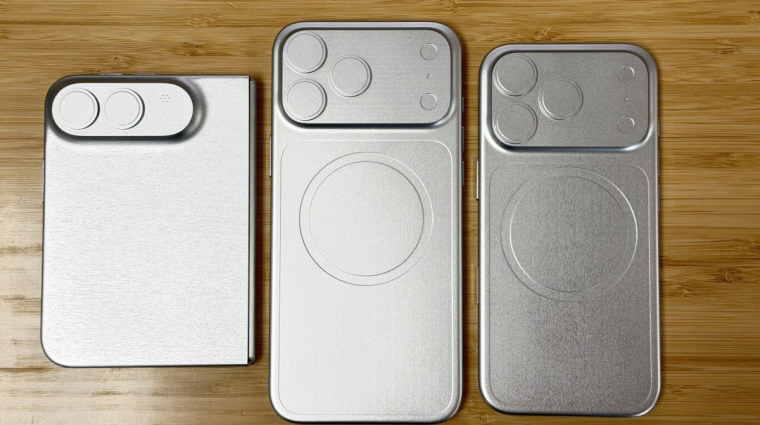
Recent leaks surrounding Apple’s upcoming foldable device have provided clearer insight into its design and dimensions, confirming long-standing rumors about the company’s entry into the flexible display market. Multiple sources, including dummy unit showcases and technical analyses, indicate that Apple is preparing to launch what may be called either the iPhone Fold or iPhone Ultra later in 2026. These developments mark a significant step in Apple’s product evolution, potentially reshaping user expectations for flagship smartphones.
The information comes from a series of verified leaks involving physical dummy units that closely resemble final product designs. According to analysis from reputable tech journalists and hardware experts, these units reveal a passport-like form factor when folded — wide but not particularly tall — suggesting a focus on pocketability and one-handed usability. The design appears to prioritize a compact folded footprint while maintaining a substantial internal display when unfolded, aligning with Apple’s historical emphasis on ergonomic refinement.
One of the most detailed examinations comes from a video presentation by Max Tech’s Vadim Yuryev, who demonstrated silver-colored dummy units described as accurate representations of the impending device. Yuryev noted that his team’s previous dummy leaks for the iPhone 17 series proved to be “spot-on,” lending credibility to the current measurements. Based on these units, the folded thickness is reported to be 11mm, expanding to just 5.5mm when fully opened — dimensions that, excluding camera bump thickness, make each half thinner than the rumored iPhone Air (5.64mm).
This ultra-thin profile when unfolded suggests Apple may be leveraging advanced materials and hinge engineering to minimize bulk without sacrificing durability. The choice to aim for such slimness reflects ongoing industry pressure to deliver foldables that feel comparable to traditional smartphones in hand, despite their dual-screen nature. Analysts have long speculated that Apple would delay entering the foldable market until it could solve core challenges related to crease resistance, hinge longevity, and seamless display integration.
Further supporting details emerge from accessory leak tracking, particularly cases designed for the upcoming device. Sonny Dickson, a well-known source for Apple product leaks, shared dimensions earlier in April 2026 that match those later replicated in Yuryev’s dummy units. The consistency between independent leak sources strengthens confidence in the reported specifications, pointing toward a finalized industrial design approaching validation stages.
While Apple has not officially confirmed the product’s name, both “iPhone Fold” and “iPhone Ultra” appear in concurrent rumor streams, with some outlets suggesting the latter could denote a premium tier above the standard iPhone 18 Pro lineup. The device is widely expected to debut alongside the iPhone 18 series in September 2026, following Apple’s traditional fall launch cadence. This timing would position the foldable as a flagship innovation for the company’s 2026–2027 product cycle.
Industry observers note that the rumored design avoids radical departures from Apple’s aesthetic language, instead refining familiar elements such as flat edges and minimalist detailing. Unlike some competitors’ foldables that emphasize dramatic transformation between modes, Apple’s approach seemingly favors subtlety — a wide-but-short folded shape that resembles a compact wallet or passport rather than a thick slab. This could appeal to users prioritizing portability over tablet-like expansiveness when closed.
The internal display size remains unconfirmed in verified leaks, though comparisons to the iPad mini have been made in speculative analyses. If accurate, this would suggest an unfolded screen diagonal of approximately 7.9 to 8.3 inches, offering substantial real estate for multitasking, media consumption, and productivity tasks while still fitting within a manageable chassis when folded. Such a configuration would distinguish it from both compact foldables like the Galaxy Z Flip and larger book-style devices such as the Galaxy Fold series.
Hardware specifics beyond dimensions remain scarce in authenticated reports. However, given Apple’s typical component sourcing and technological integration patterns, the device is expected to feature a custom Apple silicon chip — likely an evolution of the M-series or A-series architecture — paired with advanced camera systems derived from the iPhone 18 Pro lineup. Battery life, charging speed, and software optimization for foldable interfaces are anticipated to be key focus areas during development.
On the software front, iPadOS-derived multitasking features or a fresh adaptive interface layer within iOS 19 are considered likely candidates to support the dual-display environment. Apple has historically used its operating systems to differentiate hardware innovations, and a foldable device would require thoughtful adjustments to app continuity, window management, and user interaction models — especially given the anticipated aspect ratio of the internal screen.
Despite the growing volume of leaks, certain aspects remain unconfirmed, including pricing, exact release date, and whether the device will support Apple Pencil input. Analysts caution that dummy units, while informative about exterior design, do not reveal internal components, battery capacity, or radio frequency performance. Until Apple provides official details, all specifications should be treated as preliminary.
The broader implications of Apple’s entry into the foldable space extend beyond product specifications. A successful launch could validate the foldable smartphone category at scale, encouraging wider developer adoption and accessory ecosystem growth. It may also intensify competition with Samsung, which has dominated the premium foldable segment for years, and prompt renewed innovation from Google, OnePlus, and others in the Android space.
For consumers, the device represents a potential convergence of tablet-like functionality and smartphone portability — a long-sought goal in mobile computing. If Apple achieves its reported thinness and refinement targets, the iPhone Fold or Ultra could set a new benchmark for what foldable devices aim to achieve: seamless transformation without compromise in feel, durability, or usability.
As of late April 2026, no official announcement from Apple has been made regarding the foldable project. The company maintains its standard policy of not commenting on unreleased products. However, the convergence of multiple independent leaks — particularly those with demonstrated historical accuracy — suggests that development is progressing toward final validation stages.
The next confirmed milestone in the product lifecycle will likely be an official unveiling at Apple’s September 2026 launch event, where the company traditionally introduces its latest iPhone generations. Until then, updates will continue to emerge from supply chain sources, accessory manufacturers, and leaked prototyping materials, all of which will be subject to ongoing verification.
We encourage readers to share their thoughts on Apple’s potential foldable device in the comments below. What features would matter most to you in a folding iPhone? Let us recognize how you see this innovation fitting into your daily tech use.