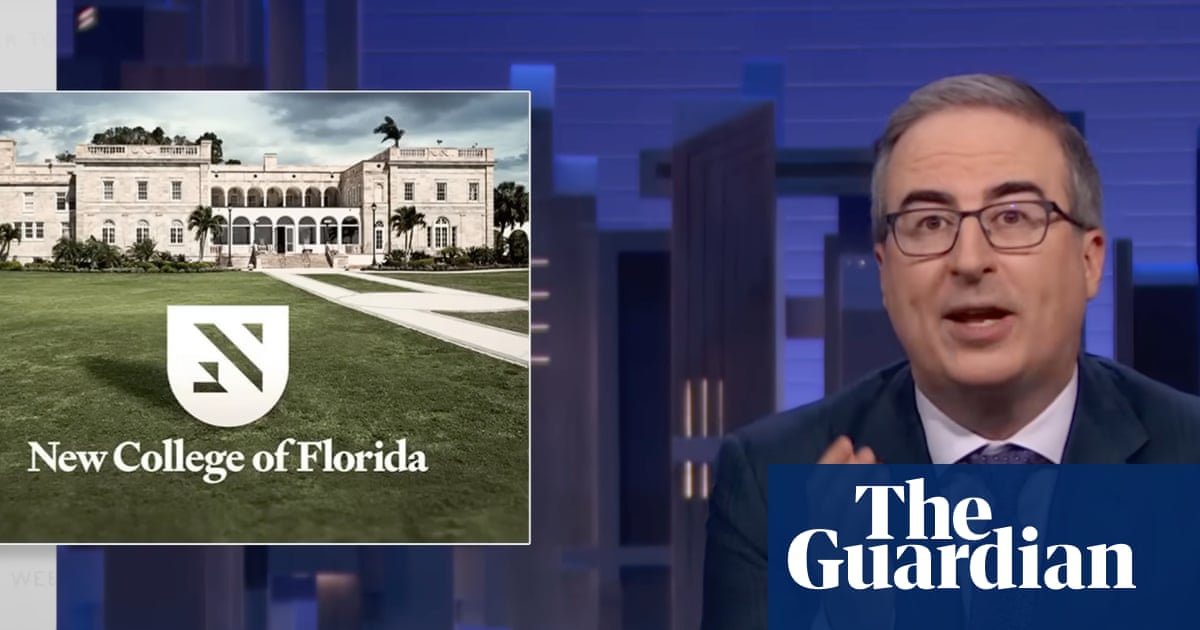
Late-night host John Oliver used the most recent episode of his HBO program, Last Week Tonight, to analyze the ongoing administrative and academic shifts at New College of Florida, describing the institution’s recent overhaul as a targeted effort by Florida Governor Ron DeSantis and his allies to implement a conservative ideological agenda. Oliver argued that the transformation of the public liberal arts college—which involved the appointment of a new Board of Trustees and the subsequent termination of various faculty members—prioritized political posturing over the stability and academic freedom of the student body.
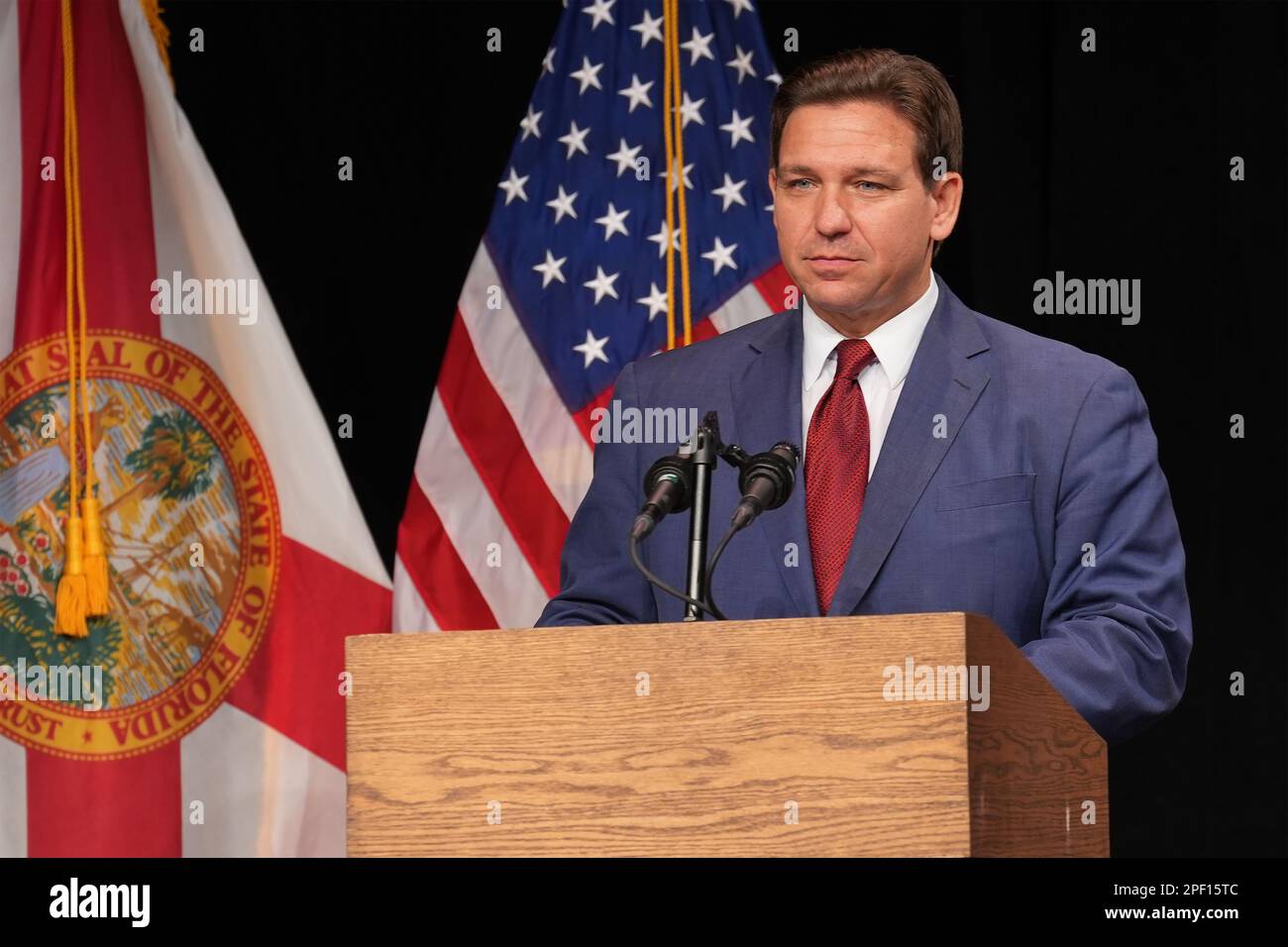
The situation at New College of Florida, a small honors institution in Sarasota, gained national attention in January 2023 when Governor DeSantis appointed six new members to the college’s Board of Trustees. These appointments were part of a broader strategy to reshape the institution, which the governor’s administration characterized as a move to eliminate “woke” ideology from public higher education, according to a press release from the Office of the Governor. The board subsequently moved to terminate the contract of then-president Patricia Okker and replace her with Richard Corcoran, a former Florida House Speaker and state education commissioner.
The Transformation of New College’s Administrative Structure
Following the appointment of the new trustees, the college underwent significant structural changes. One of the primary actions taken by the board was the denial of tenure to several professors who had previously been recommended for the status by faculty committees. This decision prompted widespread concern among educators regarding the future of academic tenure within the Florida state university system. According to the American Association of University Professors (AAUP), the move represented a significant departure from established academic norms and signaled a shift in how the college would handle faculty governance.

The administration’s actions were framed by supporters as a necessary correction to bring the college into alignment with the state’s broader educational goals. However, critics, including many students and alumni, have argued that these changes have fundamentally altered the institution’s character. New College, which was founded in 1960 and became a part of the state university system in 1975, had long been recognized for its unconventional grading system—which utilized narrative evaluations rather than traditional letter grades—and its focus on independent study. The New College of Florida institutional history notes that the school was designed to provide a high-level liberal arts experience within a public setting, a mission that many current stakeholders fear is being dismantled.
Evaluating the Impact on Student Life and Academic Freedom
John Oliver’s critique focused heavily on the human impact of these policy changes, highlighting reports of students who felt their academic environment had become hostile to their personal and intellectual interests. He suggested that the focus on “anti-woke” policies served as a performance for a national political audience rather than a genuine effort to improve student outcomes. The sentiment echoes concerns raised by the ACLU of Florida, which has monitored the situation, arguing that the administration’s focus on ideological conformity threatens the rights of students and staff to express diverse viewpoints.
The governance changes have also led to a high turnover rate among both faculty and staff. Several prominent professors resigned in the months following the board’s reorganization, citing an inability to maintain academic standards under the new leadership. According to a report by the Chronicle of Higher Education, the loss of experienced faculty members has created significant gaps in the curriculum, particularly in departments that were historically central to the college’s identity, such as gender studies and environmental science.
What Lies Ahead for the Institution
The legal and administrative battles surrounding New College remain active. The college is currently navigating an accreditation review, a process that has become increasingly complex following the recent leadership changes. The Southern Association of Colleges and Schools Commission on Colleges (SACSCOC), which provides accreditation for higher education institutions in the region, has been tasked with evaluating whether the college continues to meet the necessary standards for institutional autonomy and faculty governance.
As the college prepares for upcoming semesters, the focus remains on whether the current administration can stabilize enrollment and restore the confidence of the academic community. The next significant checkpoint for the institution involves the upcoming board meeting, where trustees are expected to discuss the long-term strategic plan and potential further adjustments to the academic calendar and course offerings. For those interested in following the developments, the university maintains a public portal for Board of Trustees meeting agendas and official minutes. Readers are encouraged to share their thoughts on the role of political oversight in public education in the comments section below.
Related reading