
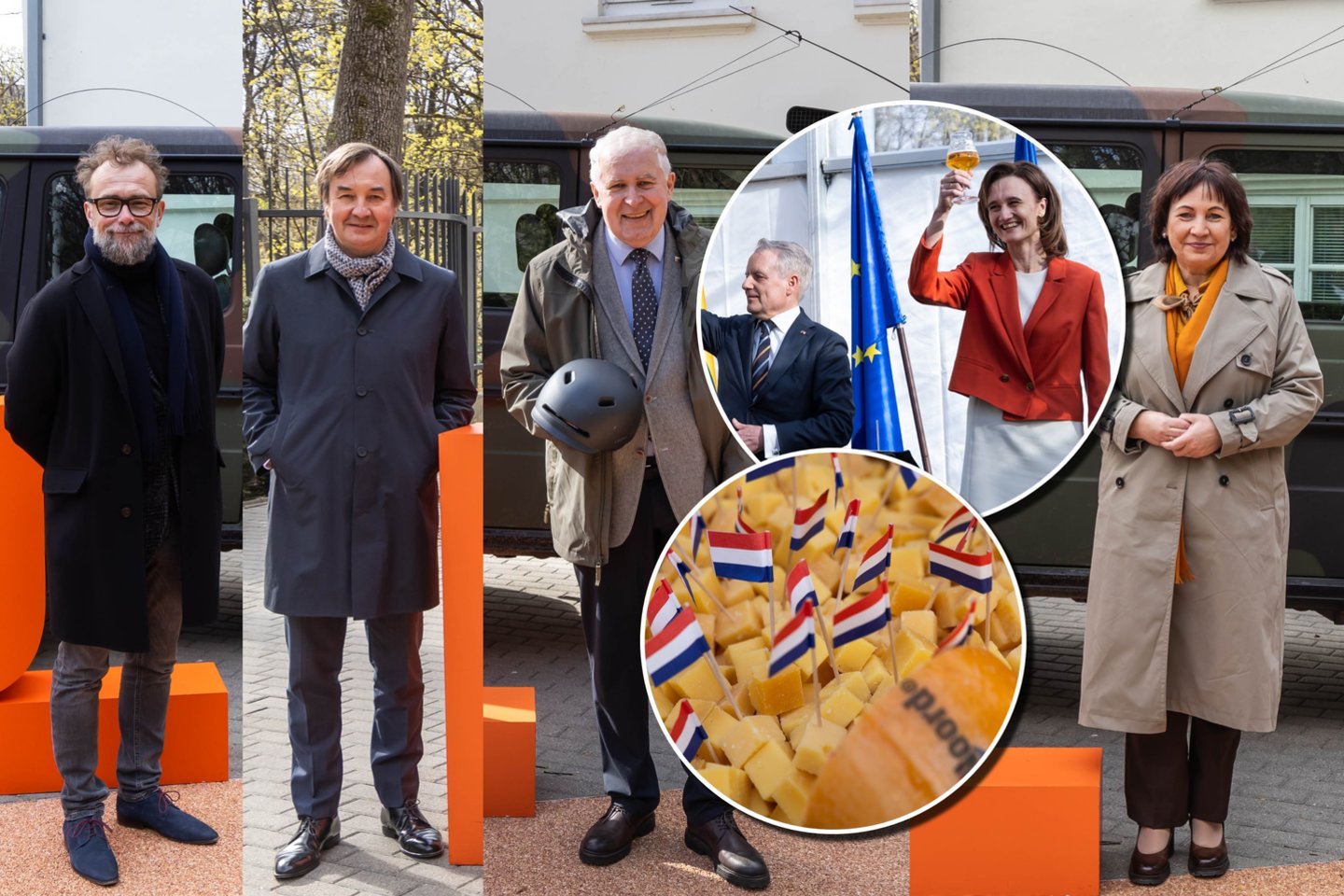
King’s Day Celebrations in Vilnius: A Vibrant Display of Dutch-Lithuanian Ties
Vilnius, Lithuania — The streets of Lithuania’s capital were awash in orange on April 27 as the Dutch community and local dignitaries gathered to celebrate King’s Day, the Netherlands’ national holiday. The annual event, marking the birthday of King Willem-Alexander, has become a symbol of the deepening cultural and diplomatic bonds between the two NATO allies. This year’s festivities in Vilnius drew an array of high-profile guests, underscoring the strategic partnership that has flourished in recent years.

King’s Day, or Koningsdag, is one of the Netherlands’ most cherished traditions, celebrated with street markets, music and a sea of orange—the color of the Dutch royal family. While the holiday is typically observed in the Netherlands, Dutch expatriates and diplomatic missions worldwide host events to share their culture. In Vilnius, the celebration took on added significance, reflecting the growing cooperation between Lithuania and the Netherlands in defense, trade, and cultural exchange.
Among the attendees were Lithuanian President Gitanas Nausėda, Prime Minister Ingrida Šimonytė, and Dutch Ambassador to Lithuania Jack Twiss Quarles van Ufford, who has played a key role in strengthening bilateral relations. The event also saw participation from Lithuanian lawmakers, military officials, and representatives of the Dutch business community, many of whom have invested in Lithuania’s burgeoning tech and logistics sectors.
The Significance of King’s Day in Lithuania
King’s Day is more than just a national holiday in the Netherlands—This proves a celebration of unity, heritage, and royal tradition. Officially observed on April 27 (or April 26 if the 27th falls on a Sunday), the holiday commemorates the birthday of King Willem-Alexander, who ascended to the throne in 2013. The festivities are marked by nationwide street parties, flea markets (vrijmarkt), and concerts, with citizens donning orange clothing and accessories in honor of the House of Orange-Nassau.
In Lithuania, the celebration has evolved into a platform for showcasing Dutch culture while reinforcing diplomatic ties. The Dutch Embassy in Vilnius, along with local Dutch expatriate groups, organizes the event annually, often in collaboration with Lithuanian institutions. This year’s gathering was held at the Presidential Palace and other central venues, blending traditional Dutch customs with Lithuanian hospitality.
“King’s Day is a wonderful opportunity to celebrate the friendship between our two nations,” Ambassador Twiss Quarles van Ufford told attendees. “The Netherlands and Lithuania share common values—freedom, democracy, and a commitment to European security. Events like this remind us of the strength of our partnership.”
A Diplomatic Showcase: High-Profile Guests and Bilateral Relations
The presence of Lithuania’s political leadership at the King’s Day celebrations highlighted the strategic importance of Dutch-Lithuanian relations. President Gitanas Nausėda, who has frequently praised the Netherlands’ contributions to Baltic security, took the opportunity to reaffirm the countries’ shared priorities. In a statement released by the Office of the President of Lithuania, Nausėda commended the Netherlands for its “significant contribution to strengthening the defense and security of the Baltic Sea region and NATO’s eastern flank.”
The Netherlands has been a key ally in Lithuania’s efforts to bolster its defenses amid regional tensions. Dutch troops are part of the NATO battlegroup stationed in Lithuania, which was elevated to brigade-level strength in 2023 as part of the alliance’s response to Russia’s invasion of Ukraine. The Netherlands has also contributed to Lithuania’s air defense capabilities, including the deployment of Patriot missile systems during military exercises.
Prime Minister Ingrida Šimonytė echoed these sentiments in her own message to the Dutch people, emphasizing the economic and cultural dimensions of the relationship. “Lithuania and the Netherlands are like-minded countries that cooperate successfully in both NATO and the European Union,” Šimonytė said. “We are grateful for the Netherlands’ support in strengthening our security and look forward to expanding our collaboration in trade, innovation, and culture.”
The Dutch business community in Lithuania has grown significantly in recent years, with over 200 Dutch companies operating in the country. Sectors such as logistics, renewable energy, and information technology have seen particularly strong Dutch investment. The Netherlands is also one of Lithuania’s top trading partners, with bilateral trade exceeding €2.5 billion in 2023, according to data from Statistics Lithuania.
Cultural Exchange and Community Spirit
Beyond the diplomatic and economic dimensions, King’s Day in Vilnius served as a vibrant cultural exchange. The event featured Dutch delicacies like stroopwafels (syrup waffles) and bitterballen (deep-fried meatballs), as well as live music performances, including traditional Dutch folk songs and modern pop. Children participated in games and crafts, while adults enjoyed Dutch beer and jenever, a juniper-flavored spirit that is a staple of Dutch celebrations.
For the Dutch expatriate community in Lithuania, estimated at around 1,500 people, the celebration was a chance to connect with fellow nationals and share their heritage with Lithuanian friends, and colleagues. “It’s wonderful to witness so many people come together to celebrate our culture,” said Vladimir Simonko, the head of the Lithuanian Gay League (LGL), who attended the event. “King’s Day is about unity and freedom, values that resonate deeply in Lithuania as well.”
One of the highlights of the event was a speech delivered in Lithuanian by a Dutch diplomat, fulfilling a request from local attendees. The gesture was widely praised as a symbol of the Netherlands’ respect for Lithuanian language and culture. “It was a minor but meaningful moment,” said one Lithuanian attendee. “It showed that our friendship is built on mutual respect and understanding.”
The Broader Context: Why Dutch-Lithuanian Relations Matter
The celebration of King’s Day in Vilnius comes at a time of heightened geopolitical significance for both countries. Lithuania, as a frontline NATO state, has been at the forefront of efforts to deter Russian aggression in the Baltic region. The Netherlands, meanwhile, has emerged as a key player in European defense, particularly in supporting Eastern European allies.
In 2022, the Netherlands pledged to increase its defense spending to 2% of GDP, aligning with NATO’s target. The country has also taken a leading role in training Ukrainian forces and providing military aid, further solidifying its reputation as a reliable security partner. For Lithuania, Dutch support has been instrumental in modernizing its armed forces and enhancing its resilience against hybrid threats.
Culturally, the two nations share a commitment to human rights and social progress. The Netherlands is known for its progressive policies on LGBTQ+ rights, environmental sustainability, and innovation, areas where Lithuania has made significant strides in recent years. Collaborations in education, science, and technology have also flourished, with Dutch universities partnering with Lithuanian institutions on research projects and student exchange programs.
What’s Next for Dutch-Lithuanian Cooperation?
Looking ahead, both countries have signaled their intent to deepen collaboration in several key areas. On the defense front, the Netherlands is expected to continue its participation in NATO’s enhanced Forward Presence (eFP) mission in Lithuania, with plans to rotate additional troops and equipment through the region. Discussions are also underway to expand joint military exercises and intelligence-sharing initiatives.
Economically, the focus will likely remain on strengthening trade ties, particularly in the fields of renewable energy and digital innovation. Lithuania’s growing reputation as a hub for fintech and startups has attracted interest from Dutch investors, while the Netherlands’ expertise in water management and sustainable agriculture could benefit Lithuania’s rural development efforts.
Culturally, the success of King’s Day in Vilnius has inspired plans for more joint events, including film festivals, art exhibitions, and educational exchanges. The Dutch Embassy has also expressed interest in supporting Lithuanian language courses for Dutch diplomats and business professionals, further bridging the cultural divide.
The next major milestone in Dutch-Lithuanian relations will be the NATO Summit in Washington, D.C., scheduled for July 2026. Both countries are expected to advocate for continued support for Ukraine and enhanced deterrence measures in Eastern Europe. Lithuanian officials have also indicated that they will seek Dutch backing for initiatives aimed at reducing energy dependence on Russia and diversifying supply chains.
Key Takeaways
- King’s Day in Vilnius: The celebration of King’s Day in Lithuania’s capital highlighted the strong cultural and diplomatic ties between the Netherlands and Lithuania, with high-profile guests including President Gitanas Nausėda and Prime Minister Ingrida Šimonytė.
- Strategic Partnership: The Netherlands is a key NATO ally for Lithuania, contributing troops, air defense systems, and military expertise to bolster the country’s security amid regional tensions.
- Economic Ties: Bilateral trade between the two countries exceeded €2.5 billion in 2023, with Dutch investment playing a significant role in Lithuania’s tech, logistics, and renewable energy sectors.
- Cultural Exchange: The event featured Dutch food, music, and traditions, fostering greater understanding and cooperation between the two communities.
- Future Collaboration: Both nations are committed to expanding their partnership in defense, trade, and cultural exchange, with key discussions expected at the upcoming NATO Summit in July 2026.
As the orange banners were taken down and the last notes of Dutch folk music faded, one thing was clear: King’s Day in Vilnius was more than just a celebration—it was a testament to the enduring friendship between two nations united by shared values and common goals. For the Dutch community in Lithuania and their Lithuanian hosts, the event was a reminder that even in uncertain times, culture and diplomacy can build bridges that transcend borders.
For those interested in learning more about Dutch-Lithuanian relations, the Dutch Ministry of Foreign Affairs and the Lithuanian Ministry of Foreign Affairs provide regular updates on bilateral initiatives and upcoming events.
What are your thoughts on the growing ties between Lithuania and the Netherlands? Share your comments below and join the conversation on social media using the hashtag #KingsDayVilnius.