
Italy’s Premier Political Talk Show “Otto e Mezzo” Sparks Debate on Governance and Media Influence
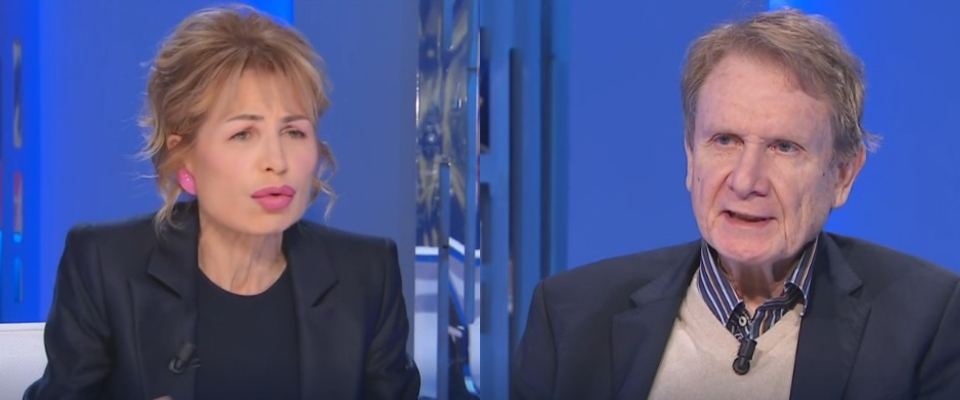
On April 27, 2026, the Italian current affairs program Otto e Mezzo, hosted by veteran journalist Lilli Gruber, became the epicenter of a heated political discourse after its latest episode featured a panel of high-profile guests dissecting Italy’s governance, judicial independence, and the role of media in shaping public opinion. The episode, which aired on LA7, a major Italian television network, included former Prime Minister Matteo Renzi, geopolitical analyst Lucio Caracciolo, journalist Massimo Giannini, and historian Anna Foa. Their discussion touched on recent controversies surrounding the Italian government, including allegations of incompetence, the potential fallout from a minister’s resignation, and broader concerns about democratic resilience in an era of rising populism.

The episode’s significance extends beyond its immediate political commentary. Otto e Mezzo, now in its 25th season, has long been a platform for rigorous debate in Italy, blending journalistic depth with accessible discourse. Its influence is underscored by its ability to attract prominent figures from politics, academia, and media, often setting the agenda for national conversations. The April 27 broadcast, however, stood out for its unusually blunt assessments of the current government, with panelists questioning its stability and competence in ways that resonated with both critics and supporters of Prime Minister Giorgia Meloni’s administration.
For global audiences, the episode offers a window into Italy’s political and media landscape, where the intersection of journalism, governance, and public trust is under increasing scrutiny. As Italy navigates economic challenges, geopolitical tensions, and internal divisions, programs like Otto e Mezzo play a critical role in holding power to account—although also reflecting the complexities of modern democracy.
The Guests: Who Shaped the Debate
The April 27 episode of Otto e Mezzo featured four guests, each bringing a distinct perspective to the table. Their presence underscored the program’s reputation as a forum for diverse viewpoints, though their remarks also highlighted the polarizing nature of Italy’s current political climate.
Matteo Renzi: The Former Prime Minister’s Critique
Matteo Renzi, Italy’s Prime Minister from 2014 to 2016 and a central figure in the center-left Democratic Party, has been a frequent guest on Otto e Mezzo. In the April 27 episode, Renzi delivered one of his most pointed critiques of the current government, stating, “We no longer have a government.” While the remark was not elaborated upon in the available clips, it aligns with Renzi’s long-standing opposition to Meloni’s right-wing coalition, which includes the Brothers of Italy, the League, and Forza Italia. Renzi’s comments often focus on institutional stability, and his assertion suggested deep concerns about the government’s ability to function effectively. His participation in the program is notable given his history of using media appearances to shape public opinion, a strategy that has both bolstered his influence and drawn criticism from opponents who accuse him of prioritizing rhetoric over policy.
Lucio Caracciolo: Geopolitics and Governance
Lucio Caracciolo, editor-in-chief of the geopolitical magazine Limes, is a regular contributor to Otto e Mezzo and is known for his sharp analysis of Italy’s role in global affairs. In the April 27 episode, Caracciolo weighed in on the government’s competence, particularly in the context of Justice Minister Carlo Nordio. According to clips from the broadcast, Caracciolo suggested that if Nordio were to resign, it could trigger a collapse of the government. His remarks framed the minister’s potential departure as a symptom of broader dysfunction, tying it to Italy’s ability to navigate domestic and international challenges. Caracciolo’s expertise in geopolitics often provides a macro-level lens for understanding Italy’s political dynamics, and his comments in this episode were no exception.
Massimo Giannini: Media and Institutional Trust
Massimo Giannini, editor-in-chief of La Stampa, one of Italy’s most respected newspapers, brought a media perspective to the discussion. Giannini’s remarks were particularly critical of the government’s handling of recent events, which he described as emblematic of a “country of operetta.” He also suggested that President Sergio Mattarella had been “put in an embarrassing position before the country,” a reference to the president’s role as a guarantor of constitutional stability. Giannini’s comments reflected broader concerns within Italy’s journalistic community about the erosion of trust in institutions, a theme he has explored in his editorials. His participation in the episode underscored the symbiotic relationship between media and politics in Italy, where journalists often serve as both observers and active participants in public discourse.
Anna Foa: Historical Context and Political Legacy
Anna Foa, a historian and author specializing in modern Italian history, provided a historical lens for the discussion. In the April 27 episode, Foa drew parallels between the current government and Italy’s fascist past, a comparison that has become increasingly contentious in recent years. She stated, “We have a government that derives directly from the [Italian] Social Republic,” referring to the Nazi-backed puppet state established by Benito Mussolini in 1943. Foa’s remarks were part of a broader debate about the legacy of fascism in contemporary Italian politics, particularly in light of the Brothers of Italy’s roots in the post-fascist Italian Social Movement. Her participation highlighted the role of historians in shaping public understanding of political movements, though her comments also risked oversimplifying complex historical continuities.
The Controversies: What Sparked the Debate
The April 27 episode of Otto e Mezzo did not shy away from contentious topics, and several key themes emerged from the panelists’ remarks. These included the government’s competence, the potential consequences of a ministerial resignation, and the broader implications for Italy’s democratic institutions.

The Government’s Competence Under Scrutiny
One of the central threads of the discussion was the perceived incompetence of the current government. Lucio Caracciolo and Massimo Giannini were particularly vocal on this point, with Caracciolo suggesting that the government’s struggles were not isolated incidents but indicative of systemic issues. Giannini’s characterization of Italy as a “country of operetta” echoed a sentiment shared by some critics of the Meloni administration, who argue that its policies and rhetoric have prioritized spectacle over substance. While neither Caracciolo nor Giannini provided specific examples of incompetence during the episode, their remarks aligned with broader criticisms of the government’s handling of economic challenges, immigration, and relations with the European Union.
Matteo Renzi’s assertion that “we no longer have a government” further amplified these concerns. Renzi, who has been a vocal opponent of Meloni’s coalition, has previously accused the government of undermining Italy’s institutions. His comments in the episode suggested a belief that the government’s actions—or lack thereof—had rendered it ineffective, though he did not elaborate on what specific events or policies had led him to this conclusion.
The Nordio Resignation Question
A significant portion of the discussion revolved around Justice Minister Carlo Nordio and the potential consequences of his resignation. Lucio Caracciolo’s remark that Nordio’s departure could lead to the government’s collapse underscored the fragility of Meloni’s coalition, which relies on a delicate balance of power among its three constituent parties. Nordio, a former magistrate, has been a controversial figure within the government, particularly due to his role in proposed judicial reforms that critics argue could undermine the independence of Italy’s judiciary. His potential resignation would not only create a vacancy in a critical ministry but could also trigger a broader crisis of confidence in the government’s ability to govern.
Caracciolo’s comments reflected a broader anxiety about the stability of Italy’s political system. The country has a history of short-lived governments, with 68 administrations since World War II, and the current coalition’s ability to maintain cohesion has been a subject of ongoing debate. While Nordio has not publicly indicated any intention to resign, the mere speculation of his departure highlighted the precarious nature of Italy’s political landscape.
Historical Parallels and Democratic Resilience
Anna Foa’s comparison of the current government to the Italian Social Republic was one of the most provocative moments of the episode. The Italian Social Republic, also known as the Republic of Salò, was a Nazi-backed state established in northern Italy during the final years of World War II. It was led by Mussolini and is widely regarded as a fascist puppet regime. Foa’s remark was likely intended to draw attention to what she perceives as authoritarian tendencies in the current government, particularly in its approach to immigration, media freedom, and judicial independence.
However, the comparison is not without controversy. Critics of Foa’s remark argue that it oversimplifies the complexities of Italy’s political history and risks trivializing the atrocities committed during the fascist era. The Brothers of Italy, the dominant party in Meloni’s coalition, has its roots in the Italian Social Movement, a post-fascist party founded in 1946 by supporters of Mussolini. While Meloni has sought to distance her party from its fascist origins, its historical ties remain a subject of debate. Foa’s comments reignited this discussion, framing it within the context of contemporary governance and democratic resilience.
The Role of Otto e Mezzo in Italian Media
Otto e Mezzo has been a fixture of Italian television since its debut in 2002, and its 25th season, which began in September 2025, has continued its tradition of blending political analysis with cultural commentary. The program is broadcast on LA7, a network known for its focus on news and current affairs, and is directed by Luciano Fontana, editor-in-chief of Corriere della Sera, one of Italy’s most influential newspapers. The show’s format typically includes a panel discussion led by Lilli Gruber, followed by Il Punto (“The Point”), a segment hosted by journalist Paolo Pagliaro that provides a concise summary of the day’s key events.

The April 27 episode was notable not only for its content but also for its timing. The program aired amid a period of heightened political tension in Italy, with the government facing criticism over its handling of economic challenges, immigration, and relations with the European Union. Otto e Mezzo has often served as a barometer for these tensions, providing a platform for both supporters and critics of the government to articulate their views. Its ability to attract high-profile guests, such as Renzi, Caracciolo, Giannini, and Foa, underscores its role as a key player in Italy’s media landscape.
However, the program is not without its detractors. Some critics argue that Otto e Mezzo and similar talk shows prioritize sensationalism over substantive debate, particularly in an era where media consumption is increasingly fragmented. Others contend that the program’s format, which often features guests with opposing viewpoints, can devolve into shouting matches rather than productive dialogue. Despite these criticisms, Otto e Mezzo remains a vital forum for political discourse in Italy, reflecting the country’s broader struggles with polarization, media trust, and democratic resilience.
Global Implications: What Italy’s Political Debates Imply for the World
While Otto e Mezzo is primarily an Italian program, the themes it explores have broader implications for global audiences. Italy’s political and media landscape serves as a microcosm of challenges faced by democracies worldwide, including the rise of populism, the erosion of trust in institutions, and the role of media in shaping public opinion.
Populism and the Erosion of Trust
Italy has long been a laboratory for populist movements, from Silvio Berlusconi’s Forza Italia to the Five Star Movement and, more recently, Giorgia Meloni’s Brothers of Italy. The April 27 episode of Otto e Mezzo highlighted the tensions between populist governance and institutional stability, a dynamic that is playing out in democracies across Europe, and beyond. Meloni’s coalition, which includes far-right and center-right parties, has been accused of prioritizing nationalist rhetoric over pragmatic policymaking, a trend that has raised concerns among Italy’s European partners. The episode’s discussion of the government’s competence and the potential consequences of Nordio’s resignation underscored the fragility of Italy’s political system, a fragility that is not unique to the country.
In the United States, for example, the rise of figures like Donald Trump has similarly tested the resilience of democratic institutions, with debates about governance, media trust, and historical parallels to authoritarianism dominating public discourse. The April 27 episode of Otto e Mezzo offered a glimpse into how these debates are unfolding in Italy, where the stakes are equally high. As Caracciolo and Giannini noted, the government’s ability to navigate these challenges will have implications not only for Italy but for the broader European project.

Media Freedom and Democratic Resilience
The role of media in holding power to account was another key theme of the episode. Massimo Giannini’s remarks about President Mattarella being “put in an embarrassing position” reflected broader concerns about the relationship between media and politics in Italy. In recent years, the country has seen a decline in press freedom rankings, with organizations like Reporters Without Borders citing concerns about political interference, economic pressures, and the concentration of media ownership. Otto e Mezzo and programs like it play a critical role in countering these trends, providing a platform for independent journalism and diverse viewpoints.
However, the episode also highlighted the challenges faced by media outlets in an era of polarization. Anna Foa’s historical comparison, while provocative, risked oversimplifying complex political dynamics and could be seen as an example of how media narratives can sometimes exacerbate divisions rather than bridge them. The episode’s discussion of the government’s competence, while critical, also underscored the need for balanced and nuanced reporting, particularly in a political climate where trust in media is already fragile.
Italy’s Role in the European Union
Italy’s relationship with the European Union was another implicit theme of the episode. As a founding member of the EU, Italy has long been a key player in European politics, but its recent governments have often clashed with Brussels over issues like fiscal policy, immigration, and rule of law. The April 27 episode of Otto e Mezzo did not directly address these tensions, but the broader discussion of governance and institutional trust reflected the challenges Italy faces in balancing its domestic priorities with its European commitments.
For global audiences, Italy’s struggles offer a case study in the difficulties of maintaining democratic resilience in an era of rising populism and economic uncertainty. The episode’s focus on the government’s competence, the potential fallout from Nordio’s resignation, and the historical parallels to fascism underscored the high stakes of Italy’s political debates. As the country navigates these challenges, programs like Otto e Mezzo will continue to play a critical role in shaping public opinion and holding power to account.
Key Takeaways from the April 27 Episode
- Government Stability Under Scrutiny: Panelists, including Lucio Caracciolo and Massimo Giannini, raised concerns about the competence of Italy’s current government, with Caracciolo suggesting that the resignation of Justice Minister Carlo Nordio could trigger its collapse.
- Historical Parallels: Historian Anna Foa drew a controversial comparison between the current government and Italy’s fascist past, reigniting debates about the legacy of fascism in contemporary Italian politics.
- Media’s Role in Democracy: The episode highlighted the critical role of programs like Otto e Mezzo in holding power to account, while also reflecting the challenges of maintaining media trust in an era of polarization.
- Global Implications: Italy’s political debates serve as a microcosm of broader challenges faced by democracies worldwide, including the rise of populism, the erosion of trust in institutions, and the role of media in shaping public opinion.
- Institutional Trust: The discussion underscored concerns about the resilience of Italy’s democratic institutions, particularly in the face of economic challenges, geopolitical tensions, and internal divisions.
What’s Next for Otto e Mezzo and Italian Politics
The April 27 episode of Otto e Mezzo is unlikely to be the last word on Italy’s political and media landscape. The program’s next episodes are expected to continue exploring the themes of governance, democratic resilience, and the role of media in shaping public opinion. Upcoming broadcasts may delve deeper into the potential consequences of Nordio’s resignation, the government’s handling of economic challenges, and Italy’s relationship with the European Union.
For global audiences, Otto e Mezzo offers a valuable lens into Italy’s political dynamics, providing insights that are relevant far beyond the country’s borders. As Italy navigates its current challenges, the program will remain a critical forum for debate, reflection, and accountability.
We invite you to share your thoughts on the April 27 episode of Otto e Mezzo and its implications for Italy and the world. What do you believe about the panelists’ assessments of the government’s competence? How do you see the role of media in shaping democratic resilience? Join the conversation in the comments below.