
The skyline of Seoul’s financial district is currently vibrating with a familiar, high-stakes energy. For investors in South Korea, the allure of a historic bull market is proving irresistible, leading to a surge in high-risk borrowing strategies to capture gains in a soaring equity market. This phenomenon—often referred to locally as “debt-investing”—has manifested in a sharp climb in “minus accounts,” the flexible overdraft credit lines that allow individuals to spend beyond their balance up to a predetermined limit.
Recent data reveals that personal overdraft loans at the nation’s five largest commercial banks have surged to their highest levels in more than three years. As the benchmark Korea Composite Stock Price Index (KOSPI) shatters records, a growing number of retail investors are pivoting away from safe, liquid savings and toward leveraged positions, signaling a significant shift in risk appetite across the peninsula.
This trend highlights a complex intersection of market euphoria and regulatory pressure. While the semiconductor-driven rally provides the incentive, tighter government restrictions on traditional household loans are simultaneously pushing borrowers toward these flexible credit lines to meet both investment and housing needs. For a global audience, this movement serves as a critical barometer for the health and volatility of one of Asia’s most influential markets.
The Surge in ‘Minus Accounts’: By the Numbers
The scale of the borrowing spree is evident in the latest balance sheets of South Korea’s banking giants. As of Thursday, the combined balance of personal overdraft loans—the “minus accounts”—at the five major lenders, which include KB Kookmin, Shinhan, Hana, Woori, and NH Nonghyup, reached 40.5 trillion won ($27.64 billion).
This figure represents the most significant balance since January 2023, when the total peaked at 40.54 trillion won. The velocity of this increase is particularly striking; in just the three business days following the end of April, the balance grew by 715.2 billion won. This rapid acceleration suggests that investors are not merely dipping their toes into the market but are aggressively deploying short-term liquidity to maximize their exposure.

To understand the significance of this shift, one must look at the inverse movement of demand deposits. These are the funds held in accounts that can be withdrawn at any time, typically serving as a financial safety net or “standby funds.” As investors move toward borrowing, they are simultaneously draining their savings. As of Thursday, the combined demand deposit balances at the five major banks totaled 696.06 trillion won, reflecting a decrease of 501.3 billion won from the previous month’s end. Throughout April alone, the balance of these deposits plummeted by 3.36 trillion won.
What is a ‘Minus Account’?
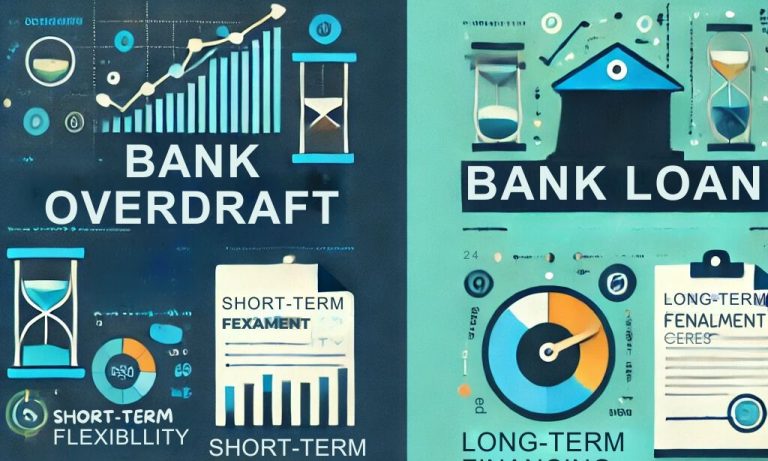
For those unfamiliar with the South Korean banking landscape, a “minus account” (신용한도대출) is essentially a revolving credit line attached to a checking account. Unlike a traditional loan where a lump sum is deposited and interest is paid on the total, a minus account allows the user to withdraw funds into a negative balance up to a specific limit. Interest is only charged on the amount actually used. This makes them an attractive tool for stock traders who need immediate, flexible liquidity to react to market swings without the paperwork of applying for a new loan every time an opportunity arises.
KOSPI’s Bull Run and the Semiconductor Catalyst
The primary engine driving this borrowing spree is the extraordinary performance of the Korean stock market. The KOSPI index has emerged as one of the world’s top-performing markets this year, fueled largely by a massive rally in semiconductor stocks. The index has surged more than 70 percent over the course of the year.
This momentum reached a fever pitch on Friday, when the KOSPI hit a fresh record high of 7,498. In the eyes of many retail investors, the fear of missing out (FOMO) has outweighed the risks associated with borrowing. When a market climbs with such velocity, the perceived cost of interest on an overdraft loan is often viewed as a negligible fee compared to the potential double-digit returns offered by the semiconductor sector.
However, this reliance on leverage creates a precarious situation. While the upside is magnified during a rally, the downside is equally amplified. If the semiconductor sector—which acts as the cornerstone of the Korean economy—were to face a sudden correction, investors using minus accounts would find themselves facing “margin call” style pressures, where they must either inject more cash or sell their assets at a loss to cover their debts.
The Regulatory Squeeze: Housing and Household Debt
While the stock market provides the motivation, government policy is providing the mechanism. A significant portion of the increase in overdraft loans is not actually destined for the stock market, but is instead a reaction to tightening credit conditions. The South Korean government has implemented stricter regulations on household loans to curb overall debt levels and stabilize the housing market.
Because traditional mortgage and personal loans have become harder to secure or more expensive to obtain due to these regulations, borrowers are turning to overdraft lines as a “gap-filler.” A bank official noted that there appears to be a growing demand for credit loans to supplement housing-related funding needs.
This creates a dual-pressure system on the Korean consumer. On one side, they are squeezed by regulations intended to protect the macro-economy from a housing bubble; on the other, they are lured by a stock market that seems to be in a permanent state of ascent. The result is a migration toward flexible, short-term credit, which may be easier to access than a formal mortgage but carries different risks regarding interest rate volatility.
Key Takeaways: The Current Financial Shift
- Credit Surge: Overdraft loans at five major banks hit 40.5 trillion won, a 3-year high.
- Liquidity Drain: Demand deposits are falling, with a 3.36 trillion won drop in April alone, as cash moves into equities.
- Market Driver: The KOSPI index surged over 70% this year, hitting a record high of 7,498, driven by semiconductors.
- Regulatory Impact: Tighter household loan rules are pushing borrowers toward overdrafts for housing funds.
- Risk Profile: Increased leverage via “minus accounts” heightens vulnerability to market corrections.
Analysis: The Danger of Short-Term Liquidity in Long-Term Plays
From an economic perspective, the shift from demand deposits to overdraft loans is a classic indicator of increasing speculative heat. When investors stop using their own savings and begin using the bank’s money to buy assets, the market enters a phase of heightened fragility. Short-term liquidity, by definition, is volatile. Overdraft lines can be adjusted or called in by banks if the borrower’s credit profile changes or if the bank decides to tighten its risk appetite.
the reliance on semiconductor stocks creates a concentration risk. While these companies are global leaders, they are subject to cyclical demand and geopolitical tensions. A sudden shift in global tech demand or a trade dispute could trigger a rapid decline in the KOSPI, leaving those with “minus accounts” in a dangerous position. The “debt-investing” strategy only works as long as the asset’s growth rate exceeds the interest rate of the loan—a gamble that becomes increasingly risky as the market reaches record highs.
The situation is further complicated by the dual-use of these loans. When the same credit line is used to both fund a home and speculate on stocks, the borrower’s primary residence effectively becomes collateral for their market bets. This intertwining of essential living costs and speculative investing is a red flag for financial stability advocates.
What Happens Next?
The trajectory of these loans will likely depend on two factors: the continued performance of the semiconductor sector and the government’s response to rising household debt. If the KOSPI continues its ascent, You can expect the balance of minus accounts to remain elevated or even climb further as more retail investors attempt to chase the rally.
However, the financial authorities are unlikely to ignore the rise in leverage. If the government perceives that “minus accounts” are becoming a loophole for bypassing household loan regulations, new restrictions on overdraft limits or higher interest rate requirements could be introduced to cool the market.
For now, the market remains in a state of euphoria, with the record-breaking 7,498 KOSPI level serving as both a beacon for new investors and a warning sign for seasoned analysts. The coming weeks will be critical in determining whether this is a sustainable growth phase or a bubble fueled by cheap, flexible credit.
World Today Journal will continue to monitor the KOSPI’s performance and the subsequent reports from South Korea’s major commercial banks regarding credit balances.
Do you think the current KOSPI rally is sustainable, or is the rise in debt-funded investing a warning sign? Share your thoughts in the comments below and subscribe to our Business section for more global market analysis.
Worth a look