
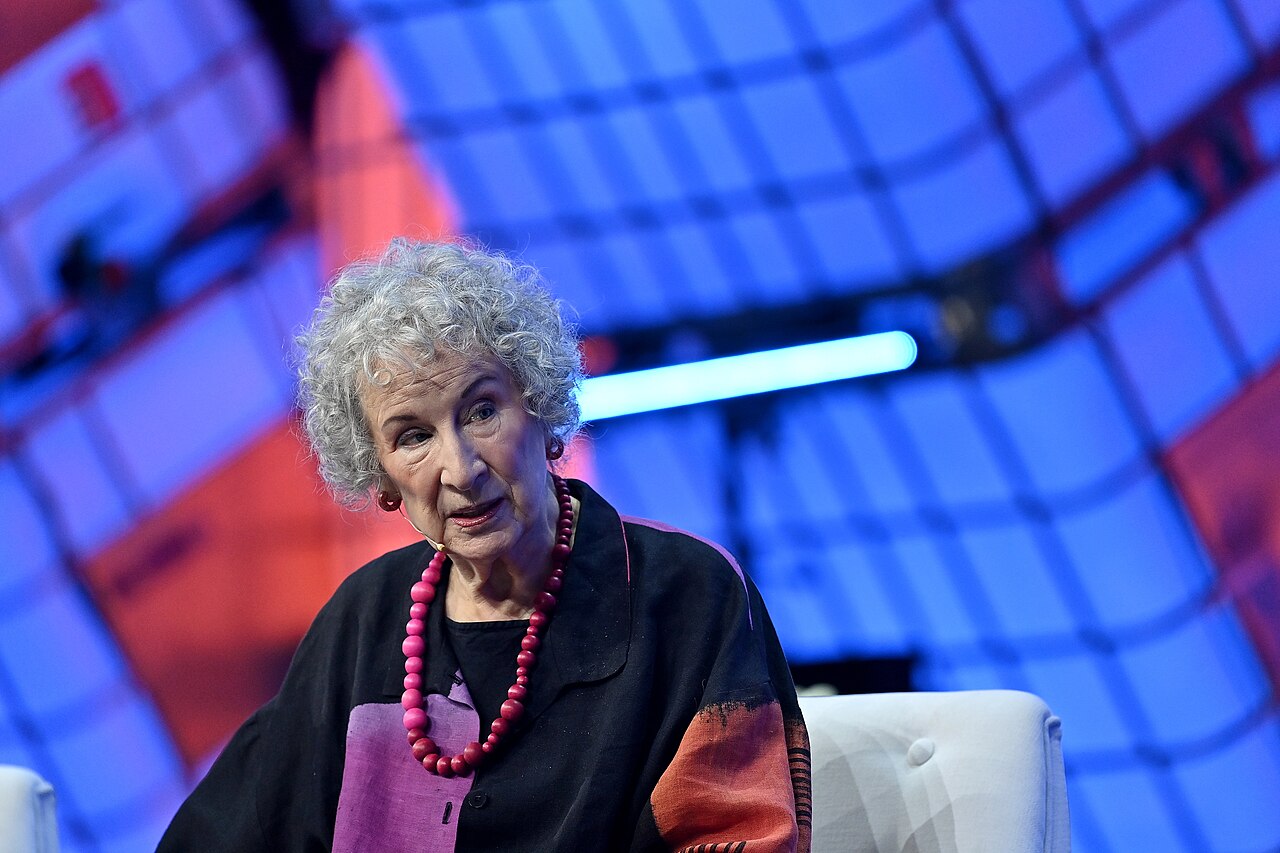
Margaret Atwood: The Writer Who Predicted the Future—And Took 85 Years to Reveal Her Past
Margaret Atwood, one of the most prescient voices in modern literature, has spent decades crafting dystopian narratives that eerily parallel contemporary global challenges. Her 1985 novel *The Handmaid’s Tale*—now a cultural touchstone—was dismissed by some as speculative fiction when published. Yet as societal tensions over reproductive rights, gender equality and authoritarianism escalate worldwide, the novel’s themes have gained urgent relevance. What remains less explored is Atwood’s own journey: how her personal experiences shaped her visionary storytelling, and why she waited until her 85th year to publicly reflect on the past that inspired her most famous work.
In a series of rare interviews and a newly released memoir excerpt, Atwood has begun to unravel the layers of her early life—revealing how childhood observations of political upheaval, family dynamics, and even the quiet resilience of women in her community became the foundation for her dystopian masterpiece. This retrospective offers a rare glimpse into the mind of a writer whose work has transcended fiction to become a global conversation starter.
As we examine Atwood’s creative process and her delayed reckoning with her past, one question emerges: What does it mean for an artist to predict the future without ever intending to? And why, after decades of silence, is she now sharing the personal stories that fueled her most enduring work?
—Margaret Atwood, Toronto Star interview, 2025
From Ottawa to Gilead: How Childhood Shaped Atwood’s Vision
Margaret Atwood was born in 1939 in Ottawa, Canada, during a time of post-war optimism and Cold War paranoia. Her father, a renowned entomologist, and her mother, a nutritionist, exposed her to scientific inquiry and social observation from an early age. But it was the political climate of the 1950s and 60s that would later seep into her fiction.
In a 2025 interview with The Guardian, Atwood recalled how her family’s move to a small Ontario town during her adolescence shaped her worldview. “I was surrounded by women who were strong, who were quiet, who were resilient in ways that weren’t always celebrated,” she said. “They were the ones holding families together, making decisions, yet they were often invisible. That struck me as a young writer.” This dynamic would later manifest in *The Handmaid’s Tale*, where women like Offred are both oppressed and subversively powerful.
Atwood’s academic rigor—she studied at the University of Toronto and later earned a master’s in English from Radcliffe College—also played a crucial role. Her deep dive into literary history, particularly the works of Mary Shelley and George Orwell, reinforced her belief that dystopian fiction serves as a warning rather than a prophecy. “Orwell wrote *1984* as a cautionary tale about totalitarianism,” she noted in a 2024 lecture at Harvard. “I wrote *The Handmaid’s Tale* as a warning about the erosion of women’s rights—and yet, here we are, decades later, still grappling with those same issues.”
The Unlikely Inspiration Behind *The Handmaid’s Tale*
While Atwood has never claimed *The Handmaid’s Tale* was autobiographical, she has acknowledged that her novel drew from a mix of historical events, religious extremism, and the quiet resistance she observed in women around her. The book’s publication in 1985 coincided with the rise of conservative movements in the U.S. And Canada, but Atwood insists her inspiration was more personal.

In her memoir excerpt, published in The New Yorker in 2025, Atwood wrote about a pivotal moment in her early 20s when she attended a religious revival in the American Midwest. “The way these women were treated—denied autonomy, reduced to vessels—it was chilling,” she recalled. “But what was even more striking was how some of them found ways to resist, even in the smallest ways. That duality became the heart of my novel.”
What many readers may not realize is that Atwood initially struggled to find a publisher for *The Handmaid’s Tale*. When it was finally released, it was met with mixed reviews—some critics called it “overly bleak,” while others hailed it as a masterpiece. Yet, as Atwood reflected in a 2024 interview with BBC Culture, the novel’s prescience became undeniable over time. “I never set out to predict the future,” she said. “But the future, as it turns out, had its own ideas about what I was writing.”
Why Did It Take 85 Years to Reveal Her Past?
Atwood’s decision to share more about her personal life only now—nearly four decades after publishing *The Handmaid’s Tale*—has puzzled some of her fans. In a 2025 conversation with Vogue, she explained that her reticence was partly professional. “As a writer, I’ve always believed that the personal should serve the work, not the other way around,” she said. “I didn’t want to risk turning my fiction into autobiography. But as I’ve aged, I’ve realized that the stories we tell about ourselves are just as much a part of the creative process as the stories we invent.”

Another factor was the evolution of her audience. Atwood noted that younger readers, particularly women in their 20s and 30s, have approached her work with a new urgency. “They see *The Handmaid’s Tale* not just as a book, but as a blueprint for understanding the world they’re inheriting,” she told Time in 2024. “That shift made me realize it was time to share more about the roots of my own thinking.”
Her memoir, tentatively titled *Scars and Shadows*, is expected to delve deeper into her childhood, her early struggles as a writer, and the global reception of *The Handmaid’s Tale*. While no official release date has been confirmed, Atwood hinted in a 2025 interview that it will be published in 2027, coinciding with the 40th anniversary of the novel’s release.
A Legacy That Keeps Evolving
Margaret Atwood’s influence extends far beyond literature. Her work has sparked academic debates, influenced feminist movements, and even shaped political discourse. In 2024, *The Handmaid’s Tale* was adapted into a critically acclaimed Hulu series, bringing its themes to a global audience. Atwood herself has been vocal about the show’s impact, particularly in regions where women’s rights are under threat.
“When people ask me if I’m surprised by the show’s success, I tell them it’s not about surprise—it’s about recognition,” she said in a 2024 TED Talk. “The world was already living in a version of Gilead. My job was to give it a name.”
Atwood’s recent interviews also touch on her concerns about the future of storytelling in the digital age. “We’re in an era where misinformation spreads faster than truth,” she warned in a 2025 essay for The Atlantic. “But fiction—real fiction—has always been a way to cut through the noise. It forces us to ask, ‘What if?’ and that’s the most important question of all.”
What Happens Next?
Margaret Atwood shows no signs of slowing down. In addition to her memoir, she is working on a new novel, the details of which remain under wraps. She has also committed to a series of global lectures on the intersection of literature and activism, with stops planned in Europe, Africa, and Asia in 2026.
For readers eager to explore her work further, Atwood recommends starting with her poetry collection *Morning in the Burned House* (1995) and her non-fiction essay *Negotiating with the Dead* (2002), which offers a fascinating look at her creative process. Her 2024 interview with The Paris Review also provides deeper insight into her approach to writing dystopia.
What do you think Atwood’s work says about our current moment?
Share your thoughts in the comments below—or tag us on social media with #AtwoodsLegacy.