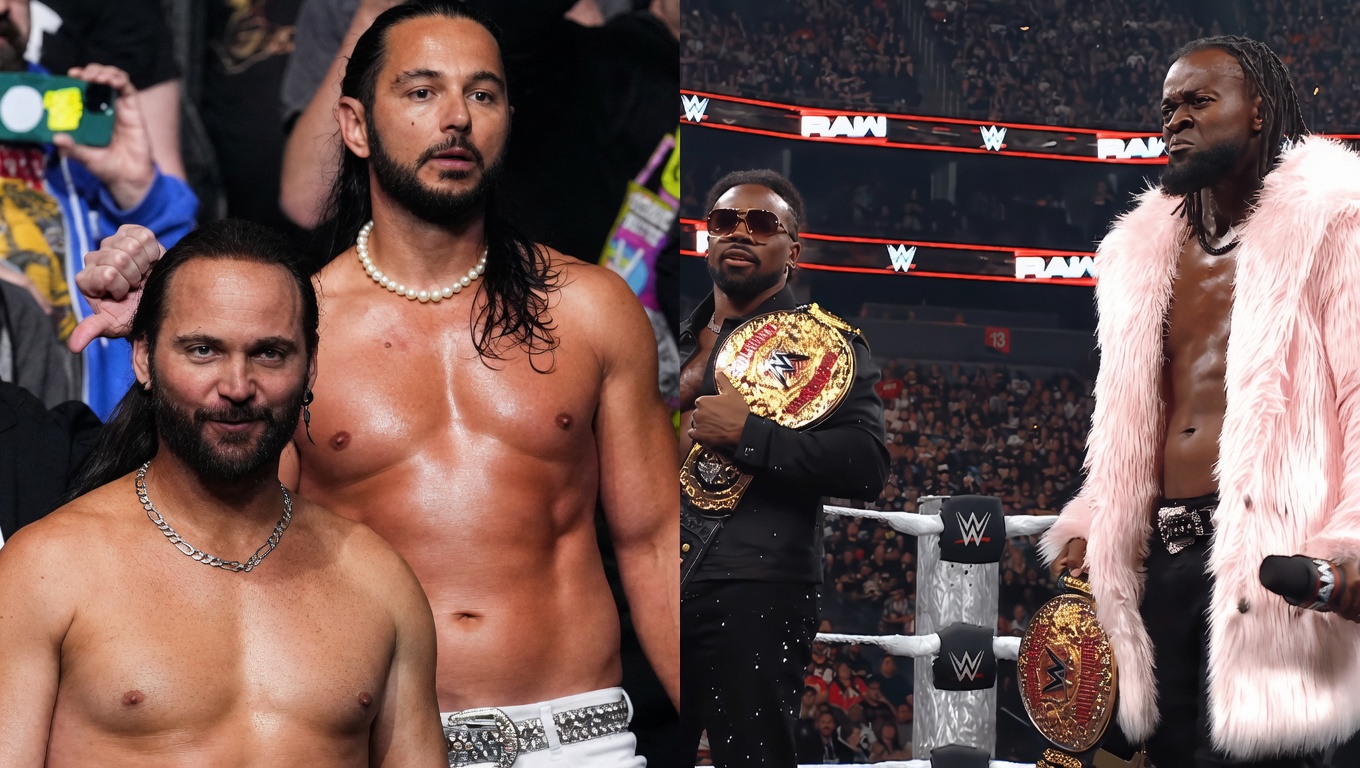
In the high-stakes world of professional wrestling, the “dream match” often remains a fantasy—a theoretical clash of styles and personalities that fans debate in forums but rarely see materialize. However, a recent revelation from Matt Jackson has pulled back the curtain on one such near-miss, revealing that the Young Bucks and Kenny Omega actively attempted to orchestrate a cross-promotional showdown with WWE’s The New Day back in 2018.
At the time, the landscape of the industry was starkly divided. The Young Bucks (Matt and Nick Jackson) and Kenny Omega were the vanguard of a global movement centered around New Japan Pro-Wrestling (NJPW) and Ring of Honor (ROH), operating under the banner of The Elite. Conversely, The New Day—comprising Kofi Kingston, Xavier Woods, and Big E—were the gold standard of the tag team division within World Wrestling Entertainment (WWE). The prospect of these two factions colliding represented more than just a match. it was a potential bridge between two entirely different philosophies of professional wrestling.
According to Matt Jackson, the desire to make this encounter happen was so strong that the group took the bold step of reaching out directly to WWE’s Paul “Triple H” Levesque. As the primary architect of WWE’s talent relations and creative direction during that era, Triple H served as the ultimate gatekeeper for any external collaborations. The attempt to secure the match highlights the ambition of The Elite during their ascent and the rigid corporate boundaries that defined the industry prior to the current era of “Forbidden Door” collaborations.
The Ambition of The Elite in 2018
To understand why a match between The Elite and The New Day was so coveted, one must look at the cultural momentum of both groups in 2018. The Young Bucks and Kenny Omega had successfully leveraged social media and independent circuits to build a global brand that existed independently of the traditional wrestling promotional machine. They were the driving force behind the Bullet Club’s dominance in New Japan Pro-Wrestling, blending high-flying athleticism with a modern, self-aware presentation that resonated with a younger, internet-savvy audience.
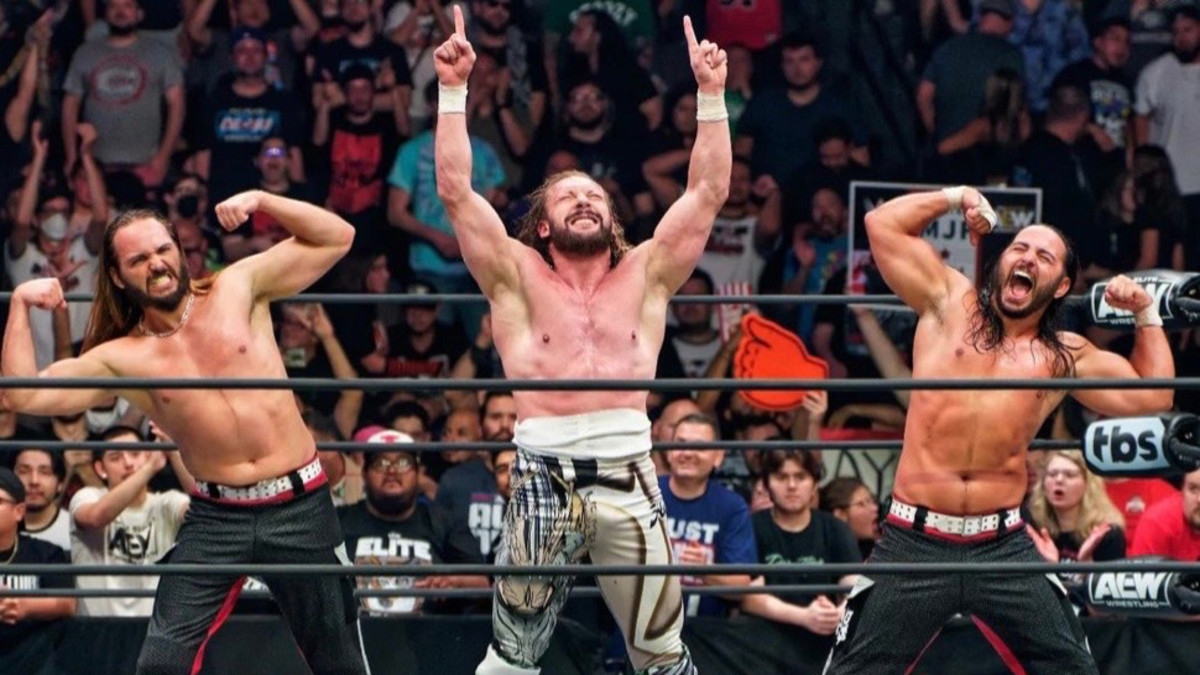
Simultaneously, The New Day had evolved from a comedic act into one of the most decorated and respected trios in WWE history. Their charisma and innovative tag team chemistry made them the perfect counterparts to the Young Bucks. For fans, a match between the two groups would have been a clash of the “indie” spirit versus the “corporate” machine, potentially validating the global reach of the independent style on the biggest stage in the world.
The decision to call Triple H was a significant gamble. In 2018, WWE rarely collaborated with other major promotions, especially those with which it had a competitive or strained relationship. The act of reaching out directly was an attempt to bypass traditional bureaucratic hurdles and appeal to the creative instincts of a man who had once spent time on the independent circuit himself.
The Corporate Wall: Why the Match Never Happened
Despite the enthusiasm from the talent involved, the match never materialized. This failure to launch can be attributed to the “walled garden” approach WWE employed for decades. During this period, WWE operated as a closed ecosystem, focusing on the development and promotion of its own contracted talent while viewing external partnerships as unnecessary risks or potential threats to its brand exclusivity.
The logistical hurdles were equally daunting. The Young Bucks and Kenny Omega were under contract with NJPW and ROH, companies that had their own set of priorities and protective instincts regarding their top stars. For a match to occur, three separate corporate entities—WWE, NJPW, and ROH—would have needed to align their interests, synchronize their schedules, and agree on how the participants would be presented. In the climate of 2018, such a tripartite agreement was nearly impossible.
the power dynamic was heavily skewed. While The Elite were superstars in the eyes of the global wrestling community, WWE held the keys to the largest platform in the industry. Any collaboration would have been on WWE’s terms, which often meant the external talent would have to adhere to strict creative guidelines that might have clashed with the Young Bucks’ established personas.
From Closed Doors to the Forbidden Door Era
While the 2018 attempt ended in silence, the spirit of that ambition eventually bore fruit. The frustration of operating within limited boundaries contributed to the eventual formation of All Elite Wrestling (AEW) in 2019. By creating their own promotion, the Young Bucks and Kenny Omega were no longer asking for permission to innovate; they were the ones granting it.
The “Forbidden Door” concept—the idea that wrestlers from different promotions should be able to compete against one another—became a cornerstone of the AEW era. This shift in philosophy has led to historic collaborations between AEW and NJPW, as well as occasional appearances from talent across the global spectrum. The industry has moved away from the rigid isolationism of the 2010s toward a more fluid, talent-driven model that prioritizes the “dream match” over corporate exclusivity.
The revelation of the phone call to Triple H serves as a historical marker. It shows that the desire for a more open wrestling ecosystem existed long before the infrastructure was in place to support it. The Young Bucks weren’t just trying to book a match; they were attempting to challenge the status quo of the industry’s most powerful company.
The Legacy of The New Day and The Elite
Regardless of whether they ever shared a ring, both The New Day and The Elite left an indelible mark on the sport. The New Day proved that positivity and character-driven storytelling could coexist with elite-level athletic performance, breaking barriers for Black athletes in the WWE main event scene. Kofi Kingston’s historic WrestleMania victory in 2019 remains a testament to the group’s enduring popularity and the fans’ desire to see them rewarded.
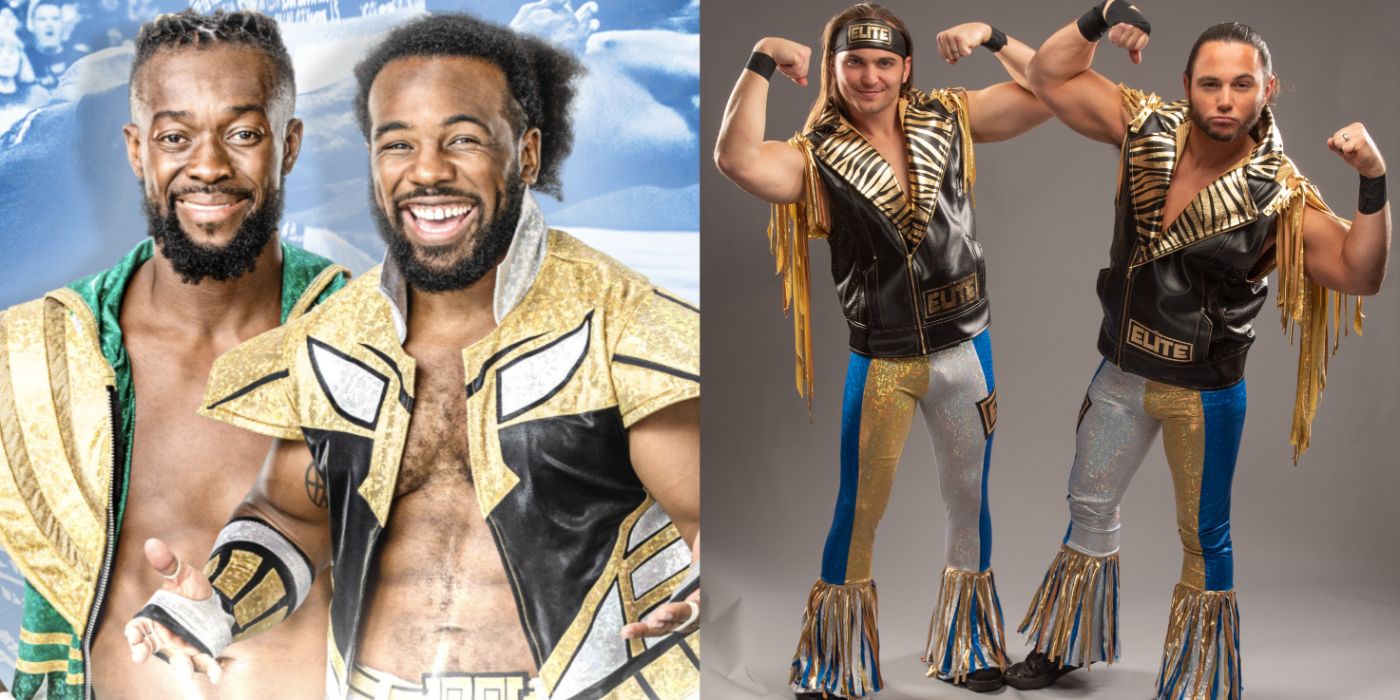
The Elite, meanwhile, changed the way wrestlers market themselves. By utilizing YouTube and social media to build a direct relationship with their audience, they proved that a performer’s value is not solely determined by the promotion they work for. Their success paved the way for the current landscape where talent has more leverage and mobility than ever before.
The irony of Matt Jackson’s revelation is that in today’s wrestling climate, such a match would be far more plausible. With the shifting alliances of the 2020s and the increasing willingness of promotions to engage in “special attraction” bouts, the gap that seemed impassable in 2018 has narrowed significantly.
As the industry continues to evolve, the story of the 2018 phone call remains a poignant reminder of the gap between creative ambition and corporate reality. It underscores the persistence required to change an industry and the lasting impact of those willing to make the call, even when the odds of a “yes” are slim.
The next major checkpoint for the professional wrestling landscape will be the upcoming summer event schedule, where further cross-promotional developments are often announced. We will continue to monitor any official updates regarding talent movements or new partnership agreements between major organizations.
Do you think a match between The Elite and The New Day would still work today, or was the magic in the 2018 hype? Let us know your thoughts in the comments below and share this story with your fellow wrestling fans.
Related reading