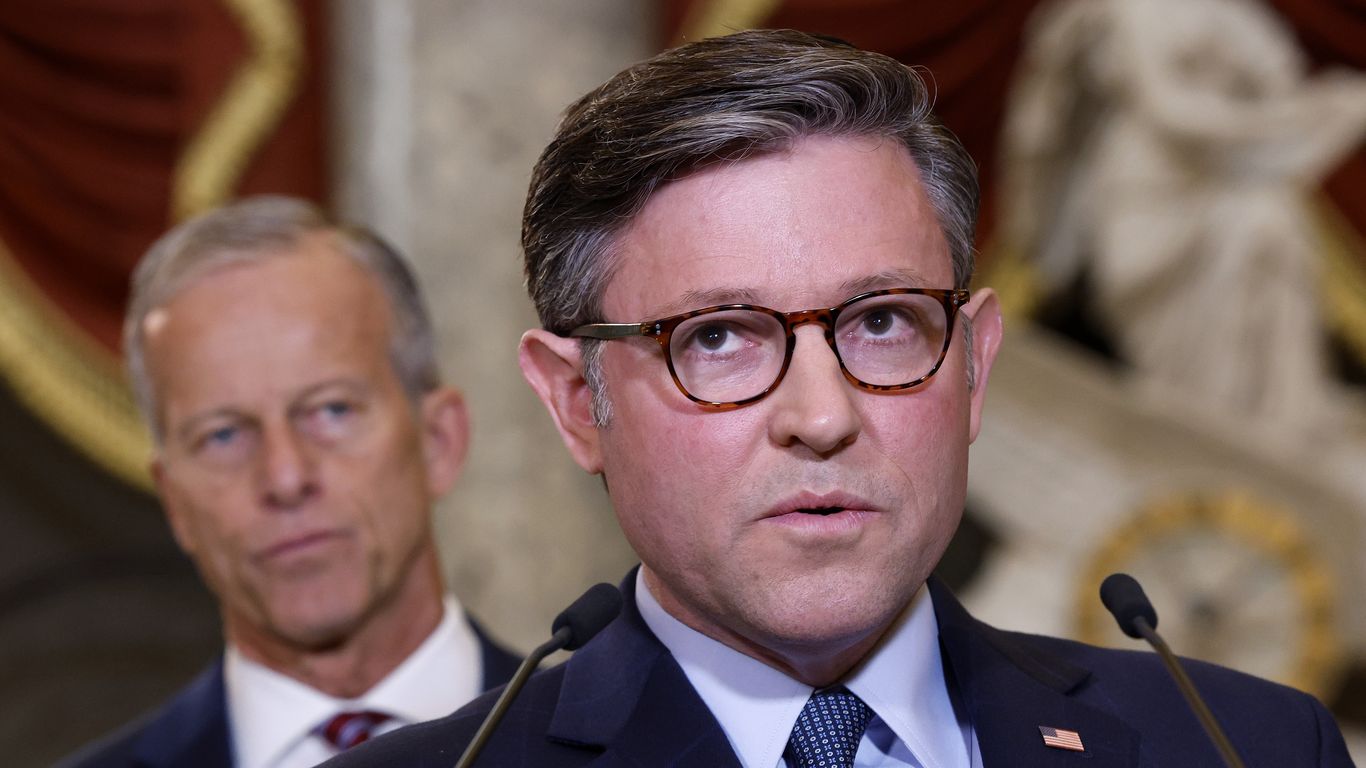
House Speaker Mike Johnson (R-La.) is stepping into a political minefield this Tuesday, as he prepares to address Senate Republicans during their weekly lunch in an urgent attempt to bridge a widening divide within the GOP. The visit, marking Johnson’s first appearance at the Senate GOP lunch this year, comes at a moment of acute intra-party friction, with the House and Senate wings of the party clashing over nearly every major legislative priority despite their joint control of Congress and the White House.
The stakes for this meeting are exceptionally high. With a self-imposed June 1 deadline looming for the passage of a second reconciliation package focused on border funding, the Republican leadership is struggling to present a unified front. The current atmosphere is defined by a deepening mistrust: House conservatives increasingly view the Senate as the primary obstacle to their agenda, while Senate Republicans have dismissed the demands emanating from the House as unrealistic.
From my perspective as an economist and journalist, This represents more than a simple disagreement over policy; it is a systemic failure of communication that threatens the stability of the current legislative session. When the two chambers of the same party cannot agree on the basic mechanics of funding—specifically regarding the Department of Homeland Security (DHS) and border enforcement—the result is a legislative paralysis that markets and government agencies watch with growing concern.
The Funding Fracture: DHS and the ‘Two-Track’ Strategy
At the heart of the current standoff is a bitter dispute over how to fund the nation’s border security apparatus. The friction peaked recently when the House passed the Senate’s Department of Homeland Security (DHS) funding legislation just before the recess. In a move that highlighted the volatility of the relationship, Speaker Johnson had previously characterized the very bill he eventually pushed through the House as a “joke.”
The conflict stems from the Senate’s adoption of a “two-track strategy.” Under this approach, the Senate funded general DHS operations while postponing additional funding for Immigration and Customs Enforcement (ICE) and the Border Patrol, pushing those specific allocations into future reconciliation packages. House conservatives revolted against this delay, viewing it as a betrayal of the party’s core commitment to immediate border enforcement.
This strategic disagreement led to open clashes between Speaker Johnson and Senate leadership, specifically Senator John Thune, as Johnson sought to implement changes to the strategy last month. The fallout has left many House Republicans feeling that the Senate is intentionally stalling on critical security measures, further deepening the rift that Johnson now hopes to heal.
The FISA Standoff and the Crypto Conflict
Beyond border funding, a second major flashpoint has emerged over the long-term extension of Section 702 of the Foreign Intelligence Surveillance Act (FISA). This warrantless surveillance program, critical for national security but controversial for civil liberties, has already seen two short-term extensions because Congress cannot agree on a permanent solution.
The House has passed a three-year extension, but they have paired it with a provocative policy rider: a total ban on a Federal Reserve-backed digital currency. This addition has turned a national security bill into a battleground for economic policy. While House conservatives insist that the crypto provision remain attached and are pushing for stricter warrant requirements, Senate Republicans have expressed strong opposition to the digital currency ban.
This impasse reflects a broader ideological struggle within the GOP. House members are leveraging essential security renewals to force through broader policy shifts, a tactic that Senate Republicans find counterproductive. The result is a legislative deadlock on one of the most sensitive tools in the U.S. Intelligence arsenal.
The SAVE Act and the Filibuster Battle
Adding to the tension is the struggle over the SAVE Act, a signature election bill for House Republicans. The House has spent months blasting its Senate counterparts for refusing to eliminate the filibuster to advance the legislation. The filibuster, which typically requires a 60-vote threshold to end debate in the Senate, has acted as a firewall against the House’s election-related priorities.

The frustration in the House has become visceral. Representative Lauren Boebert (R-Colo.) underscored the depth of the animosity late last month during FISA disagreements, stating, “I hate the Senate,” and adding, “Notice like two and a half solid senators.” Such rhetoric illustrates the collapse of the traditional “team” mentality that usually accompanies a trifecta of control over the House, Senate, and Presidency.
Fiscal Volatility: Reconciliation and the ‘Ballroom’ Controversy
As the party gears up for reconciliation packages 2.0 and 3.0—a process that allows certain spending bills to pass the Senate with a simple majority—new financial controversies are emerging. The most recent involves a proposed $1 billion in security funding earmarked for the new ballroom associated with President Trump. This specific allocation has already encountered resistance from moderate Senate Republicans who are concerned about the optics of the spending.
Democrats are already preparing to weaponize this vote, framing the $1 billion ballroom expenditure as a stark “affordability contrast” to the needs of the general public. For Speaker Johnson, this creates a delicate balancing act: he must support the President’s priorities while ensuring the funding packages don’t alienate the moderates needed to pass the broader reconciliation goals by the June 1 deadline.
To address these specific security concerns, U.S. Secret Service Director Sean Curran will join the Tuesday lunch. His presence is intended to provide a professional assessment of the need for security enhancements, though the political battle over the cost is likely to persist regardless of the technical justification.
Key Points of Contention
- Border Funding: Dispute over the “two-track strategy” that delayed ICE and Border Patrol money.
- FISA Section 702: Clash over a proposed ban on a Federal Reserve-backed digital currency attached to surveillance extensions.
- The SAVE Act: House frustration over the Senate’s refusal to waive the filibuster for election legislation.
- Presidential Security: Controversy over $1 billion in funding for security enhancements at the new ballroom.
- Timeline: A high-stakes push to finalize reconciliation packages by June 1.
What This Means for Global Markets and Policy
When the legislative branch of the world’s largest economy is this fractured, the primary casualty is predictability. From an economic policy standpoint, the inability to pass long-term funding for DHS or resolve the FISA impasse creates a vacuum of leadership that can lead to abrupt, short-term “stop-gap” measures rather than strategic planning.
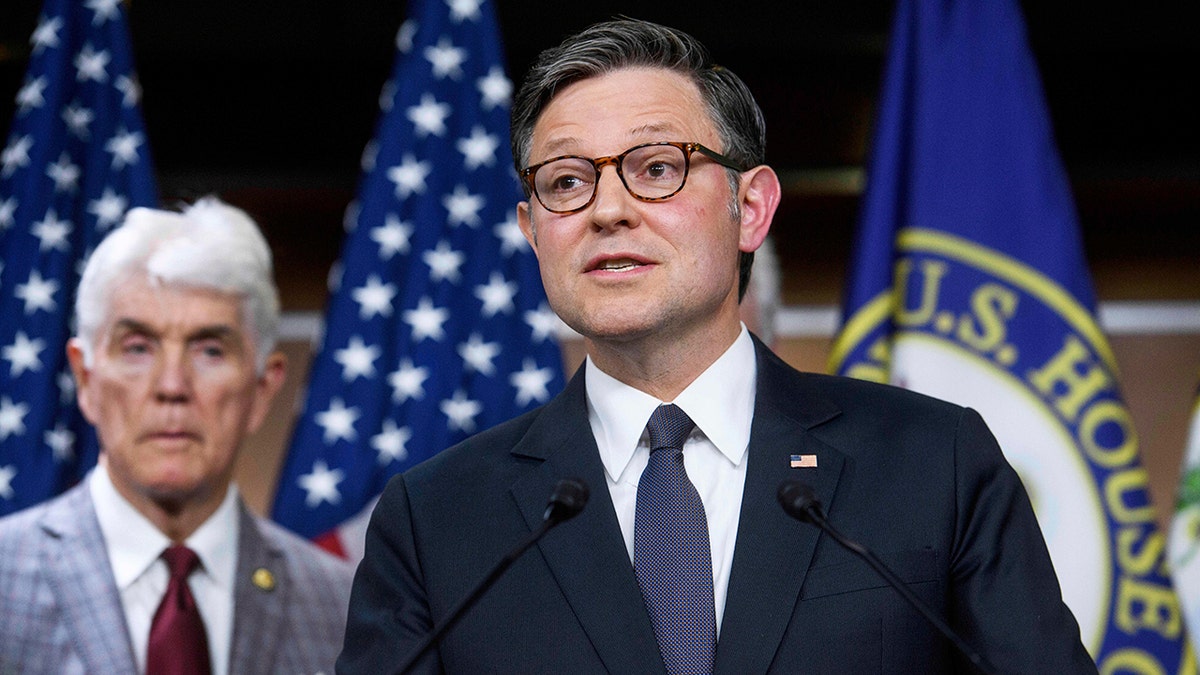
The friction between House conservatives and Senate Republicans suggests that the GOP is currently a coalition of two different parties: one driven by a populist, disruptive impulse and another focused on institutional stability and moderate viability. Speaker Johnson’s ability to synthesize these two forces will determine whether the administration can actually implement its agenda or if it will remain trapped in a cycle of internal standoffs.
The Tuesday lunch is not merely a social engagement; it is a critical test of Johnson’s leadership. If he cannot convince the Senate Republicans to move on the SAVE Act or find a compromise on the FISA crypto ban, the “unity” he seeks to emphasize may remain purely rhetorical.
The next critical checkpoint will be the June 1 deadline for the second reconciliation package. Whether the GOP arrives at that date as a unified force or a fractured one will depend heavily on the outcomes of this week’s diplomatic efforts.
Do you believe the current friction within the GOP is a sign of healthy debate or a systemic failure of leadership? Share your thoughts in the comments below or share this analysis with your network.
Related reading