
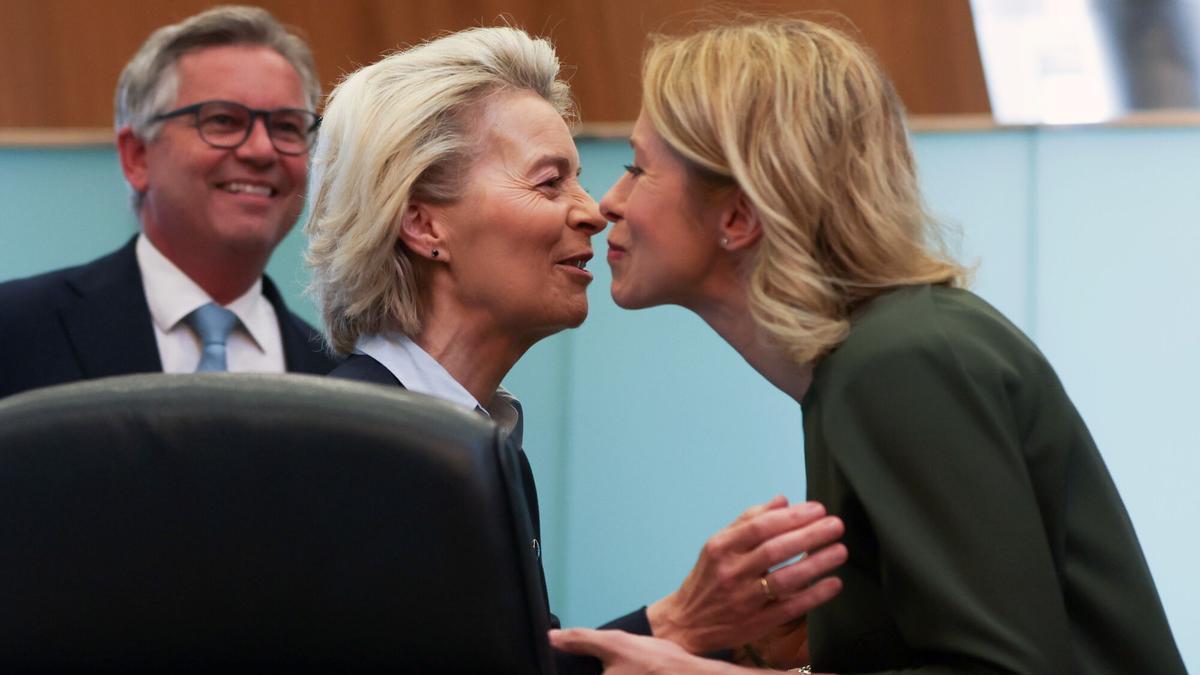
European Commission President Ursula von der Leyen and incoming European Union foreign policy chief Kaja Kallas are navigating internal friction regarding the bloc’s diplomatic approach toward Israel. The divergence in strategy centers on the management of EU-Israel relations amid the ongoing conflict in Gaza, with different commissioners pursuing varied channels of communication with Israeli officials.
The tension surfaced following recent diplomatic engagements by Dubravka Šuica, the European Commissioner for the Mediterranean. Reports indicate that Šuica held discussions with Israeli Foreign Minister Gideon Sa’ar, a move that occurred shortly after public friction between EU leadership and Israeli diplomatic representatives, according to reporting by Politico Europe. This development highlights a broader challenge for the incoming European Commission: maintaining a unified front on Middle East policy while individual commissioners maintain autonomous diplomatic portfolios.
Policy Divergence Within the Commission
The European Union has struggled to project a singular voice on the conflict in the Middle East since the October 7, 2023, attacks by Hamas and the subsequent Israeli military campaign in Gaza. While the EU officially advocates for a two-state solution and adherence to international humanitarian law, individual member states and commissioners often prioritize different diplomatic levers, as noted by the European External Action Service (EEAS).
Kaja Kallas, who is set to succeed Josep Borrell as the High Representative for Foreign Affairs and Security Policy, has signaled a desire for a more cohesive foreign policy approach. However, the presence of specific portfolios, such as the Mediterranean remit, creates structural complexities. When commissioners engage directly with foreign counterparts like Minister Sa’ar, it can complicate the messaging managed by the High Representative’s office. The European Commission functions under a principle of collegiality, yet the practical application of foreign policy remains susceptible to these departmental overlaps, according to analysis from the Council of the European Union.
The Role of the Mediterranean Portfolio
The creation of the Mediterranean portfolio was intended to streamline the EU’s engagement with its southern neighbors. However, the portfolio’s mandate inherently involves Israel, a country that maintains significant economic and security ties with the bloc. Critics within the European Parliament have previously raised concerns about potential policy fragmentation, arguing that a lack of coordination undermines the EU’s influence in regional peace negotiations.
The recent meeting between Commissioner Šuica and Minister Sa’ar serves as a case study in these internal dynamics. While the Commission maintains that such meetings are necessary to address trade, migration, and regional stability, observers note that these interactions can be perceived by external actors as a signal of shifting priorities. The European Commission’s official structure underscores the independence of individual commissioners, yet the treaty-based requirement for a unified external policy remains a point of contention.
What Happens Next
The scrutiny on EU-Israel relations is expected to intensify as Kallas formally assumes her post and begins establishing her working relationships with the various commissioners. The primary checkpoint for this policy alignment will be the upcoming Foreign Affairs Council meetings, where ministers from the 27 member states will look for a clearer articulation of the bloc’s stance on the humanitarian situation in Gaza and the broader regional security architecture.

Additionally, the European Parliament is slated to hold further sessions to review the Commission’s implementation of its regional strategies. Stakeholders and observers are advised to monitor the European Parliament’s Committee on Foreign Affairs (AFET) for upcoming reports and official statements regarding the Commission’s diplomatic conduct. As the situation evolves, the effectiveness of the new leadership team in managing these internal pulses will be a key indicator of the EU’s future geopolitical standing.
We welcome your insights on these developments. Please share your thoughts or continue the conversation in the comments section below.