
Humanity is returning to the vicinity of the Moon as the Artemis II moon flyby marks a pivotal moment in deep space exploration. A crew of four astronauts is currently venturing around the lunar surface inside the Orion spacecraft, testing critical systems in a deep space environment for the first time with humans aboard.
This mission represents the first crewed flight of the Artemis program, designed to pave the way for future landings on the lunar surface. Unlike the Apollo missions of the previous century, this journey utilizes a higher and wider vantage point, allowing the crew to directly examine lunar features from a perspective previously unseen by human eyes.
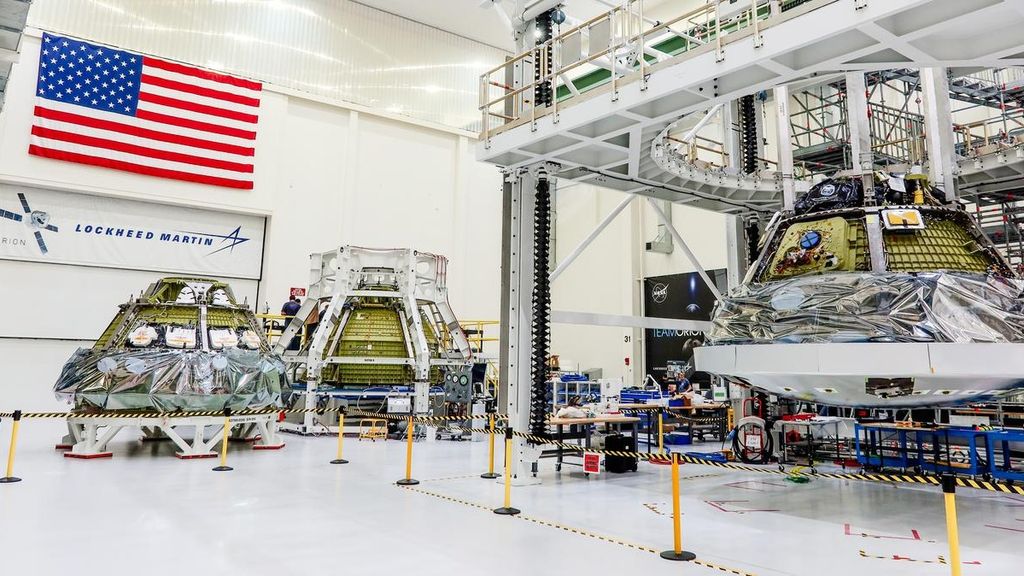
The Orion spacecraft, built by Lockheed Martin, serves as the centerpiece of this endeavor. It is currently the only human-rated spacecraft capable of transporting astronauts beyond low-Earth orbit and ensuring their safe return to Earth according to Lockheed Martin.
The approximately 10-day mission is focused on operational testing, ensuring that the spacecraft’s life-support, propulsion, and avionics systems function as designed although the crew navigates the harsh conditions of deep space.
Tracking the Orion Spacecraft in Real Time
NASA has provided the global public with unprecedented access to the mission’s progress. Through the Artemis Real-time Orbit Website (AROW), anyone with internet access can track the Orion spacecraft’s position, its distance from Earth, and its distance from the Moon via NASA’s official tracking portal.
Data collected by sensors on Orion is transmitted to the Mission Control Center at NASA’s Johnson Space Center in Houston. This real-time stream allows the public to visualize the spacecraft’s path from approximately one minute after liftoff through its eventual atmospheric reentry.
For those using mobile devices, the NASA app offers an augmented reality tracker. After a brief calibration, the app directs users to move their phones to observe exactly where Orion is positioned relative to their current location on Earth.
Key Mission Monitoring Tools
- AROW Website: Provides distance metrics, mission duration, and orbital paths.
- NASA App: Includes augmented reality features for real-time positioning.
- Lunar Data: Users can view key mission milestones and information regarding Apollo program landing sites.
Engineering the Return to Deep Space
The Orion spacecraft is the result of decades of engineering and lessons learned from previous human spaceflight programs. To ensure crew safety during the Artemis II moon flyby, the vehicle is equipped with extensive redundancies, including five independent flight computers and redundant power and life-support systems as detailed by the manufacturer.
One of the most challenging aspects of the mission is the return journey. Orion is engineered to survive the extreme heat of atmospheric reentry, where temperatures can reach 5,000°F. This thermal protection is critical for bringing the four astronauts safely back to Earth after their journey around the Moon.
The spacecraft’s propulsion system is equally complex, utilizing a layered approach of engines, and thrusters. These systems are responsible for everything from launch abort protection and orbital maneuvers to the precise lunar flyby and the final trajectory home.
Comparing Artemis II to the Apollo Era
While the Apollo missions successfully landed humans on the Moon and provided the first views of the lunar far side, Artemis II is utilizing a different operational approach. By observing the Moon from a higher and wider vantage point, NASA is enabling the crew to examine lunar features and the lunar environment with a broader perspective.
This mission is not intended for a landing, but rather as a critical “test flight” for the human-rated systems of the Orion spacecraft. The success of this 10-day mission is essential for validating the technology that will eventually support long-duration stays on the lunar surface.
| Feature | Detail |
|---|---|
| Spacecraft | Orion (Built by Lockheed Martin) |
| Crew Size | 4 Astronauts |
| Mission Duration | Approximately 10 days |
| Primary Goal | Test spacecraft systems with crew in deep space |
| Tracking Tool | Artemis Real-time Orbit Website (AROW) |
The next confirmed checkpoint for the mission is the spacecraft’s atmospheric reentry to Earth, which will mark the conclusion of the Artemis II flight. We invite you to share your thoughts on this milestone in the comments below and share this update with fellow space enthusiasts.