
The Spirit of May 17: How Foreign Residents Experience Norway’s National Day
For those living in Norway, May 17 is not merely a date on the calendar; it is a visceral explosion of color, music and national pride. Known as Constitution Day, the celebrations transform every town and city into a sea of red, white, and blue, as thousands of citizens gather to honor the foundations of their democracy. For the native-born, it is a tradition woven into the fabric of childhood. For the foreign resident, however, the experience is often a complex journey of observation, invitation, and eventual belonging.
The atmosphere of the day is defined by its inclusivity and its intensity. From the rhythmic beat of marching bands to the sight of parks blooming with flowers in the national colors, the festivities are designed to be a public manifestation of unity. Yet, for those who have moved to Norway from other corners of the globe, participating in such a concentrated expression of patriotism can evoke a wide range of emotions, ranging from sheer exhilaration to a sense of being a spectator in someone else’s story.
Understanding the perspective of foreign residents provides a window into how Norway manages its national identity in an increasingly globalized era. While the day is rooted in a specific historical moment from the early 19th century, the way it is celebrated today reflects a modern society grappling with the balance between preserving heritage and welcoming newcomers.
The Historical Foundation of Constitution Day
To understand why May 17 carries such weight, one must look back to the events of 1814. The Norwegian Constitution was adopted by the Constituent Assembly at Eidsvoll on May 16, 1814, and officially signed the following day. This document was not merely a legal framework but a declaration of independence and a commitment to a new social order.
The constitution was founded on three pillar principles: the sovereignty of the people, the separation of powers, and the protection of human rights. These ideals were revolutionary for their time and continue to serve as the bedrock of the Norwegian state. By celebrating the signing of the document, Norwegians are not just celebrating a piece of paper, but the enduring values of democracy and individual liberty. For more detailed information on the legal evolution of the state, the Government of Norway provides official records of the constitutional framework.
This historical weight is what makes the day so significant. The parades and processions are a living tribute to the assembly at Eidsvoll, ensuring that the principles of 1814 remain visible and relevant to every generation, including those who arrive in the country long after the ink has dried.
A Visual Spectacle of Patriotism
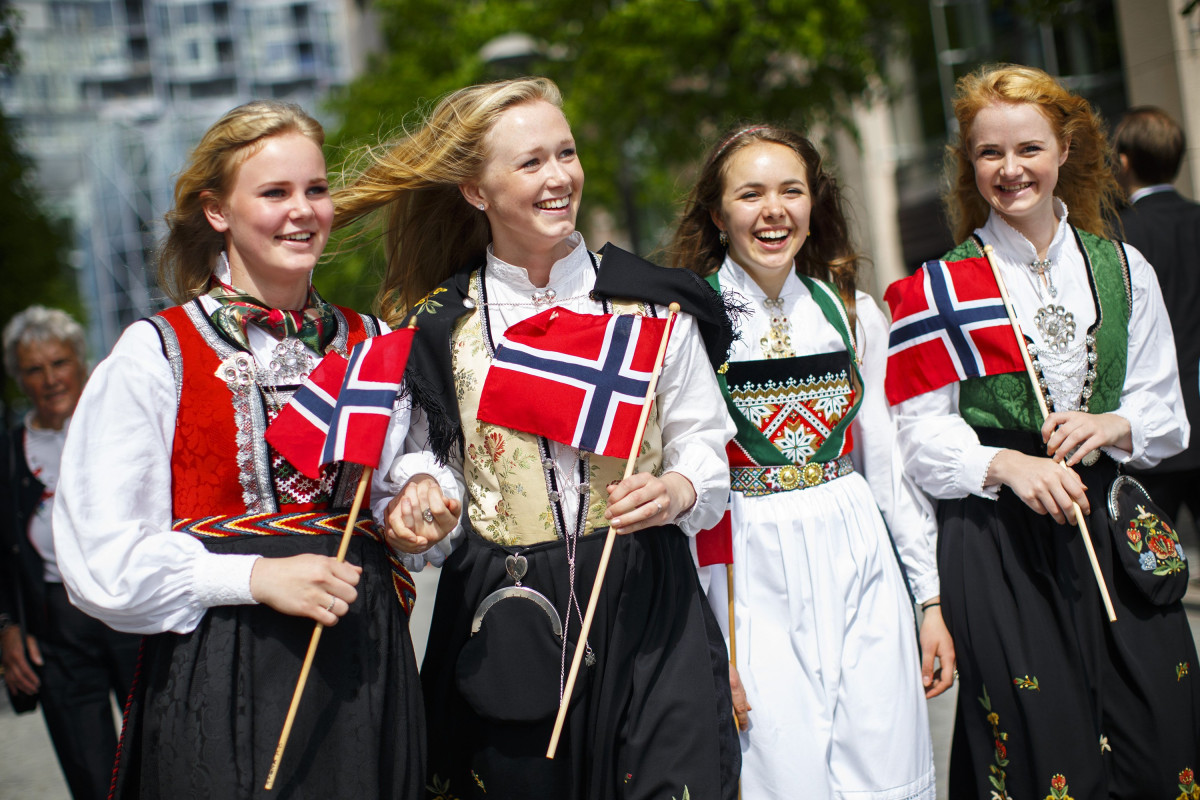
The physical manifestation of National Day is characterized by its sheer scale. Huge parades take over the streets, led by marching bands that guide celebratory processions through communities across the country. The visual landscape is dominated by the Norwegian flag, waved enthusiastically by crowds and used to decorate everything from balconies to public parks.
For many foreign residents, the first encounter with May 17 is an overwhelming sensory experience. The sound of brass instruments echoing through narrow streets and the sight of thousands of people dressed in their finest attire—often including the traditional bunad—creates an environment of collective joy. This public display of patriotism is distinct from the more political or militaristic national days seen in other parts of the world; in Norway, the focus remains heavily on children, community, and the celebration of civic values.
However, this intensity can also be daunting. For some, the sheer volume of national symbolism can make the day feel exclusive, creating a psychological barrier for those who do not feel they have a “claim” to the history being celebrated. The challenge for the foreign resident is often deciding whether to remain a passive observer or to actively engage with the festivities.
Integration and Identity: The Foreigner’s Perspective
The question of how foreign residents feel about these celebrations reveals a fascinating split in experience. Recent data indicates that a significant portion of the international community embraces the day wholeheartedly. In a survey of foreign residents, some 50 percent of respondents described the National Day celebrations as “fantastic.”
For these individuals, May 17 serves as a bridge to integration. By participating in the parades or waving the flag, they find a way to signal their respect for their adopted home and their desire to be part of the community. The joy of the day often overrides the feeling of being an outsider, as the celebratory mood creates a shared space where the common denominator is a love for the place they currently live.
Conversely, the day can be a reminder of the gap between residency, and belonging. For some, the expression of patriotism is hard to “get into,” especially if they have not yet found a deep personal connection to the historical events of 1814. The feeling of being a guest at a party where everyone else knows the songs can be a poignant reminder of their status as foreigners.
Despite these differences, the prevailing trend suggests that May 17 is increasingly viewed as an opportunity for cross-cultural connection. As Norway continues to welcome a diverse population, the National Day is evolving from a celebration of ethnic heritage into a celebration of shared civic values. When a foreign resident says they are “proud to live here” during the festivities, they are often referring to the stability, the human rights, and the democratic peace that the constitution helped establish.
Key Takeaways on May 17 for Foreign Residents
- High Approval: Approximately 50 percent of surveyed foreign residents view the celebrations as fantastic.
- Core Values: The day celebrates the 1814 Constitution, focusing on human rights, separation of powers, and popular sovereignty.
- Cultural Bridge: For many, participating in the parades and festivities is a key step in feeling integrated into Norwegian society.
- Emotional Range: Feelings vary from deep connection and pride to a sense of detachment or difficulty in relating to the patriotic intensity.
As the celebrations continue to evolve, the focus remains on the inclusive nature of the holiday. While the roots are historical, the branches of the celebration now extend to anyone who calls Norway home, regardless of where they were born.
The next major milestone for the country’s civic calendar will be the upcoming local administrative reviews and public consultations scheduled for the latter half of the year, which will further shape the community-led celebrations of future National Days.
We want to hear from you. If you are a foreign resident in Norway, how do you feel during the May 17 celebrations? Do you feel like a part of the festivities, or do you prefer to observe from the sidelines? Share your experiences in the comments below.
Keep reading