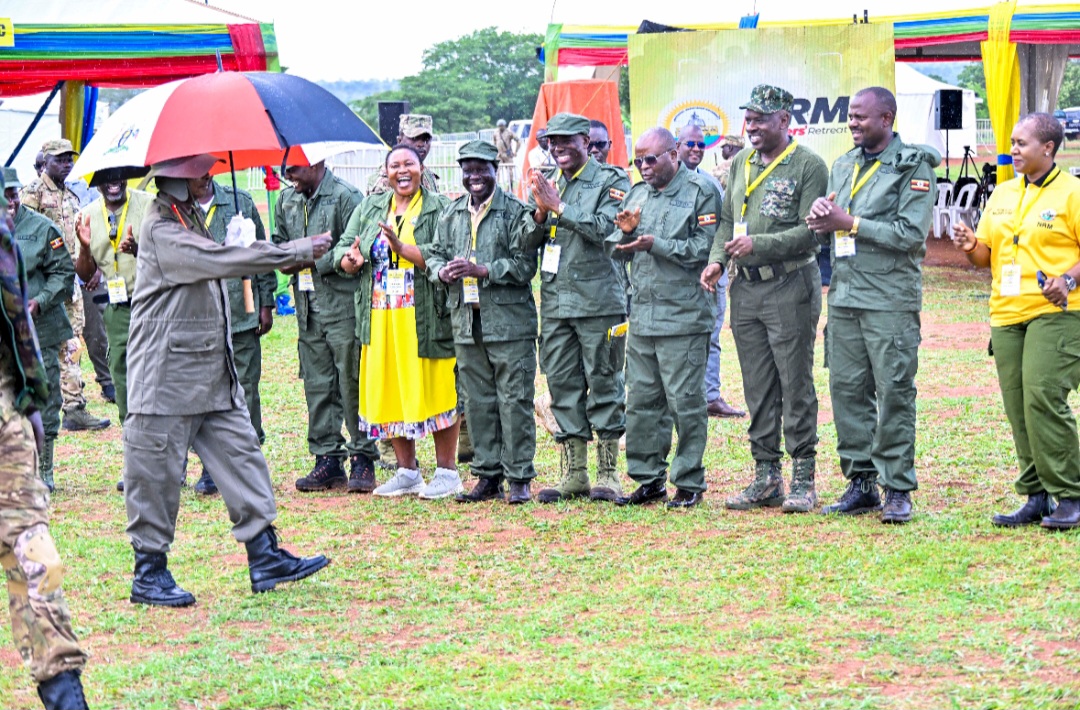
President Yoweri Kaguta Museveni has launched a strategic ideological campaign for Uganda’s legislative leadership, opening a week-long retreat for newly elected National Resistance Movement (NRM) Members of Parliament and party-leaning independents. The gathering, held at the National Leadership Institute (NALI) in Kyankwanzi, serves as a critical orientation for legislators entering the 12th Parliament, with a primary focus on rooting out corruption and synchronizing party ideology.
The retreat, which officially commenced on April 8, 2026, is themed “Aligning the NRM leadership towards protecting the gains and making a bold, qualitative leap towards a higher middle-income status society.” This initiative underscores the administration’s push to transition Uganda’s economy through disciplined leadership and a strict adherence to the party’s foundational principles.
Today, I officially opened the Leaders’ Retreat for the newly elected NRM MPs …
— Yoweri K Museveni (@KagutaMuseveni) April 8, 2026
Upon his arrival in Kyankwanzi, President Museveni was received by a high-level delegation including Vice President Jessica Alupo, Deputy Speaker Thomas Tayebwa, and NRM Secretary General Richard Todwong, alongside members of the Central Executive Committee. The event marks a pivotal moment for the NRM as it seeks to ensure that its parliamentary bloc operates with a unified strategic vision.
A ‘Seminary’ for Political Ideology
During his keynote address, President Museveni described the retreat as a political “seminary,” emphasizing that the transition from a party follower to a party leader requires a deeper intellectual commitment. He argued that even as followers may support the movement superficially, leaders must possess a comprehensive understanding of the party’s ideology, philosophy, and strategy to effectively govern.

The President broke down these three components to provide a framework for effective leadership:
- Ideology: The process of diagnosing societal problems, which he likened to a doctor identifying a patient’s illness.
- Philosophy: The study and understanding of human motivations and behaviors.
- Strategy: The practical application of the right methods to solve the diagnosed challenges.
This ideological grounding is tied to the NRM’s four core pillars: patriotism, Pan-Africanism, socio-economic transformation, and democracy. Museveni positioned these pillars as the roadmap for Africa’s broader historical mission to achieve strategic security, brotherhood, and widespread prosperity.
The War on Corruption and the PDM
A central theme of the President Museveni NRM MPs retreat was the uncompromising stance against corruption. The President warned that the mismanagement of public funds poses a direct threat to government programs, specifically highlighting the Parish Development Model (PDM). He stated that corruption not only wastes essential resources but also sets a damaging example for the citizenry, asserting that such behavior will not be tolerated.
The discussion on corruption extended to the health sector. Justine Nameere, the newly elected Women MP for Masaka City, raised concerns regarding the disappearance of essential medicines from regional referral hospitals. In response, President Museveni affirmed that the theft of drugs in government hospitals would be tackled with extreme seriousness.
To illustrate the path to prosperity, the President shared a personal anecdote from 1965, recounting how 22 cows given to him by his father were multiplied into thousands through hard work and self-reliance. He used this example to argue that genuine prosperity comes from the production of goods and services rather than “begging or stealing.”
Economic Strategy and Continental Integration
President Museveni reaffirmed Uganda’s commitment to a private-sector-led growth model. He identified four key sectors as the primary drivers of wealth creation for the nation:
- Commercial agriculture
- Manufacturing
- Services
- Information and Communication Technology (ICT)
The President also cautioned legislators against “identity-based politics,” noting that divisions based on tribe or religion can restrict trade and hinder economic progress. Instead, he urged MPs to champion regional and continental integration. He specifically pointed to the East African Community (EAC) and the African Continental Free Trade Area (AfCFTA) as essential tools for strengthening Africa, arguing that fragmentation only breeds weakness.
Key Takeaways from the Kyankwanzi Retreat
| Focus Area | Key Objective | Target Outcome |
|---|---|---|
| Leadership | Move from “follower” to “leader” status | Ideological clarity and strategic competence |
| Anti-Corruption | Strict enforcement in PDM and Health sectors | Resource preservation and public trust |
| Economy | Private-sector-led growth (Agri, ICT, Mfg) | Higher middle-income status society |
| Integration | Support for EAC and AfCFTA | Continental unity and expanded markets |
The retreat also served as a moment of reflection. President Museveni paid tribute to fallen party leaders from Kikube and Abim, characterizing their deaths as significant setbacks for the movement.
The session was chaired by Vice President Jessica Alupo, who described the retreat as a long-awaited opportunity for the 12th Parliament’s legislators to receive direct guidance from the party chairman. Secretary General Richard Todwong added that the party would present detailed electoral results to the participants during the week.
The retreat is scheduled to continue throughout the week at the National Leadership Institute, focusing on accountability mechanisms, strategic planning, and intensive ideological training to ensure NRM legislators deliver on their mandate to the electorate.
The next phase of the retreat will involve detailed sessions on the implementation of the Parish Development Model and specific legislative agendas for the coming session of Parliament.
World Today Journal encourages readers to share their perspectives on the intersection of party ideology and national development in the comments below.
Keep reading