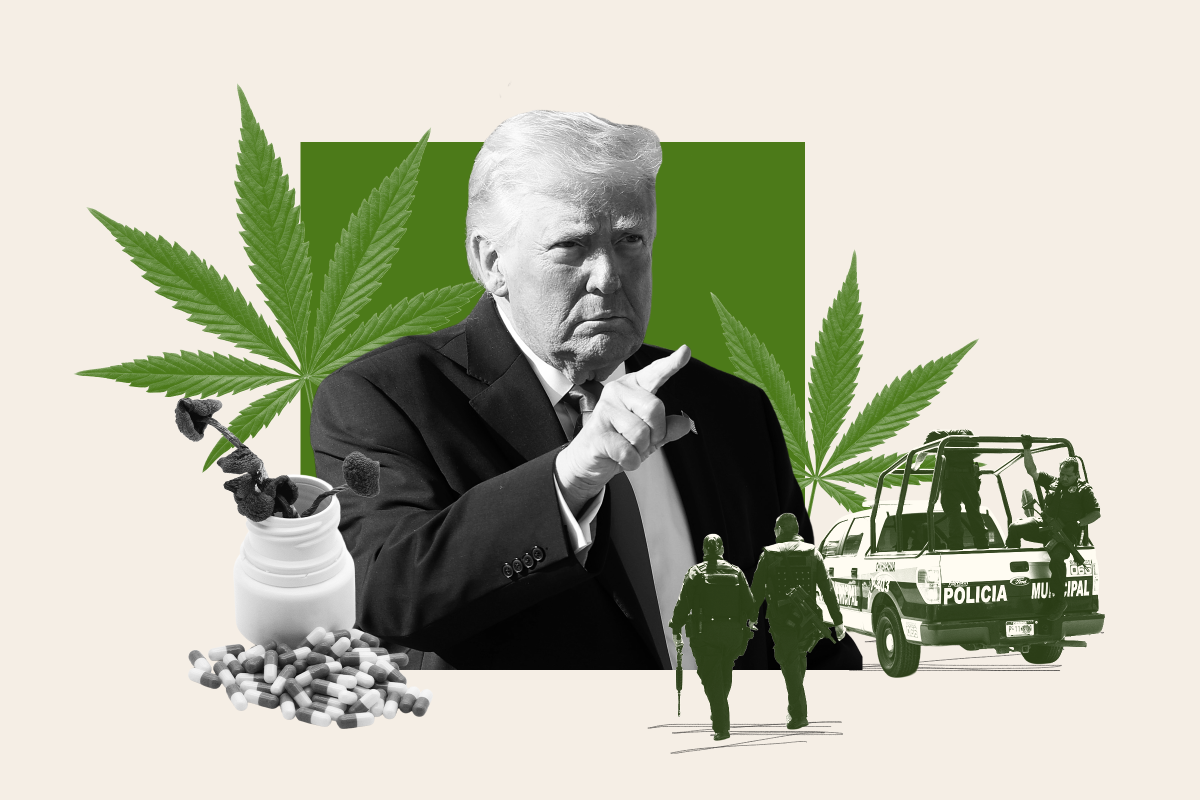
President Donald Trump has issued two significant executive actions in April 2026 that have drawn attention to his administration’s approach to drug policy: one accelerating research into psychedelic substances like psilocybin and MDMA, and another directing the reclassification of marijuana from Schedule I to Schedule III under the Controlled Substances Act. These moves come amid ongoing debate about federal drug enforcement priorities and have led some observers to question whether Trump is positioning himself as a reform-minded leader on substance policy.
The psychedelics executive order, signed on April 20, 2026, aims to speed up research, clinical trials, and “Right to Try” access for drugs such as psilocybin, MDMA, and ibogaine. According to CNBC reporting, the order does not change the legal status of these substances but reinforces a federal shift toward a medical, evidence-based framework for alternative medicines. Advocates attended a news conference outside the U.S. Capitol on April 20, 2026, highlighting the impact of incarcerating individuals charged with marijuana-related offenses and advocating for reform.
Just days later, on April 23, 2026, the Trump administration moved to reclassify marijuana, shifting it from Schedule I to Schedule III. This change, confirmed by multiple outlets including The Guardian and Deseret News, places cannabis in the same category as ketamine, anabolic steroids, and testosterone—substances recognized to have a lower potential for abuse than Schedule I drugs like heroin and LSD. The Department of Justice stated it would immediately move FDA-approved marijuana products and state-licensed medical marijuana items to Schedule III, enabling more targeted research and expanding patient access to treatments.
Despite these actions, Trump has simultaneously escalated certain aspects of federal drug enforcement. During the signing of the psychedelics order, he criticized federal officials for “slow-walking” the marijuana rescheduling process, suggesting frustration with bureaucratic delays. However, his administration has also increased funding for Drug Enforcement Administration (DEA) operations targeting illicit drug trafficking, particularly along the southern border, and has supported stricter penalties for fentanyl-related offenses in recent legislative proposals.
This dual approach—expanding access to certain substances for medical research while maintaining or increasing enforcement against others—reflects a broader pattern in Trump’s drug policy. His 2020 executive order on opioid crisis response emphasized both treatment access and law enforcement coordination, and his 2025 budget proposal included increased resources for both addiction treatment programs and DEA interdiction efforts.
Experts note that while the rescheduling of marijuana to Schedule III could reduce barriers to scientific study and allow doctors greater flexibility in recommending cannabis-based treatments, it does not constitute federal legalization. Possession, distribution, and use of marijuana remain illegal under federal law outside of strictly regulated research or state-approved medical programs. Similarly, the psychedelics order facilitates research but does not permit recreational use or bypass FDA approval processes for therapeutic applications.
The timing of these actions coincides with growing public support for drug policy reform. Polls cited in earlier reporting display majority approval for medical marijuana access and increasing interest in psychedelic-assisted therapy for conditions like PTSD and depression. However, federal reform remains gradual, with the DEA’s review of marijuana’s scheduling still ongoing as of late April 2026, despite the administration’s directive.
Stakeholders in the cannabis and psychedelic industries have responded cautiously. Advocates welcome the research opportunities but warn that without further legislative action—such as passage of the SAFE Banking Act or comprehensive cannabis reform—federal limitations will continue to impede industry growth. Medical researchers emphasize that Schedule III status, while helpful, still imposes significant regulatory hurdles compared to unscheduled prescription medications.
Looking ahead, the next key development to watch is the DEA’s final determination on marijuana’s rescheduling, which could come later in 2026. Congressional committees are expected to hold hearings on psychedelic therapeutics in mid-2026, potentially shaping future legislation on access and regulation. For now, Trump’s drug policy appears defined by a selective loosening of restrictions on certain substances alongside sustained enforcement efforts against others—a strategy that invites both praise and criticism depending on one’s perspective on substance use and public health.
Share your thoughts on this developing story in the comments below, and follow World Today Journal for continued coverage of U.S. Drug policy and its global implications.