
Saving a Songbird: Video of Egg Thieves Offers Clues to Protecting Australia’s Regent Honeyeater
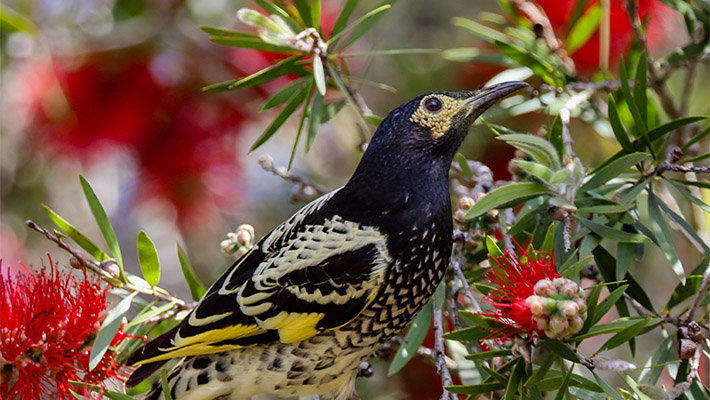
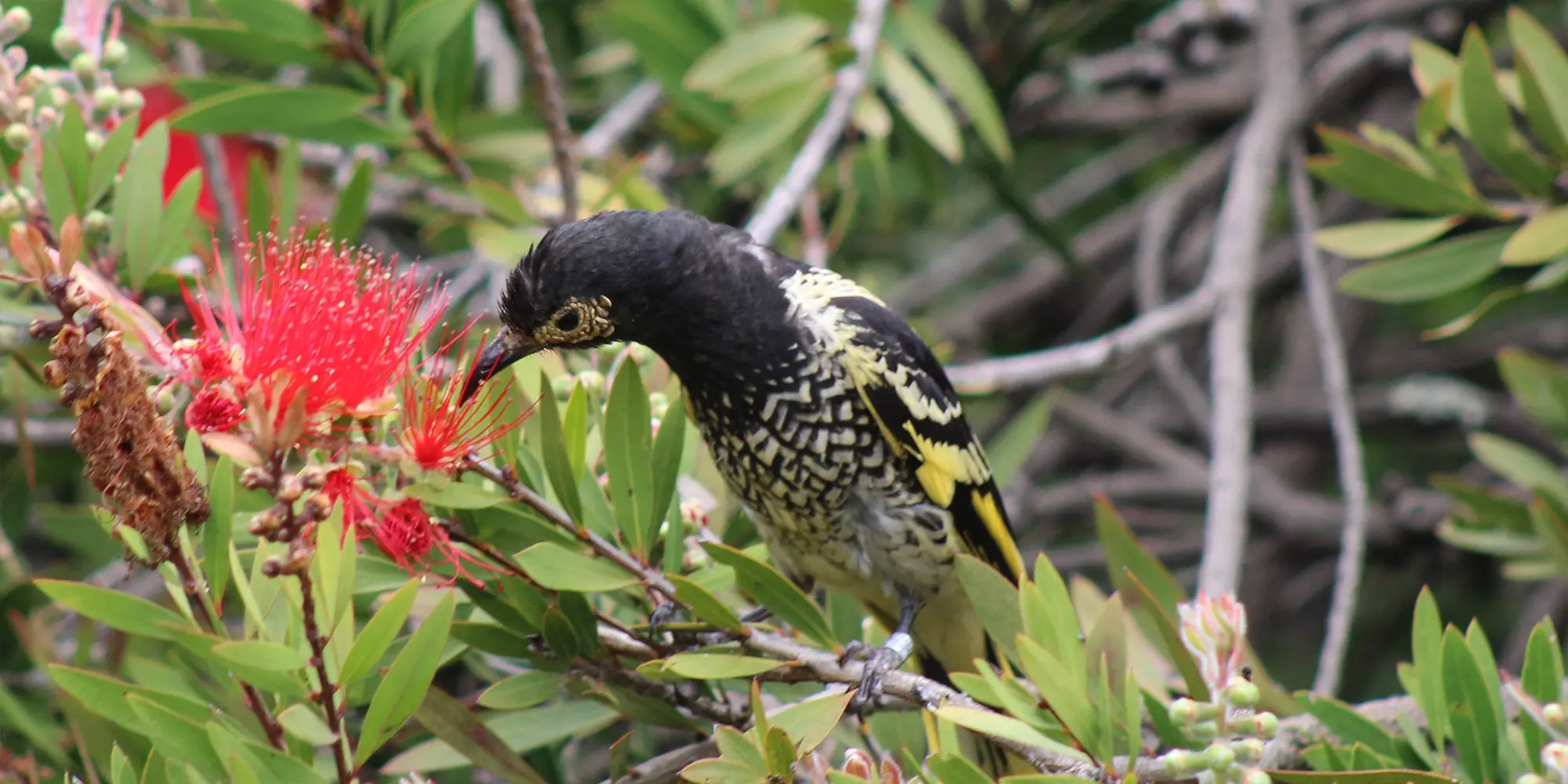
The critically endangered regent honeyeater, a striking black and yellow bird native to southeastern Australia, faces an uphill battle for survival. With fewer than 250 individuals estimated to remain in the wild, conservation efforts are increasingly reliant on innovative research. Recent work, involving the surprising observation of brush-tailed possums raiding artificial nests, is providing vital clues about the threats facing this vulnerable species and informing strategies to bolster its dwindling population. The regent honeyeater’s plight highlights the complex challenges of conserving biodiversity in a changing environment, where even seemingly minor predation events can have significant consequences.
The regent honeyeater (Anthochaera phrygia) is considered a flagship species, meaning that efforts to protect it often benefit other species sharing its habitat. First described in 1794 by English naturalist George Shaw, the bird was later reclassified within the wattlebird genus Anthochaera, with genetic research revealing a close evolutionary relationship. The species’ decline is attributed to habitat loss, fragmentation, and a reduction in the availability of flowering eucalyptus trees, its primary food source.
The Unexpected Role of Possums
Researchers at the University of Sydney, led by Bianca McBryde, have been investigating the impact of predation on regent honeyeater eggs. Traditionally, monitoring predation rates is tough due to the remote locations of nests and the elusive nature of predators. To overcome these challenges, McBryde’s team employed a clever tactic: they created artificial nests containing shop-bought quail eggs. These nests were strategically placed in trees at North Head, Sydney, and monitored using tree-mounted cameras.
The results were revealing. While possums raided only a tiny percentage of the artificial nests – four out of 40 over a two-week period – the findings were significant. “It’s likely possums have always done this occasionally and it wouldn’t have had an impact,” McBryde explained. However, with the regent honeyeater population so critically low, even infrequent predation can severely hinder recovery efforts. The research suggests that the loss of even a small number of eggs to opportunistic predators like possums can substantially increase the risk of extinction within the next 20 years.
Why a Small Loss Matters So Much
The regent honeyeater’s precarious situation stems from a dramatic population decline over the past few decades. As few as 250 individuals are believed to remain in the wild, restricted to just three key sites. This limited genetic diversity makes the species particularly vulnerable to environmental changes and disease. The loss of even a few breeding pairs can have a cascading effect, reducing the overall resilience of the population.
The research highlights a critical shift in the dynamics of predation. Historically, a low level of predation might have been sustainable for a larger, more robust population. However, with the regent honeyeater teetering on the brink of extinction, even seemingly minor losses can push the species closer to the point of no return. This underscores the importance of understanding and mitigating all potential threats, even those that might have been considered insignificant in the past.
Conservation Efforts and Future Directions
The findings from McBryde’s research are informing a range of conservation strategies. These include habitat restoration, supplementary feeding, and targeted predator control. Efforts to restore flowering eucalyptus forests are crucial for providing the regent honeyeater with a reliable food source. Supplementary feeding programs aim to bridge the gap during periods of food scarcity, while predator control measures focus on reducing the impact of introduced species like foxes and cats, as well as native predators like possums.
Beyond these direct interventions, conservationists are also working to address the underlying causes of habitat loss and fragmentation. This involves collaborating with landowners, advocating for sustainable land management practices, and promoting the importance of biodiversity conservation. The long-term survival of the regent honeyeater depends on a holistic approach that addresses both the immediate threats and the broader ecological challenges facing the species.
Genetic Research and Population Management
Recent genetic research has provided valuable insights into the regent honeyeater’s evolutionary history and population structure. Studies have confirmed its close relationship to wattlebirds, revealing that the species diverged from a common ancestor relatively recently. This information is being used to inform population management strategies, such as identifying genetically distinct populations and prioritizing conservation efforts accordingly. Understanding the genetic makeup of the remaining regent honeyeaters is essential for maximizing the species’ long-term evolutionary potential.
The Broader Implications for Endangered Species
The story of the regent honeyeater serves as a cautionary tale about the vulnerability of endangered species in the face of environmental change. It demonstrates that even seemingly minor threats can have devastating consequences when populations are already small and fragmented. The research also highlights the importance of innovative monitoring techniques and adaptive management strategies in conservation efforts.
The use of artificial nests and camera traps, as employed by McBryde’s team, represents a cost-effective and non-invasive way to gather critical data on predator behavior. This approach can be applied to other endangered species facing similar challenges, providing valuable insights that can inform conservation planning. The regent honeyeater’s plight underscores the need for a proactive and evidence-based approach to biodiversity conservation.
Key Takeaways
- The regent honeyeater is critically endangered, with fewer than 250 individuals remaining in the wild.
- Research shows that even infrequent predation by brush-tailed possums can significantly impact the species’ recovery.
- Conservation efforts include habitat restoration, supplementary feeding, and predator control.
- Genetic research is informing population management strategies.
- The regent honeyeater’s story highlights the vulnerability of endangered species and the importance of innovative conservation techniques.
The next steps in the conservation of the regent honeyeater involve continued monitoring of predator activity, ongoing habitat restoration efforts, and the implementation of targeted predator control measures. Researchers will continue to analyze data from the artificial nest experiments to refine their understanding of predation dynamics and inform future conservation strategies. The Australian government is expected to release an updated conservation plan for the regent honeyeater in late 2026, outlining specific targets and actions for the next five years.
The fate of this iconic Australian bird hangs in the balance. Share this article to raise awareness about the challenges facing the regent honeyeater and the importance of supporting conservation efforts. Your voice can help ensure that future generations have the opportunity to witness the beauty and song of this remarkable species.
Related reading