
In the ever-evolving landscape of digital entertainment, few figures have dominated global online culture quite like former U.S. President Donald Trump. His presence on social media—particularly through viral videos, memes, and parodies—has cemented his status as a cultural phenomenon, transcending politics to become a mainstream internet sensation. Now, at the heart of this digital storm sits Ryan Chen, a comedian and impressionist whose ability to mimic Trump has not only garnered millions of followers but also sparked conversations about the intersection of humor, satire, and global influence.
Chen, whose viral impressions of Trump have amassed hundreds of millions of views across platforms like TikTok, YouTube, and Instagram, has become a key player in what many now call “the Trumpification of the internet.” His work exemplifies how political figures can morph into meme-worthy icons, blurring the lines between satire and serious discourse. But as Chen’s popularity soars, so too do the questions: How did a comedian’s impressions become a global movement? What does this say about the power of digital humor in shaping public perception? And perhaps most critically, where does satire end—and propaganda begin—in an era where online content spreads faster than fact-checks?
For Chen, the journey began years ago, when he noticed a cultural shift. “People weren’t just watching politics; they were consuming it as entertainment,” he told World Today Journal in a recent interview. “Trump’s persona was so exaggerated, so performative, that it lent itself perfectly to satire.” What started as a side project quickly exploded into a full-fledged career, with Chen’s videos becoming staples of late-night comedy shows and even influencing mainstream media coverage. His ability to capture Trump’s cadence, catchphrases, and signature gestures has made him a go-to source for commentary on the former president’s public appearances and statements.
Yet, as Chen’s influence grows, so too do the ethical dilemmas. Satire has long been a tool for social critique, but in an age where algorithms prioritize engagement over nuance, the line between humor and harm can blur. For instance, while Chen’s impressions are often framed as playful, critics argue that they risk normalizing or even glorifying controversial political figures. “The challenge is balancing humor with responsibility,” Chen acknowledges. “You don’t want to cross into parody that feels like endorsement.”
The Rise of Digital Satire: Trump as a Global Meme
Trump’s online dominance is a product of several factors: his unfiltered communication style, his willingness to engage directly with audiences, and the viral nature of his statements. Unlike traditional politicians who rely on press releases and controlled messaging, Trump’s Twitter (now X) feed became a real-time feed of quotable, often controversial, content. This raw material proved too tempting for comedians and content creators to ignore.
Chen’s rise mirrors that of other viral impressionists, such as Tommy Schnelle, whose Trump impressions on SNL became cultural touchstones. However, Chen’s advantage lies in his digital-first approach. By leveraging platforms like TikTok, where short-form video thrives, he taps into a younger, more global audience. His videos often go beyond simple mimicry, weaving in current events and pop culture references to create a unique brand of satirical commentary.
According to a 2023 Pew Research Center report, 72% of U.S. Adults use social media, with platforms like TikTok and Instagram driving much of the engagement. Chen’s content thrives in this environment, where humor is currency and political figures are fair game. “The audience isn’t just laughing at the impression; they’re laughing with the impression,” Chen explains. “It’s a shared experience, a way to process the chaos of the world.”
Satire in the Digital Age: A Double-Edged Sword
While Chen’s work is widely celebrated, it also highlights the risks of unchecked satire in the digital age. In countries like China, where political satire is heavily censored, creators face severe consequences for mocking leaders. A 2017 study in New Media & Society found that posting critical comments about government officials, including through satire, can lead to arrests or online suppression. The study noted that while satire is a powerful tool for dissent, its effectiveness is often undermined by state surveillance and censorship.
In contrast, the U.S. Has a longer history of political satire, from Saturday Night Live to The Daily Show. However, even here, the rise of digital platforms has introduced new challenges. Algorithms that prioritize outrage and engagement can amplify divisive content, including satirical pieces that may be taken out of context. “The internet doesn’t care if it’s satire or not,” Chen warns. “It only cares if it’s shareable.”
This dynamic was on full display during the 2024 U.S. Election cycle, where deepfake videos and edited clips of political figures spread rapidly. While Chen’s impressions are clearly labeled as satire, the blurred lines between reality and parody raise questions about accountability. “There’s a responsibility that comes with this kind of influence,” Chen says. “You have to be mindful of how your work is consumed and interpreted.”
Ryan Chen: From Viral Sensation to Cultural Commentator
Chen’s journey from unknown comedian to global sensation is a testament to the power of digital platforms. Born in Taiwan and raised in Canada, Chen moved to the U.S. To pursue comedy, initially performing at open mics in Los Angeles. His big break came when a Trump impression he posted on Instagram went viral in 2020, during the height of the COVID-19 pandemic and the presidential election. The video, which parodied Trump’s handling of the crisis, resonated with audiences hungry for both humor and political commentary.
Today, Chen’s content spans a range of topics, from political satire to pop culture parodies. His videos often feature collaborations with other comedians, further expanding his reach. “I see myself as a storyteller,” Chen says. “The goal isn’t just to make people laugh but to make them think, to reflect on the world around us.”
Chen’s success has also opened doors for other creators, particularly those from underrepresented communities. “There’s a hunger for diverse voices in comedy,” he notes. “The internet has democratized the space, allowing people who might not have had a platform before to share their perspectives.” However, he cautions that this democratization comes with its own set of challenges, including the pressure to constantly produce content and the risk of algorithmic suppression.
Navigating the Ethics of Political Satire
One of the most pressing questions surrounding Chen’s work—and digital satire in general—is where to draw the line. While satire is meant to expose folly and vice, there’s a risk that it can inadvertently reinforce stereotypes or oversimplify complex issues. Chen addresses this by ensuring his content is rooted in respect and accuracy. “You can’t just make things up,” he says. “There has to be a foundation of truth, even if you’re exaggerating for comedic effect.”
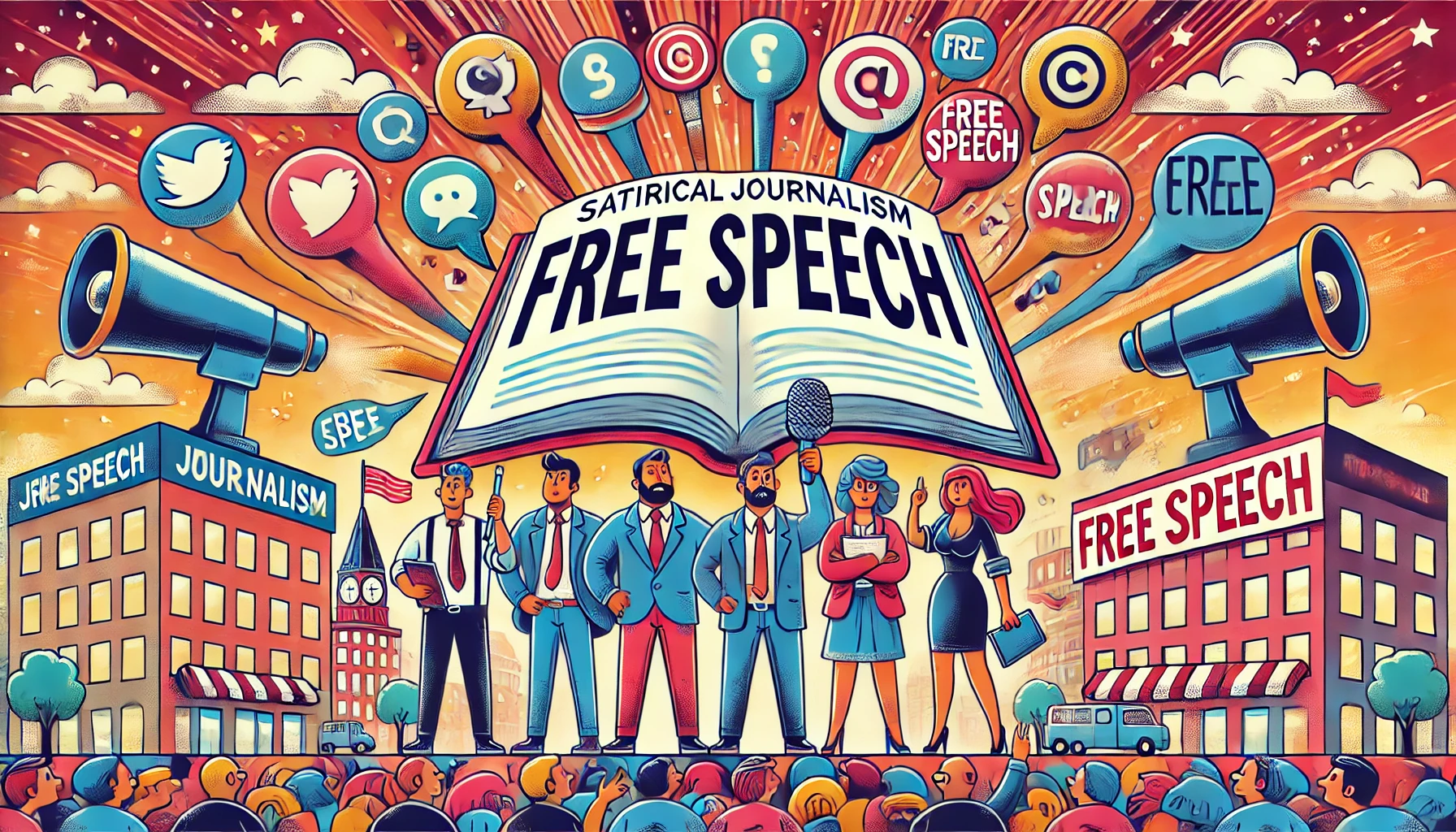
This approach aligns with the principles of classic satire, as defined by Merriam-Webster: “wit, irony, or sarcasm used to expose and discredit vice or folly.” Chen’s work fits this definition, but the digital landscape adds layers of complexity. For example, a video that might be seen as harmless fun in one context could be interpreted as offensive or inflammatory in another.
To mitigate these risks, Chen engages with his audience directly, often responding to feedback and clarifying intent. “The conversation is as important as the content,” he emphasizes. “You have to be willing to listen and adapt.” This interactive approach has helped him build a loyal following that appreciates both his humor and his thoughtfulness.
The Future of Digital Satire: What’s Next?
As digital platforms continue to evolve, so too will the role of satire in public discourse. Chen sees opportunities for creators to push boundaries while maintaining integrity. “The key is to stay authentic,” he advises. “Don’t chase trends just for the sake of engagement. Stay true to your voice and your values.”
Looking ahead, Chen plans to expand his content into longer-form projects, including a potential stand-up special and collaborations with international creators. He also hopes to use his platform to support emerging comedians, particularly those from marginalized communities. “Comedy has the power to unite people,” he says. “It’s a language that transcends borders and cultures.”
For now, Chen remains focused on balancing humor with responsibility. His work serves as a reminder that in the digital age, satire is not just a form of entertainment—it’s a reflection of society itself. As long as there are political figures worth mocking and audiences hungry for laughter, creators like Chen will continue to shape the cultural conversation.
Key Takeaways
- Digital Dominance: Donald Trump’s online presence has made him a global meme, with comedians like Ryan Chen capitalizing on his viral appeal.
- Satire’s Double Edge: While satire can expose folly, it must navigate the risks of misinterpretation and algorithmic amplification.
- Global Challenges: Countries like China demonstrate the dangers of political satire under censorship, while the U.S. Grapples with the ethics of digital humor.
- Creator Responsibility: Comedians like Chen emphasize the need for authenticity and accountability in their work.
- Future Trends: The rise of short-form video and global platforms is democratizing comedy but also increasing the pressure to produce engaging content.
As Chen continues to redefine the boundaries of digital satire, one thing is clear: the internet’s appetite for humor—and the figures who inspire it—shows no signs of slowing down. For now, the conversation remains open, and the laughs are on us.
What do you think? Is satire a powerful tool for social change, or does it risk oversimplifying complex issues? Share your thoughts in the comments below, and don’t forget to follow World Today Journal for more insights into the intersection of entertainment and culture.
Keep reading