Tadej Pogačar and Paul Seixas found themselves locked in a tense duel atop La Redoute during the 2026 Liège-Bastogne-Liège, responding to an early race split that had forced them onto the defensive barely an hour into Belgium’s most demanding spring classic.
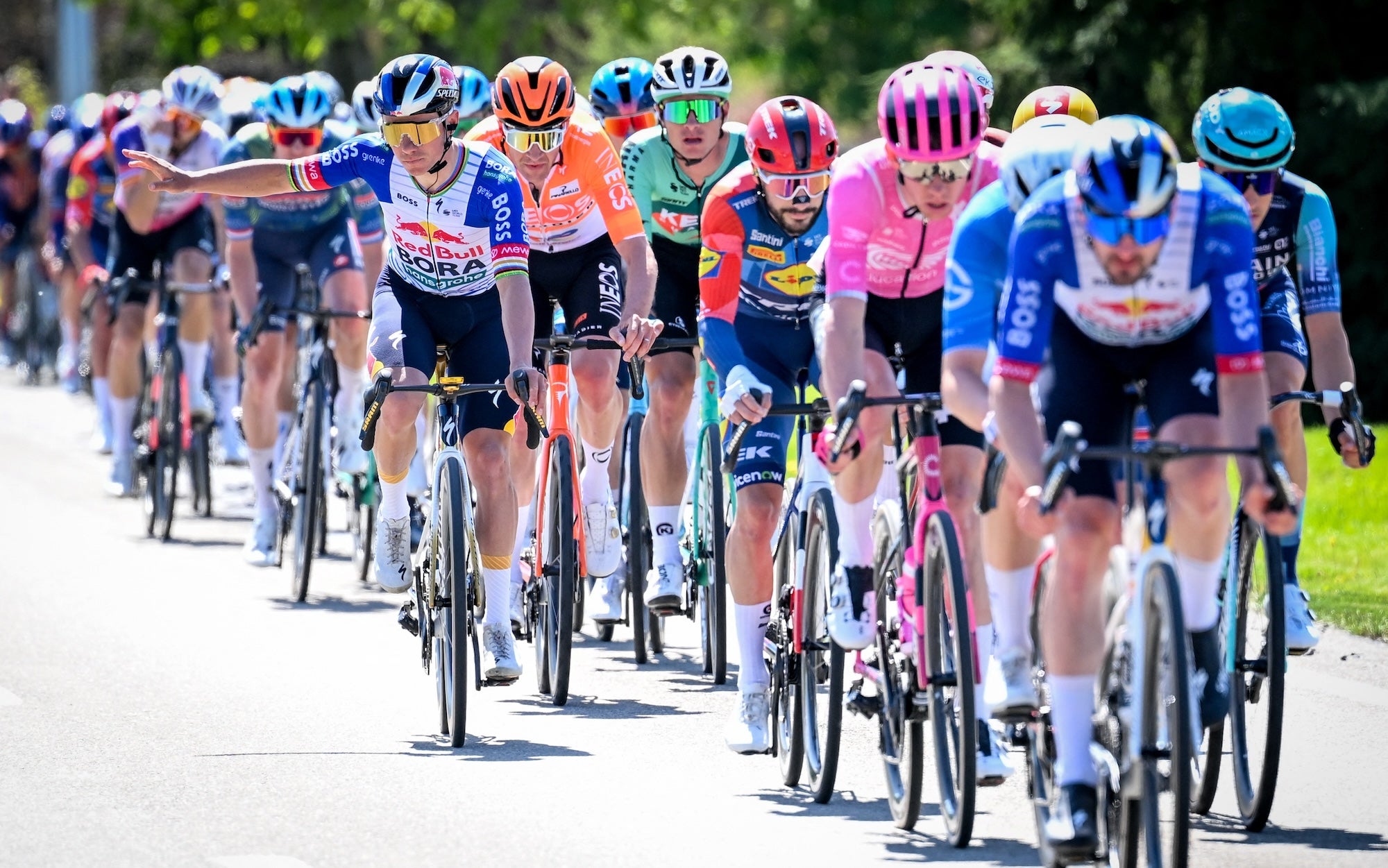
The decisive moment unfolded after Remco Evenepoel had slipped into a dangerous breakaway that swelled to nearly 50 riders shortly after the rolling start south of Liège. With UAE Team Emirates-XRG and Decathlon CMA CGM each lacking representatives in the initial move, Pogačar and Seixas were compelled to organize a chase as the gap ballooned to almost three minutes on the roads toward Bastogne.
By the time the peloton turned north and began ascending the Côte de Stockeu, the advantage had been trimmed to under two minutes. The break, which had included big names such as Egan Bernal, Laurens De Plus, Magnus Cort, Andreas Leknessund, Dylan Van Baarle, Diego Ulissi, and Alan Hatherly alongside Evenepoel, began to fray on the climb, allowing the favorites to regroup.
As the race approached La Redoute – the iconic wall that often decides Liège-Bastogne-Liège – Pogačar and Seixas launched their counteroffensive. According to live race commentary, the two took turns driving the pace, matching each other pedal stroke for pedal stroke as they closed the gap to the remnants of the morning’s breakaway.
“They near the top and the gap to the others is huge! Everyone else seems to have accepted defeat,” observed one commentator as Pogačar surged again with 500 meters to the summit, only to see Seixas remain firmly on his wheel. The Belgian-French rider, who had entered the race fresh from a La Flèche Wallonne victory, showed no signs of yielding as he exchanged turns with the two-time defending champion on the ascent.
By the crest of La Redoute, Pogačar and Seixas had effectively neutralized the morning’s danger, bringing the chasers – including Evenepoel, who was 35 seconds back at one point – into contention for the final podium spots. The duo’s collaboration marked a rare moment of unity between rivals, born from necessity after the early chaos had disrupted the race’s expected narrative.
Early Split Reshapes Race Dynamics
The opening hours of Liège-Bastogne-Liège 2026 unfolded contrary to pre-race expectations, with a nervous start south of Liège triggering a crash that precipitated the significant split. Evenepoel capitalized on the situation, infiltrating a front group that quickly grew to encompass riders from multiple squads seeking advantage on the rolling terrain.
:strip_icc()/pic6981072.jpg "Seixas Poga Bastogne")
With only a single UAE Team Emirates-XRG rider and no Decathlon CMA CGM representatives in the break, the burden of pursuit fell disproportionately on Pogačar and Seixas. Their teams responded by driving the pace from the rear of the peloton, gradually reducing what had once approached a three-minute deficit.
As the race progressed toward Bastogne and the terrain began to rise, the composition of the break evolved. Riders such as Bernal and De Plus took turns at the front, but the lack of sustained cooperation eventually doomed the move’s chances of success. By the Côte de Stockeu, the advantage had diminished sufficiently to set up a classic showdown on the slopes of La Redoute.
Seixas Steps Into the Spotlight
For Paul Seixas, the 2026 Liège-Bastogne-Liège represented an opportunity to validate his status among cycling’s elite following a breakthrough spring campaign. His performance in La Flèche Wallonne, where he had prevailed in a sprint finish against top-tier competition, had already signaled his readiness to contend at the sport’s highest level.
Matching Pogačar’s accelerations on La Redoute – a climb notorious for exposing weaknesses and separating contenders from pretenders – served as a significant statement. The two riders exchanged leads multiple times on the ascent, demonstrating comparable climbing prowess under fatigue.
Although Evenepoel would ultimately need to overcome a deficit to challenge for victory, the sight of Seixas exchanging blows with the two-time Liège-Bastogne-Liège winner underscored his arrival as a genuine threat in the Ardennes classics. His ability to recover from the early chase effort and still possess the snap to match Pogačar’s attacks highlighted his growing resilience.
Tactical Implications for the Finale
With the initial danger neutralized, the race entered its final phase with the favorites re-established near the front. The collaboration between Pogačar and Seixas on La Redoute, though born of circumstance, potentially altered the tactical landscape for the run-in to Liège.
Having worked together to bridge the gap, both riders demonstrated willingness to share the burden when mutual interest aligned. This dynamic could prove pivotal in the closing kilometers, particularly if attacks emerge from the group chasing Evenepoel or if the Slovakian champion attempts to extend any advantage gained on the final ascents.

For Seixas, the experience of matching Pogačar’s pace on one of cycling’s most revered climbs provided invaluable reference point as he continues to establish himself in Monument-level company. The effort required to close the morning’s gap and then contend on La Redoute spoke to his developing capacity to endure the unique demands of Liège-Bastogne-Liège.
As the peloton descended toward the finish in Liège, the stage was set for a climax shaped by the morning’s early turbulence and the response it provoked from two of the sport’s brightest talents.
For ongoing updates on the 2026 Liège-Bastogne-Liège and other major cycling events, readers are encouraged to follow official race communications and share their insights on the day’s dramatic developments.
Related reading