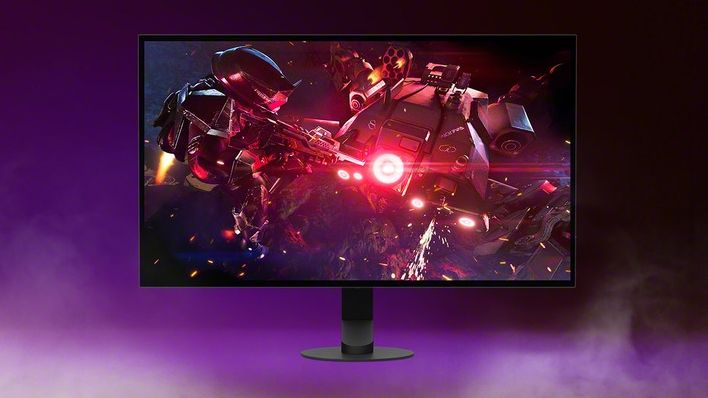
Sony is pushing the boundaries of motion clarity for competitive gaming with the introduction of its latest high-performance display. The Sony Inzone M10S OLED QHD gaming monitor is designed specifically for the rigorous demands of eSports, where milliseconds can define the difference between victory and defeat.
Developed in collaboration with the Fnatic esports team, the monitor focuses on extreme responsiveness and visual precision. By leveraging OLED technology, Sony aims to provide the deep blacks and instantaneous pixel response times required for high-stakes competitive play.
The hardware is engineered to deliver a 1440p QHD resolution, ensuring a sharp image while maintaining the speed necessary for fast-paced titles. According to official specifications, the display features a 480 Hz refresh rate and a remarkably low 0.03 ms response time Sony Electronics.
Engineering for the eSports Edge
For professional gamers, the “input lag” and “motion blur” are the primary enemies. The Inzone M10S addresses these through its 480 Hz refresh rate, which allows the screen to update the image 480 times per second. This results in fluid motion and a more accurate representation of real-time action.
The choice of an OLED panel is critical here. Unlike traditional LCDs, OLED pixels emit their own light and can switch states almost instantaneously. This is reflected in the 0.03 ms response time, virtually eliminating ghosting and smearing during rapid camera movements in first-person shooters or racing simulators.
The collaboration with Fnatic ensures that the monitor’s features are grounded in the actual needs of professional players. This partnership typically focuses on optimizing the balance between resolution and speed to ensure that the hardware does not become a bottleneck for the athlete’s reflexes.
Technical Specifications and Performance
The monitor maintains a 27-inch form factor, which is widely considered the “sweet spot” for competitive gaming as it allows the player to see the entire screen without excessive eye movement.
- Resolution: 1440p QHD
- Refresh Rate: 480 Hz
- Response Time: 0.03 ms
- Panel Type: OLED
- Screen Size: 27 inches
While some unconfirmed reports suggest a “dual-mode” capability that could allow the monitor to reach 720 Hz at a lower 720p resolution, official documentation from Sony currently verifies the performance at 480 Hz for its QHD output.
Why Refresh Rates Matter in Competitive Play
In the context of high-level gaming, a higher refresh rate reduces the time between the game engine calculating a frame and that frame appearing on the screen. When combined with a 0.03 ms response time, the visual feedback loop is tightened, allowing players to react to enemy movements more precisely.
The 1440p QHD resolution provides a significant upgrade over standard 1080p, offering more screen real estate and finer detail without the massive performance hit associated with 4K gaming. This allows the GPU to push the high frame rates required to capture full advantage of the 480 Hz panel.
The Impact on the Gaming Ecosystem
The launch of the Inzone M10S signals a shift toward “ultra-high refresh” standards in the consumer market. As GPUs become more powerful, the demand for monitors that can actually display those frames is increasing.
By targeting the hardcore eSports segment, Sony is positioning the Inzone brand as a direct competitor to other high-end gaming peripherals. The integration of professional feedback from teams like Fnatic suggests that this is not just a spec-bump, but a tool designed for a specific professional workflow.
For the average consumer, these specifications may exceed their immediate needs, but for the professional circuit, these incremental gains in speed and clarity are essential for maintaining a competitive advantage.
As Sony continues to expand its Inzone ecosystem, the focus remains on creating a cohesive environment where audio and visual hardware function in tandem to enhance player immersion and performance.
For those interested in the latest official updates and availability, the Sony Electronics store serves as the primary point for verified product information.
We invite our readers to share their thoughts on whether 480 Hz is the fresh gold standard for gaming in the comments below.
Worth a look