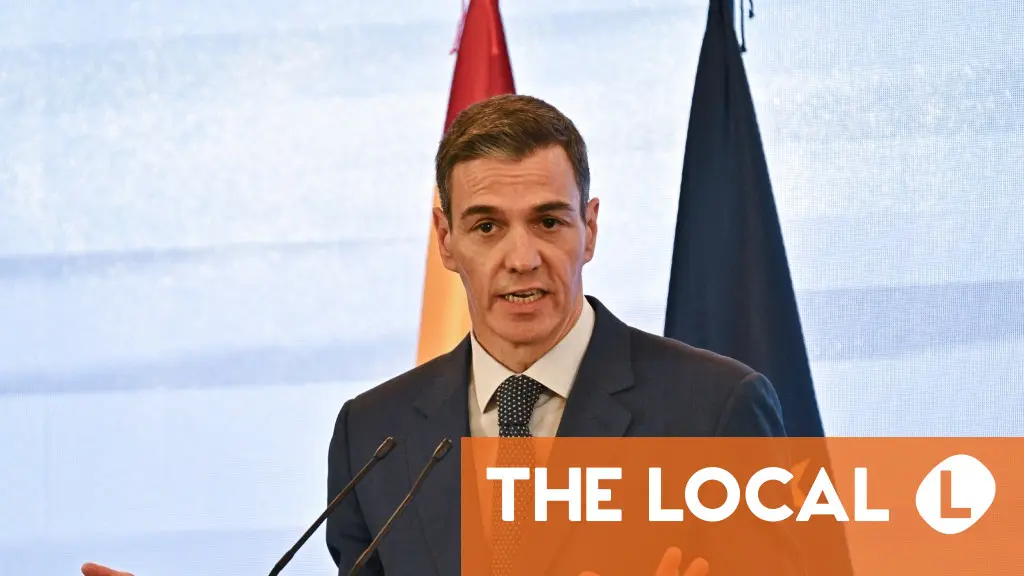
Spain has formally called on the European Union to suspend its association agreement with Israel, citing alleged violations of international law in the ongoing conflict in Gaza. The request, announced by Spanish Prime Minister Pedro Sánchez on Sunday, marks a significant escalation in EU member state pressure regarding the bloc’s relationship with Israel amid growing international scrutiny over humanitarian conditions in the Palestinian territories.
The move comes amid rising concern among several EU governments about Israel’s conduct in Gaza, particularly following statements from United Nations agencies and international human rights organizations warning of potential war crimes and breaches of international humanitarian law. Sánchez’s announcement reflects broader debates within the EU about how to balance diplomatic engagement with accountability mechanisms under existing agreements.
Spain’s position adds to a growing chorus of voices within the European Parliament and national capitals calling for a reassessment of EU-Israel relations. While the association agreement remains in force, any decision to suspend or terminate it would require consensus among all 27 EU member states—a threshold that currently appears difficult to reach given divergent positions among countries such as Germany, France and Italy.
The EU-Israel Association Agreement, which has governed trade and political cooperation since 2000, includes a human rights clause that allows for suspension in cases of serious violations. Legal experts note that invoking this clause would represent an unprecedented step in the EU’s external relations, potentially setting a precedent for how the bloc responds to alleged breaches of international law by its partners.
Background on the EU-Israel Association Agreement
The EU-Israel Association Agreement entered into force in 2000 after being signed in 1995, establishing a framework for political dialogue, trade, and cooperation across sectors including innovation, culture, and agriculture. Under the agreement, Israel enjoys preferential access to the European single market for industrial goods, while both parties engage in regular political dialogue through association councils and committees.
Crucially, Article 2 of the agreement states that relations between the parties, as well as all the provisions of the agreement itself, shall be based on respect for human rights and democratic principles, which guides their internal and international policy and constitutes an essential element of the agreement. This provision allows for protective measures, including suspension of the agreement, if these principles are violated.
According to the European External Action Service (EEAS), the agreement has been periodically reviewed, with the most recent association council meeting held in 2022. Trade data from Eurostat shows that bilateral trade in goods between the EU and Israel reached approximately €40 billion in 2023, with machinery, transport equipment, and chemicals constituting major sectors.
Legal scholars emphasize that while the human rights clause is legally binding, its interpretation and application involve political judgment. The European Court of Justice has previously ruled that such clauses must be respected, but enforcement remains contingent on political will among member states.
Official text of the EU-Israel Association Agreement
European Commission – EU-Israel trade relations
Sánchez’s Statement and Legal Basis
Prime Minister Pedro Sánchez made the announcement during a televised address on Sunday, stating that Spain would formally request the EU to examine whether Israel’s actions in Gaza constitute a breach of the association agreement’s human rights clause. He emphasized that the request was not made lightly and was based on assessments by international legal bodies and humanitarian organizations.
Sánchez did not specify a timeline for the EU’s response but noted that Spain would perform with like-minded member states to build support for a formal review. He added that any decision would demand to be taken collectively, respecting the EU’s consensus-based foreign policy framework.
The Spanish government has not released the full legal memorandum underpinning its position, but officials have referenced findings from UN special rapporteurs, the International Court of Justice (ICJ) advisory opinion on Israel’s policies in the Occupied Palestinian Territory, and reports from organizations such as Amnesty International and Human Rights Watch.
In March 2024, the ICJ issued an advisory opinion stating that Israel’s continued presence in the Occupied Palestinian Territory is unlawful and calling for an conclude to settlement activities. While not legally binding, the opinion carries significant weight in international law and has been cited by several European governments in assessing compliance with international obligations.
Reactions Across the EU and International Community
The announcement elicited varied responses across Europe. While countries such as Ireland and Belgium have expressed openness to discussing the agreement’s future, others have cautioned against linking trade policy to ongoing conflicts, arguing that dialogue remains essential even during crises.
German Chancellor Olaf Scholz has maintained that the EU should continue engaging with Israel while expressing concerns about humanitarian conditions in Gaza. French President Emmanuel Macron has called for a ceasefire and increased humanitarian access but has not publicly supported suspending the association agreement.
Within the European Parliament, the debate has intensified. In a non-binding resolution passed in April 2024, lawmakers urged the European Commission to assess whether Israel’s actions comply with the agreement’s human rights clause, though the vote fell short of calling for suspension.
Israeli officials have rejected the allegations, with Foreign Ministry officials stating that Israel adheres to international law and accusing critics of applying double standards. Israeli Prime Minister Benjamin Netanyahu has described such moves as “rewarding terrorism” and warned against politicizing economic relations.
The United States, while critical of certain aspects of Israel’s conduct in Gaza, has not supported reassessing the EU-Israel agreement, emphasizing instead the importance of maintaining strong transatlantic and European partnerships in addressing regional challenges.
European Parliament resolution on EU-Israel Association Agreement (April 2024)
U.S. Department of State – Bureau of Near Eastern Affairs
What Happens Next?
Any formal move to suspend the EU-Israel Association Agreement would require a proposal from the European Commission, followed by discussion and unanimous agreement in the Council of the European Union. As of now, no such proposal has been tabled, and the Commission has not indicated plans to initiate a formal review process.
The next scheduled association council meeting between the EU and Israel has not been publicly announced. Officials from the EEAS confirm that preparatory talks typically occur several months in advance, but no date has been set for 2024 or 2025.
Spain has stated it will continue to raise the issue in EU foreign affairs forums, including the Foreign Affairs Council and political and security committee discussions. Diplomatic sources suggest that while consensus remains elusive, the matter is likely to remain on the agenda of EU deliberations on foreign policy and security cooperation.
For now, the agreement remains in force, and trade and political dialogue continue under existing frameworks. Monitoring bodies such as the European Parliament’s Subcommittee on Security and Defence and the Committee on Foreign Affairs are expected to keep the issue under review as new developments emerge.
Worth a look