
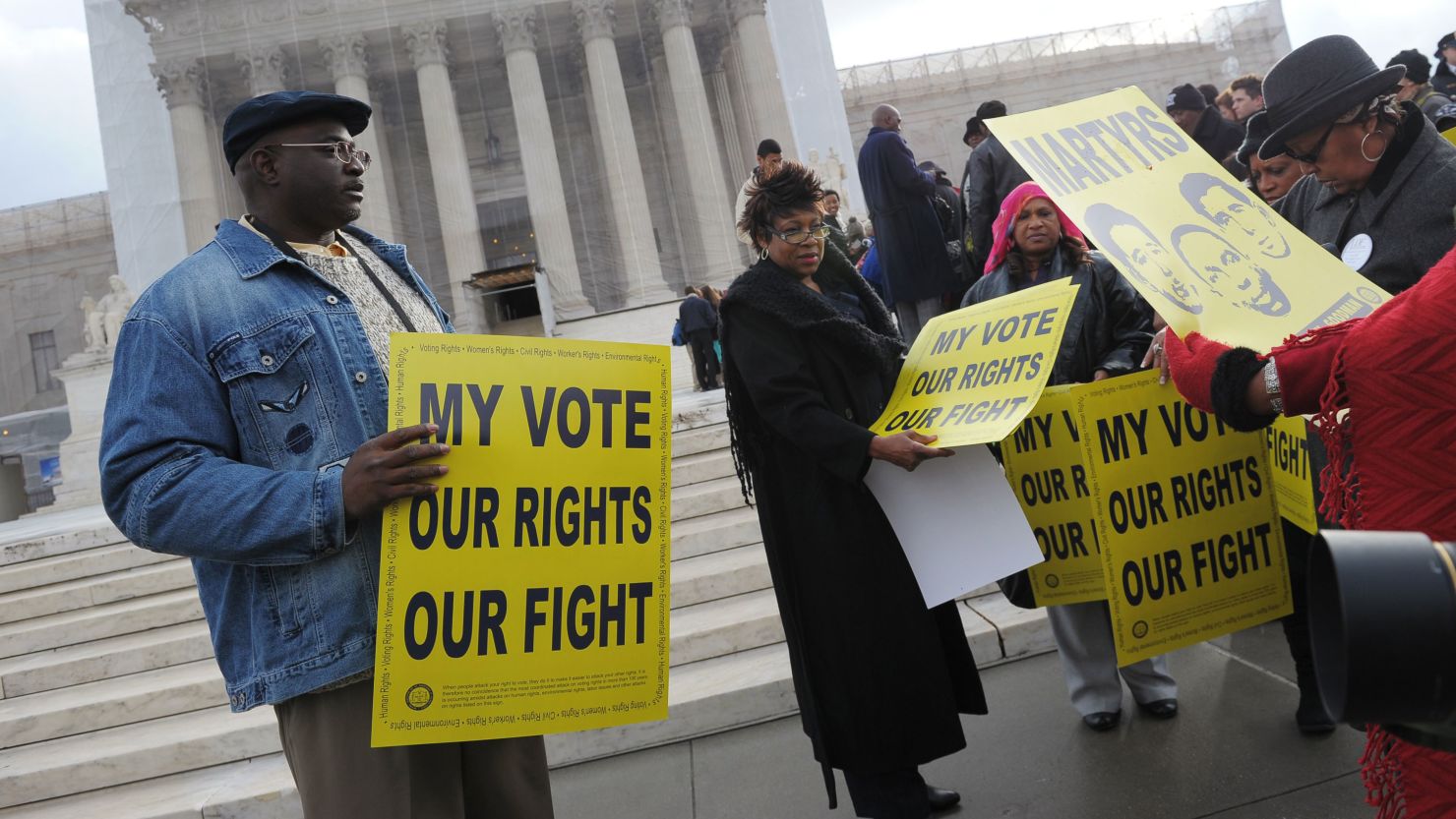
For decades, the Voting Rights Act of 1965 served as the primary safeguard for minority voters in the United States, acting as a legal shield against discriminatory electoral practices. However, the landscape of American democracy shifted dramatically following a series of landmark Supreme Court rulings that dismantled key protections, leaving jurisdictions with histories of systemic exclusion—such as Fayette County, Tennessee—vulnerable to new forms of voter suppression.
The erosion of these protections has transformed the struggle for the ballot from a proactive prevention system into a reactive legal battle. Where the federal government once required certain states to prove that changes to voting laws would not harm minority voters, the burden of proof has shifted. Now, disenfranchised citizens must wait for a law to be implemented and then spend years in court attempting to overturn it, often after the damage to an election cycle is already permanent.
In places like Fayette County, this legal shift is not a theoretical debate over constitutional interpretation; it is a lived reality. The county, characterized by a significant Black population and a long history of racial tension regarding political power, represents a critical case study in how the removal of federal oversight can silence marginalized voices and solidify the grip of entrenched political interests.
The current crisis centers on the intersection of judicial philosophy and the practical application of electoral law. By prioritizing a “current-day” interpretation of racial harmony over the documented history of systemic exclusion, the judiciary has opened the door to sophisticated racial gerrymandering and restrictive voting laws that disproportionately impact Black communities across the American South.
The Dismantling of Preclearance: Shelby County v. Holder
To understand the current vulnerability of voters in Tennessee and beyond, one must first understand the mechanism of “preclearance.” Under Section 5 of the Voting Rights Act of 1965, jurisdictions with a documented history of discriminatory voting practices were prohibited from making any change to their election laws without prior approval from the U.S. Department of Justice or a federal court.
This proactive measure ensured that discriminatory laws—such as the sudden relocation of polling places, the implementation of restrictive voter ID requirements, or the redrawing of district lines to dilute minority voting strength—were blocked before they could be enacted. It was a preventative strike against disenfranchisement.
This protection was effectively neutralized in 2013 with the Supreme Court’s decision in Shelby County v. Holder. The Court ruled that the formula used to determine which jurisdictions were subject to preclearance (Section 4(b)) was outdated and based on data from the 1960s and 70s. By striking down the coverage formula, the Court rendered Section 5 inoperable.
The immediate aftermath was a surge in restrictive voting legislation. Within hours of the ruling, several states moved to implement strict voter ID laws that had previously been blocked by the preclearance process. This shift fundamentally changed the relationship between the state and the voter, moving from a system of federal oversight to a system of litigation after the fact.
Fayette County: A Microcosm of Systematic Exclusion
Fayette County, Tennessee, exemplifies the danger of this legal vacuum. Historically, the county has been a site of intense struggle over political representation. Despite a Black majority in the population, the structures of local government and the drawing of electoral districts have frequently functioned to keep political power in the hands of a white minority.
Without the shield of preclearance, local officials in jurisdictions like Fayette County can implement changes to voting procedures—such as closing polling sites in minority-heavy precincts or altering the boundaries of school boards and county commissions—without having to prove that these changes are not discriminatory. By the time a civil rights organization can file a lawsuit and a judge can issue a ruling, an entire election cycle may have passed, effectively silencing the Black electorate for years.

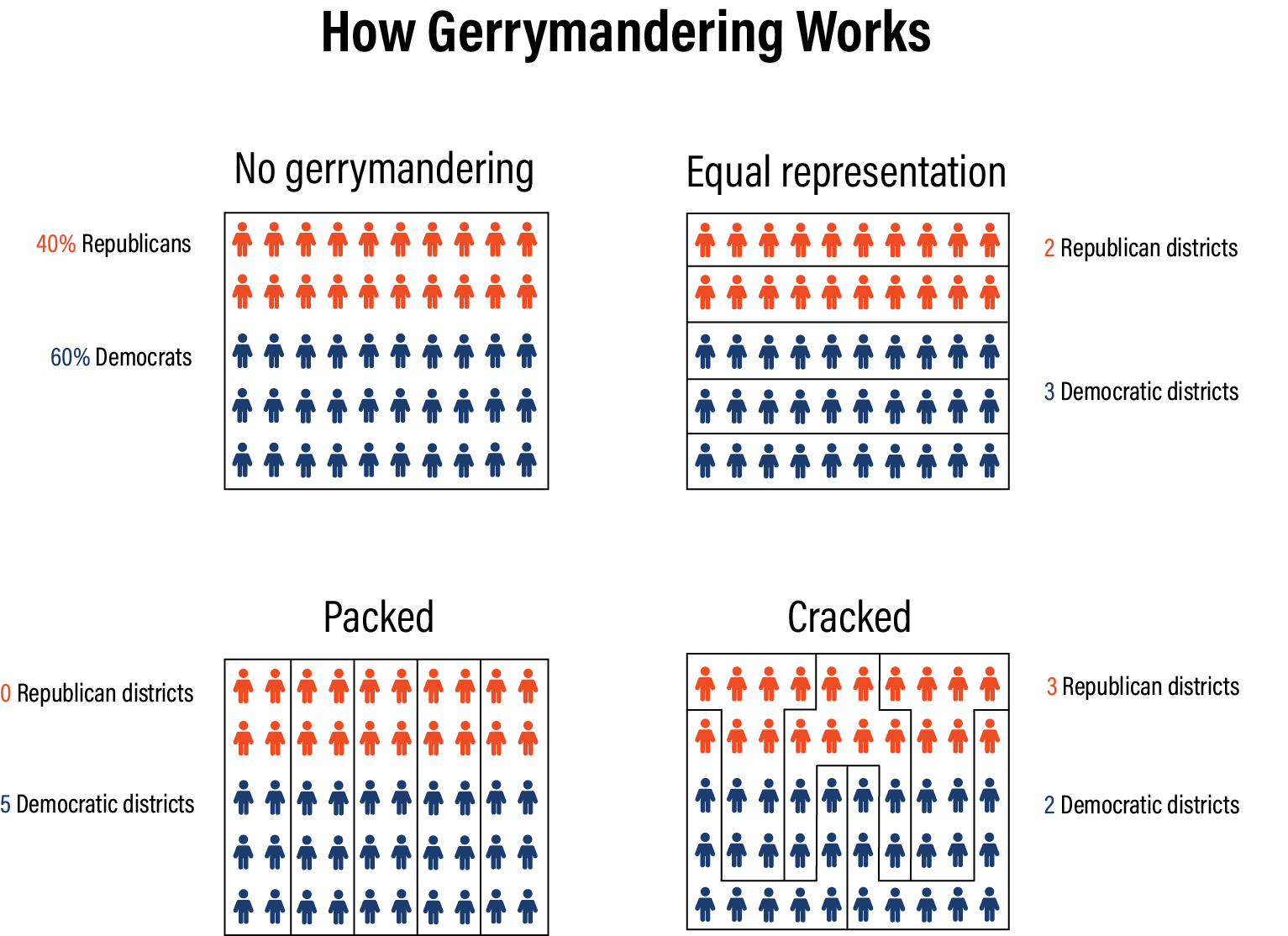
This “silencing” occurs not only through the direct prevention of voting but through the dilution of the vote. When districts are drawn to “crack” (split) a minority community across several districts or “pack” (concentrate) them into a single district, the ability of those voters to elect a candidate of their choice is severely diminished. This practice, known as racial gerrymandering, has become more prevalent and more difficult to challenge since the 2013 ruling.
The psychological impact of this shift is equally profound. When voters perceive that the system is designed to neutralize their influence, voter apathy increases. In Fayette County, the historical memory of voter intimidation is still fresh, and the removal of federal protections is often viewed not as a legal modernization, but as a return to a previous era of exclusion.
The New Era of Racial Gerrymandering
The current legal battle over voting rights has shifted toward Section 2 of the Voting Rights Act, which prohibits any voting practice that results in a denial or abridgment of the right to vote on account of race. Unlike Section 5, Section 2 does not require preclearance; it allows for lawsuits after a law is passed.
Recent litigation, such as the 2023 case Allen v. Milligan, has provided some hope. In that decision, the Supreme Court upheld Section 2, ruling that Alabama had likely violated the Act by drawing a congressional map that diluted the power of Black voters. The Court reaffirmed that the “results test”—whether a minority group has an equal opportunity to elect candidates of their choice—remains a valid way to identify racial gerrymandering.
However, the victory in *Allen v. Milligan* highlights the inherent flaw in the current system: the necessity of exhaustive, expensive, and time-consuming litigation. To challenge a map, plaintiffs must hire expert demographers, spend thousands of hours analyzing census data, and navigate a court system that is increasingly divided on the interpretation of racial neutrality.
the rise of “partisan gerrymandering” as a legal shield has complicated these efforts. In *Rucho v. Common Cause* (2019), the Supreme Court ruled that partisan gerrymandering—drawing maps to favor one political party—is a “political question” beyond the reach of federal courts. This creates a loophole where state legislatures can claim they are drawing maps for partisan advantage (which is legally permissible) while achieving the same result as racial gerrymandering (which is prohibited).
Why This Matters for Global Democracy
The struggle for voting rights in Tennessee is not merely a domestic American issue; it is a reflection of a global trend toward democratic backsliding. Across various continents, there is an increasing tendency for ruling parties to use “legalistic” means to undermine electoral fairness. Whether through the manipulation of electoral boundaries, the introduction of restrictive registration requirements, or the delegitimization of election officials, the goal is often the same: to ensure that the outcome of an election is decided before a single vote is cast.
When the highest court of a leading democracy signals that historical patterns of exclusion are no longer relevant to the application of current law, it provides a blueprint for other nations to follow. The argument that “times have changed” is frequently used to justify the removal of protections that are still desperately needed by marginalized populations.
The case of Fayette County serves as a reminder that democracy is not a static achievement but a constant process of maintenance. The removal of a single legal mechanism—preclearance—can ripple through a community, affecting everything from local school board representation to the overall trust citizens place in their government.
Key Takeaways on the State of Voting Rights
- The End of Preclearance: The *Shelby County v. Holder* (2013) decision removed the requirement for certain jurisdictions to get federal approval before changing voting laws.
- Shift in Burden: The responsibility to prove discrimination has moved from the government (pre-enactment) to the voters (post-enactment).
- Racial Gerrymandering: Tactics like “packing” and “cracking” are used to dilute the influence of Black voters, often disguised as partisan redistricting.
- Legal Recourse: Section 2 of the Voting Rights Act remains the primary tool for challenging discriminatory maps, as seen in *Allen v. Milligan*.
- Local Impact: In areas like Fayette County, TN, the lack of federal oversight increases the risk of voter suppression and political marginalization.
What Happens Next: The Path Forward
The future of voting rights in the United States now rests on two primary tracks: legislative action and continued judicial challenges. There have been repeated attempts in Congress to pass the John Lewis Voting Rights Advancement Act, which would create a new, updated coverage formula to restore the preclearance mechanism of Section 5. However, these efforts have consistently faced gridlock in the Senate.
In the absence of new legislation, the battle will continue in the courts. Legal teams are increasingly focusing on state constitutions, which in some cases provide stronger protections for voting rights than the U.S. Constitution. By arguing that state laws guarantee a “free and fair” election, advocates are attempting to bypass the restrictive interpretations of the federal Supreme Court.
For the residents of Fayette County and similar jurisdictions, the immediate focus remains on voter education and mobilization. With the “shield” of federal preclearance gone, the only remaining defense against disenfranchisement is a highly engaged and informed electorate capable of identifying and challenging restrictive laws in real-time.
The next critical checkpoint for voting rights advocates will be the upcoming cycle of redistricting lawsuits following the 2020 Census data implementations, as courts continue to determine where partisan advantage ends and racial discrimination begins.
Join the Conversation: Do you believe federal oversight is necessary to ensure fair elections, or should states have total autonomy over their voting laws? Share your thoughts in the comments below and share this article to keep the conversation going.