In the modern corporate landscape, the ascent of people of color into the upper echelons of management is frequently heralded as a victory for diversity, equity, and inclusion (DEI). From the boardroom to the C-suite, the visual representation of a multicultural leadership team is often used as a primary metric for institutional progress. However, a critical examination of these dynamics suggests that representation does not always equate to transformation. Instead, a phenomenon has emerged that some scholars and critics describe as an “overseer class”—a layer of minority leadership tasked with managing the marginalized on behalf of a system that remains fundamentally unchanged.
This structural arrangement creates a profound paradox: the very individuals who have navigated the hurdles of systemic racism are often placed in positions where their primary function is to maintain the stability and productivity of a capitalist framework that relies on those same hierarchies. When the objective of a diversity initiative is to integrate a few high-performers into the existing power structure rather than to dismantle the structure itself, the result is often a reinforcement of the status quo. In this environment, the minority leader becomes a buffer between the institution and the oppressed, providing a veneer of equity while upholding the mechanisms of white supremacy.
The concept of the “overseer class” is not merely a corporate critique but a sociological observation on how power operates within racialized capitalism. It suggests that for a minority individual to rise within a rigid hierarchy, they must often demonstrate a loyalty to the institution that exceeds their loyalty to their own community. This dynamic creates a psychological and professional tension, where the “success” of the individual is predicated on their ability to effectively police, manage, and neutralize the grievances of those below them.
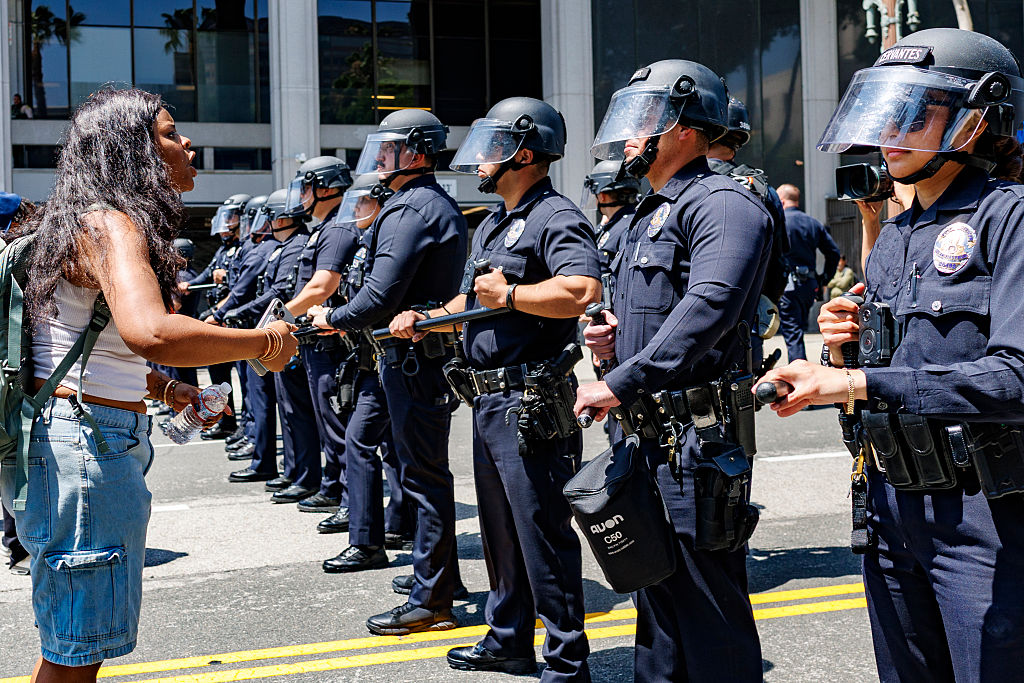
To understand the gravity of this dynamic, one must look beyond the corporate office and toward the historical and systemic roots of policing and social control. The alignment of racial identity with institutional enforcement has long been a tool for maintaining social order, often by leveraging the aspirations of a few to suppress the many.
The Baldwin Thesis: Loyalty and the Burden of the Minority Officer
The intellectual foundation for understanding the overseer class can be traced back to the observations of James Baldwin. In a 1967 essay published in The New York Times, Baldwin explored the complex and often fraught relationship between Black citizens and Black police officers. He noted a specific, heightened fear regarding minority officers, suggesting that “we feared black cops even more than white cops, because the black cop had to work so much harder — on your head.”
Baldwin’s insight captures the essence of the overseer dynamic: the need for the marginalized person in power to “over-perform” their loyalty to the dominant system to prove they are not “biased” by their own identity. In a policing context, this manifests as excessive force or rigid adherence to punitive protocols to avoid the appearance of leniency toward one’s own race. In a business context, this translates to the minority executive who is more likely to dismiss systemic complaints of racism within the company, as doing so signals to the white power structure that they are a “safe” and “objective” leader.
This “over-performance” is a survival mechanism within a capitalist system that views diversity as a tool for risk management rather than a moral imperative. When a company hires a person of color to lead its DEI efforts or manage a diverse workforce, the unspoken expectation is often that this person will “tame” the workforce, smoothing over racial tensions without implementing the radical structural changes—such as wealth redistribution or a total overhaul of hiring and promotion pipelines—that would actually challenge white supremacy.
The 2023 Tyre Nichols Case as a Systemic Warning
The theoretical dangers of the overseer class are given a visceral and tragic reality in the case of Tyre Nichols. In January 2023, Nichols, a Black man, was brutally beaten by officers of the Memphis Police Department’s specialized “SCORPION” unit, resulting in his death. The subsequent investigation and legal proceedings revealed a systemic failure of oversight and a culture of violence within the unit. The U.S. Department of Justice eventually brought civil rights charges against five officers involved in the incident.
While the most visible perpetrators were white officers, the broader institutional context highlights the failure of the “overseer” mechanism. When minority officers or supervisors exist within a culture of systemic violence, their presence does not automatically act as a safeguard for the community. If the institutional culture prizes loyalty to the “thin blue line” over the protection of human rights, the minority officer is either coerced into silence or becomes an active participant in the violence to maintain their standing within the hierarchy.
The Nichols case demonstrates that representation—having Black officers in a police department—is an insufficient defense against systemic racism. If the underlying ideology of the institution is rooted in the control and subjugation of specific populations, the racial identity of the officer in the uniform is secondary to the function of the uniform itself. This is the same mechanism at play in the corporate world: a Black CEO cannot dismantle a system of racial capitalism if their own power is derived from and dependent upon that system’s continued operation.
Racial Capitalism and the Logic of the Managerial Class
To analyze this from an economic perspective, we must engage with the concept of “racial capitalism.” This theory posits that the development of capitalism was inextricably linked to racial hierarchy; the accumulation of wealth in the Global North was built upon the enslavement, colonization, and exploitation of non-white peoples. Capitalism does not simply “coexist” with racism; it utilizes racial categorization to determine who is exploitable and who is entitled to ownership.
In the modern era, this manifests as a shift from overt exclusion to a more sophisticated form of inclusion. The creation of a minority managerial class allows capitalism to maintain its core extractive nature while presenting a face of progress. By promoting a small percentage of minority employees to high-paying roles, the system creates a “possibility narrative.” This narrative suggests that the system is a meritocracy where anyone, regardless of race, can succeed if they work hard enough. This shifts the focus away from the systemic barriers that keep the vast majority of minority workers in low-wage, precarious employment.
The overseer class serves several critical functions for the capitalist state:
- Legitimization: The presence of minority leaders provides moral cover for the institution, making it harder for critics to argue that the organization is racist.
- Intelligence: Minority managers can provide the institution with insights into the grievances of the marginalized workforce, allowing the company to preemptively address “optics” issues without changing actual policy.
- Co-optation: By bringing potential leaders of dissent into the fold of the managerial class, the system neutralizes their ability to lead grassroots movements for systemic change.
- Containment: The overseer class is tasked with managing the expectations of the minority workforce, often convincing them that incremental changes are the only realistic path to progress.
Diversity Theater vs. Structural Transformation
Much of what is currently termed “Diversity, Equity, and Inclusion” in the business world is, in reality, “diversity theater.” This is the practice of implementing visible but superficial changes—such as unconscious bias training, minority networking groups, or the appointment of a Chief Diversity Officer—without altering the distribution of power or capital.
The Chief Diversity Officer (CDO) is often the quintessential example of the overseer role. In many organizations, the CDO has significant responsibility for “fixing” the company’s racial culture but possesses very little actual authority over budgets, hiring, or firing. They are positioned as the bridge between the disgruntled workforce and the executive board. When they push for genuine structural change, they are often sidelined; when they successfully manage the workforce’s frustrations, they are praised as “effective leaders.”
True structural transformation would require a move away from the overseer model toward a model of shared governance and economic democracy. This would involve:
- Equity in Ownership: Moving beyond “employment” to actual ownership stakes for marginalized communities.
- Transparent Pay Scales: Eliminating the racial wage gap through audited, transparent salary structures.
- Democratic Oversight: Implementing worker-led boards that have the power to veto executive decisions that harm the community.
- Reparative Investment: Directing corporate profits toward the communities that were historically exploited to build the company’s original wealth.
The Psychological Toll of the Overseer Position
It is important to acknowledge the immense psychological pressure placed on those within the overseer class. These individuals often experience a form of “double consciousness,” as described by W.E.B. Du Bois—the sense of always looking at one’s self through the eyes of others. The minority manager must navigate the world as both a member of an oppressed group and a representative of the oppressor’s institution.

This leads to a state of chronic tension. To succeed, they must often distance themselves from their community, adopting the language, mannerisms, and values of the dominant culture. This alienation can result in a profound sense of isolation and a crisis of identity. When they attempt to advocate for their peers, they are often accused of “playing the race card” or being “unprofessional.” When they fail to advocate, they are viewed as traitors by their own community.
The system is designed to keep the overseer in this state of precariousness. By ensuring that their position is always contingent on the approval of the white power structure, the institution ensures that the overseer remains a loyal servant of the status quo. The fear of falling back into the ranks of the exploited is a powerful motivator for compliance.
Conclusion: Moving Beyond Representation
The “overseer class” is a symptom of a system that seeks the appearance of justice without the cost of equity. As long as diversity is viewed as a metric for corporate branding rather than a catalyst for structural redistribution, the cycle of co-optation will continue. The lesson from James Baldwin, and the warning from the Tyre Nichols tragedy, is that identity does not override institutional mandate. A Black hand holding the whip is still holding the whip.
For the global business community, the challenge is to move beyond the illusion of representation. True progress is not measured by how many people of color are in the boardroom, but by how much the boardroom’s power is shared with the people who do the actual work. The goal should not be to create a more diverse overseer class, but to abolish the need for overseers entirely.
The next critical checkpoint in the global conversation on racial capitalism will be the upcoming series of international labor summits and corporate transparency filings expected in the second half of 2026, where several multinational firms are under pressure to disclose the racial breakdown of their wealth distribution, not just their headcount.
We invite our readers to share their perspectives: Have you witnessed the “overseer” dynamic in your own professional environment? How can organizations move from diversity theater to genuine systemic change? Join the conversation in the comments below.
Related reading