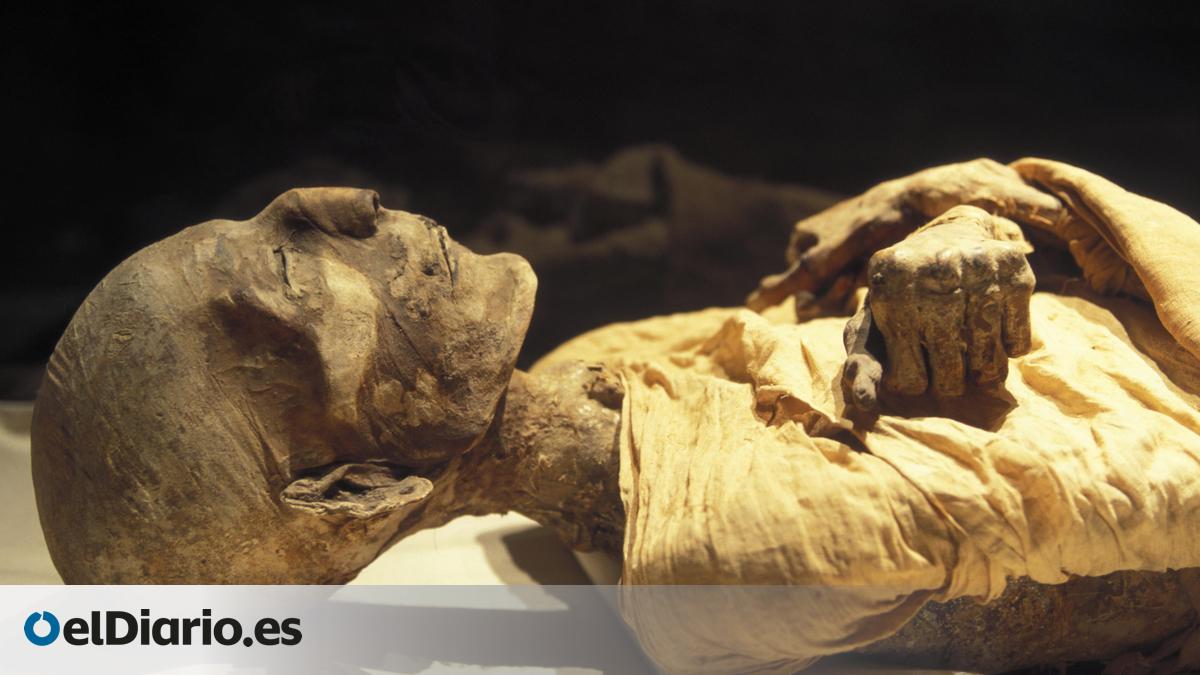
The global online trade in centuries-old mummified human remains poses a severe public health hazard, according to a peer-reviewed study published in the International Journal of Cultural Property. Researchers warn that the underground market for body parts—including severed hands, feet, and entire mummified heads—exposes not only collectors but also postal workers, warehouse employees, and customs officials to dangerous latent microorganisms and toxic preserving chemicals.
Authored by a team including human bioarchaeology professor Kirsty Squires of Staffordshire University, Dario Piombino-Mascali, Clara Urzì, and Damien Huffer, the study highlights what the researchers term a “desolate landscape” of semi-clandestine sales across social media networks, e-commerce platforms, and auction houses. An analysis of 128 online listings revealed widespread biodeterioro without any safety guidelines or protective equipment provided to buyers, who frequently rely on standard postal services to transport the remains.
Pathogens and Heavy Metals in the Global Trade
According to the published study, isolated body parts such as hands and feet appeared most frequently in the examined listings, followed by complete mummified heads. Over half of the analyzed sample—specifically 51.6%—consisted of heads in varying states of preservation. This category included partial or complete mummified heads, crania with preserved soft tissue or hair, and tsantsas, which are the traditional reduced heads crafted by the Shuar people of northern Peru and eastern Ecuador.
The risks associated with acquiring these artifacts extend far beyond legal and ethical concerns. Mummification processes, whether natural or artificial, rely on complex physical and chemical treatments intended to halt decomposition. Historically, these techniques often utilized toxic substances and heavy metals such as arsenic, mercury, and lead to preserve delicate tissues.
Furthermore, researchers emphasize that mummified remains can harbor latent microorganisms that survive centuries of desiccation. When these remains are handled, moved, or disturbed, fungal spores can become airborne and pose a direct inhalation threat to living individuals. Historical precedents underscore this danger; experts point to the 1970s opening of Polish King Casimir IV’s tomb in Krakow, where the inhalation of Aspergillus fungal spores was linked to the deaths of 10 out of 12 conservation scientists. A similar severe form of aspergillosis is believed to have contributed to the 1923 death of Lord Carnarvon, the primary financial backer of the exploration of Tutankhamun’s tomb in Egypt’s Valley of the Kings.
Widespread Risks Beyond the Collector’s Living Room
The study cautions that the danger is not limited to private collectors who display fragile remains in uncontrolled home environments. Investigators noted instances where severely degraded remains were photographed resting on open mounts without glass covers, exposing occupants to decay odors and potential pathogens.
Crucially, the research highlights the occupational hazards faced by logistics personnel. Because buyers and sellers frequently utilize commercial courier services and standard mail carriers to ship mummified remains, warehouse workers, transport drivers, and customs inspectors routinely come into contact with unregulated biological shipments without utilizing necessary personal protective equipment.
Keep reading
- Meet Francesca Hong: Wisconsin’s Korean-American Governor Candidate on Identity, Politics, and History
- Flood Alerts Issued for South-Eastern Australia After Record Rainfall
- Free Cancer Wellness & Exercise Program: Rebuild Strength and Health (archyworldys.com)
- Impact of Parental Hospitalization on Children’s Health Insurance in China (archynewsy.com)