
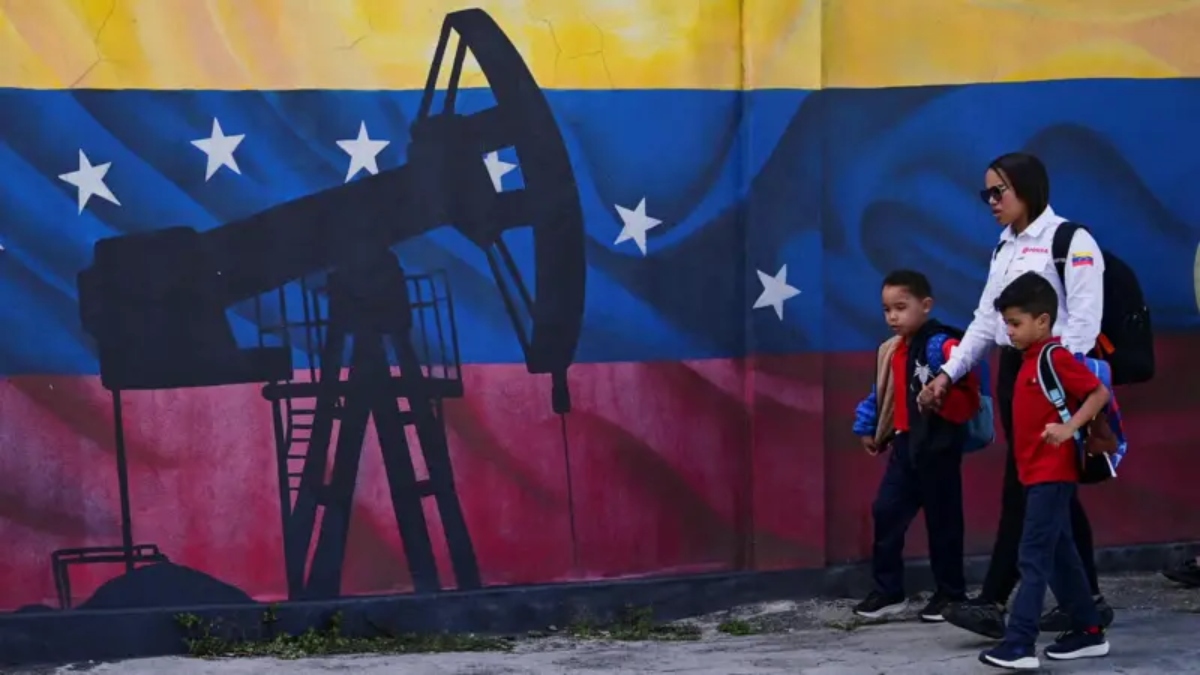
For much of the 20th century, the global energy landscape was not governed by open markets or sovereign states, but by a tight-knit oligopoly known as the “Seven Sisters.” This group of Anglo-American oil companies exerted a level of control over the world’s petroleum reserves that is almost unfathomable in today’s diversified energy market. From determining the price of a barrel of crude to deciding which nations were allowed to industrialize, the Seven Sisters operated as a shadow government of the oil world.
Understanding the rise and eventual decline of this cartel is more than a history lesson. it is a study in the birth of resource nationalism. Nowhere was this tension more evident than in Venezuela. As one of the world’s earliest and most prolific oil producers, Venezuela served as both a primary profit center for these corporations and the epicenter of the struggle for national sovereignty over natural resources.
As a financial journalist who has spent nearly two decades analyzing global markets and economic policy, I have observed that the echoes of the Seven Sisters era still resonate in today’s geopolitical tensions. The shift from foreign corporate dominance to state-led control—a transition that defined the Venezuelan economy—laid the groundwork for the modern energy order and the creation of the Organization of the Petroleum Exporting Countries (OPEC).
Who Were the Seven Sisters?
The term “Seven Sisters” was coined to describe the seven dominant oil companies that managed the global petroleum industry from the early 1900s until the 1970s. These companies did not just compete; they frequently collaborated to stabilize prices and divide territories, effectively creating a global cartel. The group primarily consisted of Anglo-Persian (now BP), Royal Dutch Shell, Standard Oil of New Jersey (now ExxonMobil), Standard Oil of New York (now ExxonMobil), Standard Oil of California (now Chevron), Gulf Oil and Texaco.

These firms controlled nearly every stage of the oil value chain: exploration, production, refining, and distribution. By controlling the “tap,” they could manipulate supply to keep prices favorable to their margins. Their power was cemented through secret agreements, such as the Achnacarry Agreement of 1928, where the companies met in Scotland to end a ruinous price war and agree on a quota system for production.
For the host countries where the oil was actually located, the arrangement was often predatory. The Seven Sisters typically operated under “concession” agreements—long-term contracts that gave the companies exclusive rights to vast tracts of land for decades, often in exchange for modest royalties that bore little relation to the actual market value of the oil being extracted.
The Seven Sisters in Venezuela: A Relationship of Dependency
Venezuela’s entry into the oil age transformed the nation from an agrarian society into an urbanized, oil-dependent state. In the early 20th century, the Venezuelan government granted massive concessions to the Seven Sisters, allowing these firms to build the infrastructure necessary to extract crude from the Orinoco Belt and Lake Maracaibo.
During this era, the relationship was characterized by an extreme imbalance of power. The companies provided the technology and capital, but they also dictated the terms of production. For Venezuela, this meant that while the country was producing millions of barrels of oil, the vast majority of the wealth was flowing back to headquarters in London, New York, and The Hague.
This dynamic created a “dual economy.” On one hand, there was a modern, high-tech oil sector managed by foreigners; on the other, a struggling domestic economy that remained underdeveloped. This structural inequality fueled growing resentment among the Venezuelan populace and policymakers, who began to view the Seven Sisters not as partners in development, but as agents of economic imperialism.
The Pivot to Sovereignty: The 50/50 Split and Nationalization
The tide began to turn after World War II. Host nations started demanding a fairer share of the profits. A pivotal moment occurred in the late 1940s and early 1950s with the introduction of the “50/50 profit-sharing” principle. Originally pioneered in Saudi Arabia, this model forced the Seven Sisters to split the profits from oil production equally with the host government.

In Venezuela, this shift was codified through legislative changes, including the Hydrocarbons Law of 1948, which sought to increase the state’s take from oil exports. This was a critical first step toward breaking the absolute grip of the foreign cartel, as it transitioned the government from a passive recipient of royalties to an active partner in profit-sharing.
However, profit-sharing was not enough for those advocating for full resource sovereignty. The desire for total control over the national patrimony culminated in the nationalization of the oil industry. On January 1, 1976, the Venezuelan government officially nationalized its oil assets, creating the state-owned company Petróleos de Venezuela, S.A. (PDVSA). This move effectively evicted the Seven Sisters from their role as owners of the oil, although many of the companies remained as service providers or partners in joint ventures.
The Birth of OPEC and the End of the Cartel Era
The struggle against the Seven Sisters in Venezuela and other oil-rich regions led to one of the most influential organizations in economic history: the Organization of the Petroleum Exporting Countries (OPEC). Founded in 1960 in Baghdad, OPEC was a direct response to the Seven Sisters’ practice of unilaterally lowering the “posted price” of oil, which reduced the revenues of producing nations.
By coordinating production levels and pricing, OPEC members—including Venezuela—were able to wrest control of the market away from the Anglo-American companies. The 1973 oil crisis served as the definitive death knell for the Seven Sisters’ hegemony, as producing nations demonstrated they could use oil as a political and economic weapon, causing prices to skyrocket and shifting the global balance of power.
The legacy of this era is complex. While nationalization allowed Venezuela to capture the full rent of its oil wealth, it also tied the nation’s fate entirely to the volatility of global oil prices. The institutional strength of PDVSA in its early years was a point of national pride, but the subsequent decades of political instability and mismanagement have highlighted the risks of “Dutch Disease”—where a reliance on a single natural resource stifles other sectors of the economy.
Key Takeaways: The Seven Sisters’ Impact
- Market Monopoly: The Seven Sisters controlled production, pricing, and distribution of global oil for nearly 70 years, operating more as a cartel than as competitors.
- The Concession Model: Early agreements in Venezuela allowed foreign firms to extract wealth with minimal benefit to the local economy, fueling future nationalist movements.
- Shift to Sovereignty: The transition from royalties to 50/50 profit-sharing and eventually to the 1976 nationalization marked the end of corporate dominance in Venezuela.
- Geopolitical Realignment: The resistance to the Seven Sisters led directly to the formation of OPEC, shifting power from Western capitals to producing nations.
What Happens Next in Global Energy?
While the Seven Sisters no longer exist in their original form, the tension between state-owned enterprises (NOCs) and investor-owned companies (IOCs) continues to shape the energy transition. Today, the focus has shifted from who owns the oil to who controls the minerals necessary for the green transition, such as lithium and cobalt.
For Venezuela, the path forward remains tied to the rehabilitation of its oil infrastructure and a potential renegotiation of its standing in the global market. The next critical checkpoint for observers will be the ongoing developments regarding international sanctions and the potential for restructured agreements with foreign energy firms to revive production.
Do you think the rise of “green minerals” will create a new version of the Seven Sisters? Share your thoughts in the comments below or share this analysis with your network.