
Three French nationals, who were brought to Syria as children by their parents and forced into the service of the Islamic State (IS), are now seeking the repatriation of former IS child fighters to France. Their legal representative announced the request on Friday, highlighting the complex legal status of individuals recruited as minors by the militant group.
These men are among thousands of suspected IS “fighters” currently held in Iraq. They were part of a massive logistical operation earlier this year that saw detainees moved across the border from Syria to face the Iraqi judicial system.
The request for repatriation underscores the ongoing global debate over how to handle individuals who were indoctrinated or coerced into joining the transnational jihad movement during their childhood, as opposed to adult volunteers who traveled to the region to join the conflict.
Mass Transfer of Detainees to Baghdad
The Frenchmen’s current detention is the result of a large-scale operation conducted by the U.S. Military. According to official reports, the U.S. Military completed the transfer of 5,700 IS detainees from Syria to Iraq.

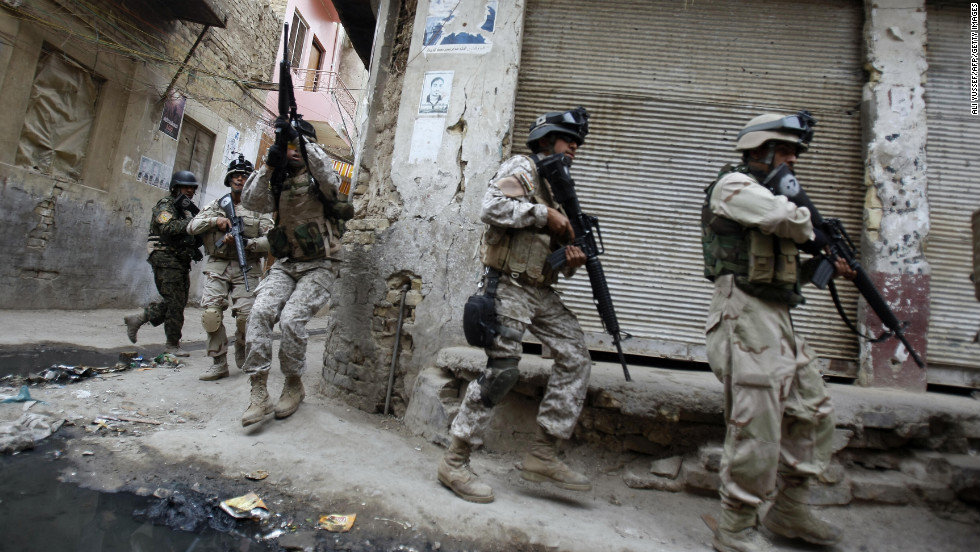
Once transferred, the detainees were placed under the jurisdiction of Iraqi authorities, who intend to try them for their alleged roles in the organization. On Thursday, Feb. 12, 2026, Iraqi security forces were documented leading suspected militants for questioning at the Al-Karkh Central Prison in Baghdad.
The movement of these prisoners from Syrian camps to Iraqi prisons represents a significant shift in the management of the remaining IS remnants. For the three Frenchmen, this transfer has intensified the push for their return to Europe, as their lawyer argues that their childhood forced labor should exempt them from the same treatment as adult combatants.
The Legacy of the IS Caliphate
The Islamic State, similarly known as ISIS, ISIL, or Daesh, is a transnational Salafi jihadist militant organisation that sought to establish a state based on a fundamentalist interpretation of Islamic law. The group originated among Sunni Iraqis and was affiliated with al-Qaeda until 2014.
The organization gained worldwide notoriety when it declared the establishment of a caliphate in 2014 following significant territorial gains across Iraq, and Syria. Yet, this territorial control was short-lived. By November 2017, the group had lost most of its territory.
Key milestones in the group’s decline included the capture of Mosul by Iraqi forces on July 20, 2017, and the capture of Raqqa by Syrian Democratic Forces (SDF) on October 17, 2017. By March 23, 2019, the organization had lost all of its remaining territory in Syria.
Forced Recruitment and Child Soldiers
The case of the three Frenchmen highlights a recurring tragedy of the IS conflict: the use of children as “fighters” or forced laborers. These individuals were often brought to the region by parents who had joined the movement, leaving the children with no choice but to be raised and trained within the group’s infrastructure.
The legal distinction between a “fighter” and a “victim of forced recruitment” is central to the repatriation of former IS child fighters. Whereas Iraqi authorities view the detainees as militants, defense lawyers argue that those recruited as children cannot be held to the same standard of criminal intent as adults.
Legal Challenges and Human Rights Implications
The repatriation of foreign nationals from Iraqi prisons involves complex diplomatic negotiations and legal hurdles. France, like several other Western nations, has faced internal pressure to balance national security concerns with the human rights of citizens who were minors at the time of their involvement with IS.
The prisoners at Al-Karkh Central Prison face a rigorous Iraqi legal process. Due to the fact that the Iraqi government expects to try these detainees, the window for repatriation often depends on whether the home country is willing to accept the individuals for trial or rehabilitation on their own soil.
For the three Frenchmen, the goal of their legal team is to secure a transfer from Iraqi custody back to France, where they can be processed under French law, which may provide different protections for those who were minors during the commission of alleged crimes.
Summary of the IS Territorial Timeline
| Date | Event | Outcome |
|---|---|---|
| June 29, 2014 | Declaration of Caliphate | Renamed to “Islamic State” and claimed vast territories |
| July 20, 2017 | Fall of Mosul | City captured by Iraqi forces |
| October 17, 2017 | Fall of Raqqa | City captured by SDF forces |
| March 23, 2019 | Total Territorial Loss | Loss of all remaining territory in Syria |
The current situation in Baghdad serves as a final chapter for many who were swept up in the rise and fall of the caliphate. As Iraqi security forces continue questioning the 5,700 transferred detainees, the international community continues to grapple with the moral and legal obligations toward those who were children during the conflict.
The next confirmed checkpoint for these cases will be the ongoing trials and questioning sessions conducted by Iraqi authorities at Al-Karkh Central Prison, which will determine whether these individuals remain in Iraqi custody or are granted repatriation.
World Today Journal encourages readers to share this story and leave comments below regarding the legal complexities of repatriating former child soldiers.
Related reading