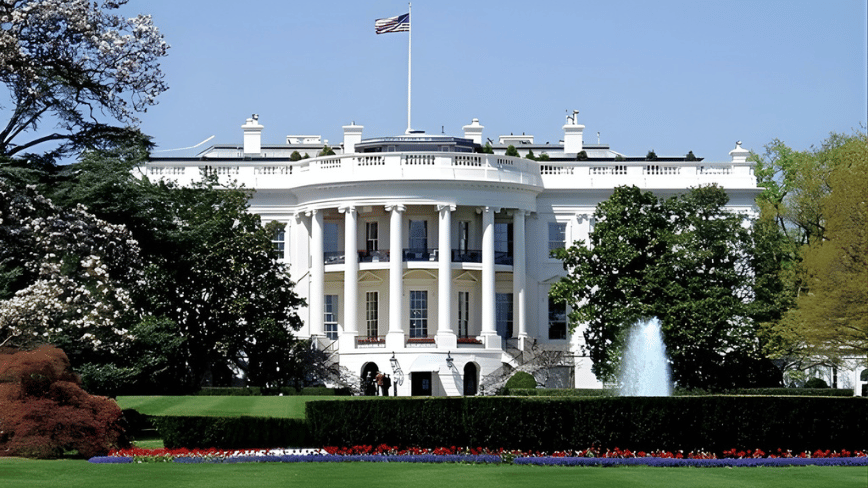
President Donald Trump’s administration is pushing for a national framework to govern artificial intelligence that would override state-level regulations, a move that has sparked growing resistance from state legislatures and members of Congress across party lines. The effort, led by the Department of Justice and the Department of Commerce, seeks to establish what officials describe as a “minimally burdensome national standard” for AI development and deployment. But as of mid-2024, more than a dozen states have enacted or advanced their own AI governance laws, citing concerns over algorithmic bias, privacy risks, and the need for localized oversight in the absence of comprehensive federal action.
The administration’s strategy includes a DOJ litigation task force reviewing state laws for potential preemption challenges, Commerce Department assessments identifying certain state requirements as “unduly burdensome,” and advocacy for federal legislation that would expressly preempt state AI rules. Yet these initiatives have faced consistent pushback. In early 2024, a bipartisan group of senators introduced the Artificial Intelligence Civil Rights Act, which would prohibit discriminatory AI utilize and empower state attorneys general to enforce violations — directly contradicting the administration’s preemption goals. Similarly, the House Committee on Energy and Commerce held hearings in March 2024 where lawmakers from both parties questioned whether a national standard could adequately address diverse regional concerns without stifling innovation or accountability.
State-level activity has accelerated rapidly. According to the National Conference of State Legislatures (NCSL), at least 1,208 AI-related bills were introduced in state legislatures during the 2023–2024 legislative session, with over 130 enacted into law. These measures span a wide range of applications, from regulating AI in hiring and housing decisions to requiring impact assessments for automated systems used in public benefits programs. Colorado became the first state to pass comprehensive AI discrimination legislation in May 2024 with the SB 24-205, which mandates reasonable care to prevent algorithmic bias in high-risk AI systems and allows individuals to sue for violations. Utah and Tennessee have also passed laws focusing on transparency in generative AI use, while New York City’s Local Law 144, effective July 2023, requires bias audits for AI-driven hiring tools — a rule that remains in effect despite ongoing legal challenges.
Federal Preemption Efforts Face Legal and Political Hurdles
The Trump administration’s reliance on federal preemption to block state AI laws rests on the Supremacy Clause of the U.S. Constitution, which gives federal law precedence when it conflicts with state law. However, legal experts note that preemption only applies if Congress has clearly expressed intent to occupy a regulatory field — a standard that has not yet been met in AI governance. In a March 2024 analysis, the Congressional Research Service stated that “no comprehensive federal AI statute currently exists that would occupy the field to the exclusion of state action,” meaning states retain authority to regulate unless Congress acts decisively.
The administration has pointed to existing sector-specific federal rules — such as those governing AI in medical devices under the FDA or autonomous vehicles under the NHTSA — as evidence of federal leadership. But critics argue these frameworks are narrow and depart major gaps in consumer protection, workforce impacts, and civil rights protections. During a Senate Judiciary Committee hearing in April 2024, Professor Woodrow Hartzog of Boston University School of Law testified that “federal preemption without a substantive federal floor risks leaving consumers unprotected in areas where states have stepped forward to address real harms.”
Meanwhile, the DOJ’s litigation task force, reportedly formed in late 2023 to evaluate state AI laws for potential preemption suits, has not filed any public challenges as of June 2024. Department officials have not confirmed the task force’s existence or activities in response to multiple Freedom of Information Act requests, raising questions about its operational status. The Commerce Department, meanwhile, issued a request for information in February 2024 seeking public comment on “state AI laws that may impose undue burdens on interstate commerce,” but has not released findings or announced any formal determinations.
States Argue for Localized Solutions in Policy Vacuum
State officials maintain that their legislative activity is a necessary response to federal inaction. In the absence of a national AI law, states argue they are filling a critical governance gap to protect residents from discriminatory outcomes, opaque decision-making, and unchecked surveillance technologies. California, which has long been a leader in tech regulation, passed the SB 1047 in September 2023 — though it was later vetoed by Governor Gavin Newsom over concerns about stifling innovation — and continues to advance narrower measures through its Privacy Protection Agency.
Other states are taking more targeted approaches. Illinois amended its Human Rights Act in 2023 to prohibit the use of AI that discriminates based on protected characteristics in employment, housing, and financial services. Washington state enacted the My Health My Data Act in 2023, which includes provisions limiting the use of AI to infer sensitive health information from consumer data. Virginia and Maryland have established AI advisory councils to study impacts and recommend future legislation, while cities like Seattle and Boston have implemented municipal guidelines for government use of AI.
Industry groups remain divided. While some tech associations, including NetChoice and the Chamber of Progress, have lobbied for federal preemption to avoid a “patchwork” of state laws, others — particularly those focused on ethical AI and civil rights — have supported state-level action as a necessary check on powerful systems. The Software & Information Industry Association (SIIA) has urged Congress to act, warning that continued inaction will only increase regulatory uncertainty for businesses operating across state lines.
What Comes Next: Congressional Action and Legal Uncertainty
As of June 2024, no comprehensive AI regulation bill has passed Congress, though several proposals are under consideration. The CREATE AI Act, which would establish a national AI research resource and support workforce development, has bipartisan backing but does not include regulatory provisions. The Artificial Intelligence Civil Rights Act, meanwhile, faces an uncertain future in a closely divided Senate, where procedural hurdles could prevent a vote despite majority support.
The administration has signaled it may pursue executive action if legislative efforts fail. In a May 2024 interview with Fox News, Chief of Staff Susie Wiles stated that the president is “exploring all available tools” to ensure AI development aligns with national interests, including potential use of executive orders to direct federal agencies. However, legal scholars note that executive orders cannot override state laws unless based on existing statutory authority — limiting their effectiveness in achieving broad preemption.
The next key development to watch is the Senate Committee on Commerce, Science, and Transportation’s scheduled markup of AI legislation in July 2024, where amendments addressing state preemption could be debated. The Federal Trade Commission is expected to release final guidance later in 2024 on its authority to regulate AI under Section 5 of the FTC Act, which could influence how aggressively the federal government pursues oversight — with or without new legislation.
For now, the tension between federal preemption efforts and state innovation continues to define the evolving landscape of AI governance in the United States. As states move forward with laws targeting fairness, transparency, and accountability, the absence of a clear federal framework leaves businesses, developers, and consumers navigating a complex and shifting regulatory environment.
Stay informed about developments in AI policy by following updates from the National Conference of State Legislatures, the Congressional Research Service, and state legislative websites. Share your thoughts on how AI should be governed — and who should decide — in the comments below.
Worth a look