British Prime Minister Sir Keir Starmer has maintained a firm stance against joining the United States in military action against Iran, despite repeated public pressure and criticism from President Donald Trump. In a statement to the House of Commons on April 15, 2026, Starmer declared he would “not yield” to pressure to participate in the conflict, emphasizing that it is “not in our national interest to join this war and we will not do so.” This position follows Trump’s public remarks suggesting the UK had failed to support US requests for assistance during the Iran war, which began in late February 2026 after US-Israeli strikes commenced.
The tension between the two leaders has escalated amid broader disagreements over NATO burden-sharing and transatlantic cooperation. Trump has repeatedly criticized Starmer personally, describing him as “not Winston Churchill” and questioning the strength of the US-UK special relationship. In an interview with The Sun newspaper, Trump stated that while France has been a strong ally, Britain’s refusal to allow US warplanes to use its bases for strikes against Iran has damaged bilateral ties. These comments come as Starmer continues to advocate for diplomatic solutions, including efforts to reopen the Strait of Hormuz through regional engagement with Gulf states.
Starmer has framed his opposition to military involvement as a matter of national sovereignty and economic prudence. In an interview with ITV, he expressed being “fed up” with UK households facing energy price volatility linked to global conflicts, including those driven by actions of foreign leaders like Trump and Russian President Vladimir Putin. He argued that Britain should not bear financial costs for wars it does not actively participate in, calling for greater energy resilience and independence. This perspective was reiterated in a Guardian opinion piece where he urged using the Iran conflict as a warning to strengthen domestic and European resilience.
The Prime Minister’s recent diplomatic efforts have focused on de-escalation and regional cooperation. Following a meeting with Trump the night before April 10, 2026, Starmer traveled to Qatar to conclude a three-day Gulf tour aimed at building consensus on reopening the Strait of Hormuz. He stressed that any lasting ceasefire must involve Iran’s neighbors, noting that Gulf states are directly affected by the waterway’s closure. Starmer told reporters he had shared regional perspectives with Trump during their discussion, emphasizing that stability in the area requires inclusive diplomacy rather than unilateral military action.
Historical Context of the Falklands Dispute
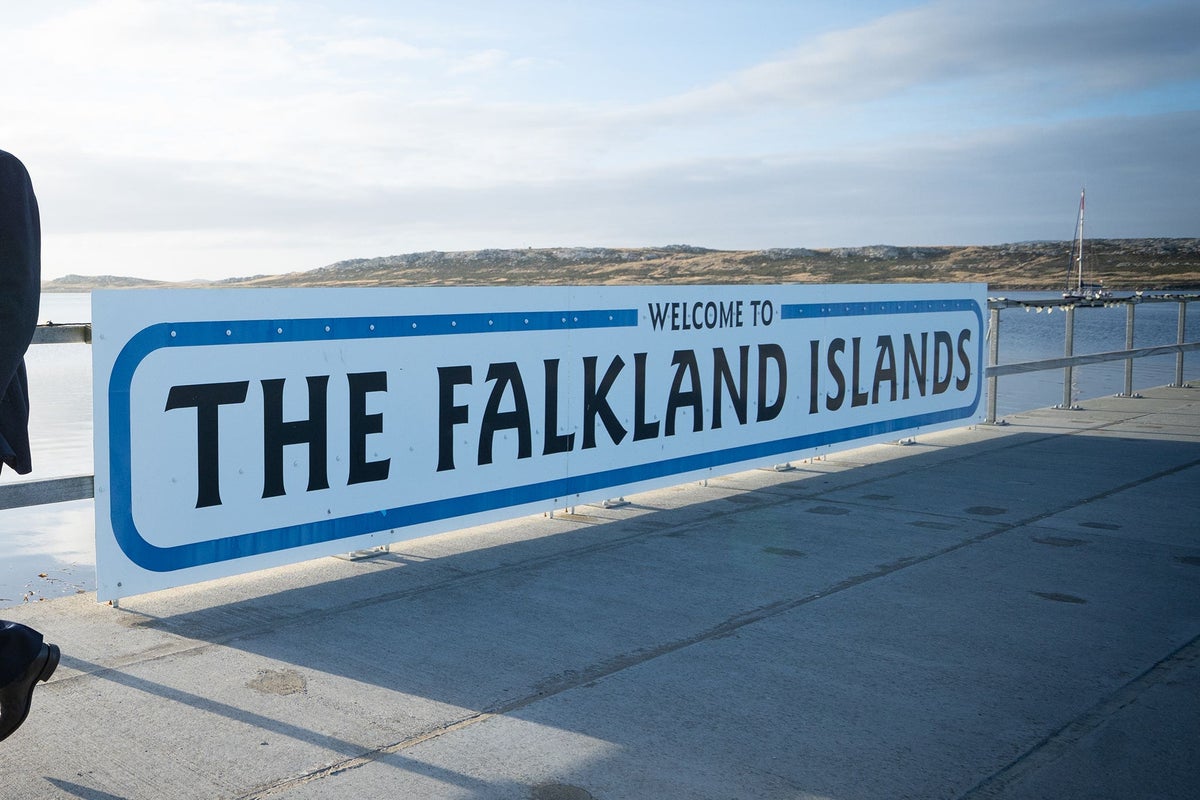
The sovereignty of the Falkland Islands has been a longstanding point of contention between the United Kingdom and Argentina since the 19th century. The UK has administered the islands since 1833, maintaining that the islanders’ right to self-determination underpins its claim. Argentina asserts historical inheritance from the Spanish Empire and proximity as grounds for its sovereignty claim, referring to the islands as Islas Malvinas. The dispute culminated in the 1982 Falklands War, when Argentina invaded the islands and the UK launched a military campaign to retake them, resulting in British victory after 74 days of conflict.
Despite the war’s outcome, Argentina has continued to pursue its claim through diplomatic channels at the United Nations and other international forums. The issue remains sensitive in both countries, particularly around anniversaries of the conflict. In recent years, Argentina has renewed calls for negotiations, while the UK government has consistently maintained that talks will only occur if the Falkland Islanders themselves agree. The islanders have expressed a strong preference to remain a British Overseas Territory, as demonstrated in a 2013 referendum where 99.8% voted in favor of maintaining ties with the UK.
Trump’s Stance on Territorial Claims and NATO
During his presidency, Donald Trump has frequently questioned the value of longstanding US alliances and challenged partners to increase defense spending. His “America First” foreign policy has emphasized transactional relationships, often linking security commitments to financial contributions or specific policy alignments. Trump has previously suggested that NATO members who fail to meet defense spending targets could face reassessment of US commitments, though he has not formally withdrawn the US from the alliance.
Regarding territorial disputes, Trump has generally avoided taking explicit positions that could complicate US relations with either party. Yet, his criticism of NATO allies for perceived lack of support in specific conflicts has raised concerns among some European officials about the consistency of US backing on other issues. Analysts note that while Trump has not publicly linked NATO burden-sharing to territorial claims like the Falklands, his broader rhetoric about alliance reliability has contributed to uncertainty in European capitals about future US engagement.
Current Status of UK-Argentina Relations
Diplomatic relations between the United Kingdom and Argentina remain strained but functional, with both countries maintaining embassies in each other’s capitals. The two nations have established mechanisms for dialogue on practical issues such as fisheries, air travel, and identification documents for Falkland Islanders traveling to mainland Argentina. However, substantive discussions on sovereignty have been repeatedly rejected by the UK government, which insists that any talks must include the Falkland Islanders and respect their expressed wish to remain British.
In recent years, Argentina has pursued its claim through multilateral forums, including the UN Special Committee on Decolonization. The UK has consistently opposed these efforts, arguing that they undermine the principle of self-determination. Despite periodic tensions, both countries have avoided escalation since 1982, focusing instead on economic and humanitarian cooperation where possible. The discovery of oil reserves in the waters surrounding the Falklands has added economic complexity to the dispute, though exploration remains limited due to ongoing political disagreements.
International Law and Self-Determination
The Falkland Islands situation is frequently discussed in relation to the principle of self-determination under international law. The UK government bases its position on the 2013 referendum, in which Falkland Islanders voted overwhelmingly to remain a British Overseas Territory. International observers noted the vote was conducted freely and fairly, with a turnout of over 90%. The UK argues that this expression of popular will constitutes a valid exercise of self-determination, which is enshrined in the UN Charter and subsequent human rights treaties.
Argentina counters that the principle of self-determination does not apply in cases of territorial displacement, arguing that the current population was implanted after Britain’s 1833 assertion of control. It maintains that the issue should be resolved through negotiations between the two states, citing UN General Assembly resolutions that have called for a peaceful settlement. Legal scholars note that while self-determination is a fundamental principle, its application in long-standing territorial disputes remains subject to interpretation, particularly when historical claims and contemporary demographics intersect.
As of April 2026, no formal talks between the UK and Argentina on sovereignty are underway, and the UK government has not indicated any shift in its position that negotiations require Falkland Islander consent. The islands continue to self-govern under their constitution, with the UK responsible for defense and foreign affairs. Any change in status would require legislative action in both the Falkland Islands and the UK Parliament, alongside a further expression of the islanders’ views.
For ongoing developments regarding international diplomatic positions and regional security dynamics, readers can refer to official updates from the UK Foreign, Commonwealth and Development Office and the Argentine Ministry of Foreign Affairs. Stay informed by following verified diplomatic channels and multilateral organization announcements.
We encourage readers to share their thoughts on this evolving geopolitical situation in the comments below and to share this article with others interested in global affairs.
Worth a look