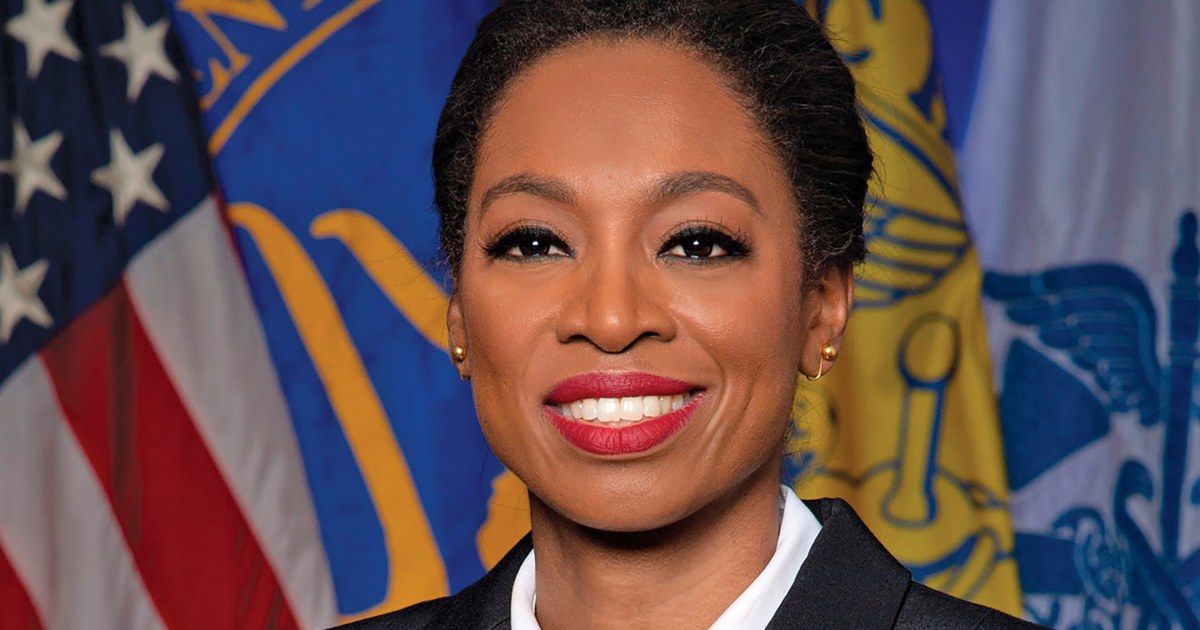
President Donald Trump has nominated Dr. Erica Schwartz to lead the Centers for Disease Control and Prevention (CDC), marking his latest appointment to head the nation’s public health agency. The announcement, made on Truth Social on April 16, 2026, positions Schwartz—a Coast Guard rear admiral with a background in medicine, law and public health—as Trump’s choice to fill a role that has remained without a Senate-confirmed director for much of his second term.
Schwartz served as Trump’s deputy surgeon general during his first administration and brings over two decades of experience in the Commissioned Corps of the U.S. Public Health Service. Her nomination comes amid ongoing scrutiny of the CDC’s direction under Health and Human Services Secretary Robert F. Kennedy Jr., who has overseen significant restructuring and staff reductions at the agency. Trump praised Schwartz on social media, calling her a “star” and highlighting her dual degrees from Brown University and the University of Maryland.
The CDC has been led in an acting capacity by Dr. Jay Bhattacharya, director of the National Institutes of Health, since September 2025 following the departure of former director Susan Monarez. Monarez was removed after publicly disagreeing with Kennedy Jr. Over vaccine advisory panel composition, a conflict she detailed in a Wall Street Journal op-ed. Schwartz, if confirmed, would report to Kennedy Jr. As part of the HHS leadership structure.
Trump as well announced three additional executive appointments alongside Schwartz’s nomination: Sean Slovenski, a former Walmart executive, as CDC deputy director and chief operating officer; Dr. Jennifer Shuford, Texas health commissioner, as deputy director and chief medical officer; and Dr. Sara Brenner, a senior FDA official, as senior counselor for public health to the health secretary. The president stated these appointees collectively bring “knowledge, experience, and TOP degrees” to “restore the GOLD STANDARD OF SCIENCE at the CDC.”
Schwartz’s nomination now moves to the Senate for confirmation, a process that could take several months. During this period, Bhattacharya is expected to continue serving as acting CDC director. The appointment reflects Trump’s ongoing effort to reshape federal public health leadership in alignment with his administration’s priorities, particularly regarding vaccine policy and agency oversight.
Background on Erica Schwartz’s Public Health and Military Service
Before her nomination, Erica Schwartz built a career spanning military service and public health administration. She graduated from Brown University with both her undergraduate and medical degrees, later earning a law degree from the University of Maryland and a Master of Public Health. Her service in the U.S. Public Health Service Commissioned Corps spanned 24 years, during which she held various clinical and administrative roles.
During Trump’s first presidency, Schwartz served as deputy surgeon general, advising on public health matters and supporting federal health initiatives. After leaving government service at the end of that term, she was not selected for a similar role under the Biden administration. Her nomination marks a return to a prominent federal health position, bringing with it experience in both military medicine and civilian public health infrastructure.
Schwartz’s background includes involvement in federal pandemic response efforts, though specific details of her role during the COVID-19 crisis were not elaborated in the announcement. Her legal and medical training distinguishes her from many previous CDC directors, who have typically come from epidemiology or academic research backgrounds.
Context of CDC Leadership Vacancies and Administration Priorities
The CDC has operated without a Senate-confirmed director for extended periods during Trump’s second term. Following the ousting of Susan Monarez in September 2025, the agency faced leadership instability amid broader changes initiated by Secretary Kennedy Jr. These included workforce reductions, program consolidations, and shifts in advisory committee composition—particularly regarding vaccine policy.
Kennedy Jr. Has publicly described these changes as efforts to reduce “bureaucratic sprawl” and restore scientific integrity, though critics have argued they undermine public health expertise and institutional independence. The removal of Monarez, who had served less than a month as director, intensified scrutiny over political influence in public health appointments.
Trump’s initial nominee for CDC director after Monarez’s departure was former Florida congressman Dave Weldon, a known vaccine skeptic. That nomination was withdrawn when it became clear Weldon lacked sufficient Senate support for confirmation. Schwartz’s nomination appears to be an effort to appoint someone with established government credentials while still aligning with the administration’s broader health policy goals.
Reactions and Implications for Public Health Policy
The nomination has drawn attention from public health experts and lawmakers, particularly given the CDC’s current challenges in maintaining morale and operational capacity amid leadership turnover. While Schwartz’s military and government service background may appeal to senators seeking a nominee with institutional experience, her association with Trump’s first administration and Kennedy Jr.’s HHS leadership may raise questions about her independence on issues like vaccine safety and pandemic preparedness.
Public health organizations have emphasized the importance of a Senate-confirmed CDC director capable of providing stable, science-based leadership during ongoing health threats, including seasonal influenza, emerging infectious diseases, and chronic disease prevention. The confirmation process will likely examine Schwartz’s views on these matters, as well as her ability to lead an agency that has faced significant internal disruption in recent months.
For now, the CDC continues under acting leadership, with Schwartz’s nomination setting the stage for a Senate debate over the future direction of the nation’s premier public health institution. The outcome will influence not only agency operations but also public trust in federal health guidance during a period of heightened polarization over science and policy.
What Happens Next in the Confirmation Process
The next step in the process is Senate consideration of Schwartz’s nomination, which will involve review by the Health, Education, Labor, and Pensions (Aid) Committee. A hearing date has not yet been scheduled, but such proceedings typically occur within weeks of a nomination being formally submitted. If approved by the committee, the nomination would proceed to a full Senate vote.

Until a confirmation vote occurs, Dr. Jay Bhattacharya will remain in his role as acting CDC director, balancing responsibilities between leading the NIH and overseeing the CDC’s day-to-day operations. The duration of the confirmation process remains uncertain, though past nominations for similar positions have taken anywhere from two to six months, depending on political dynamics and the completeness of background checks and financial disclosures.
The public and stakeholders can monitor updates through official Senate channels, including the HELP Committee website and congressional recording systems, which provide access to hearing schedules, witness lists, and vote results once proceedings begin.
As this story develops, World Today Journal will continue to provide verified updates on the nomination process and its implications for American public health policy.
Stay informed. Share this article to help others follow the developments.
Keep reading