
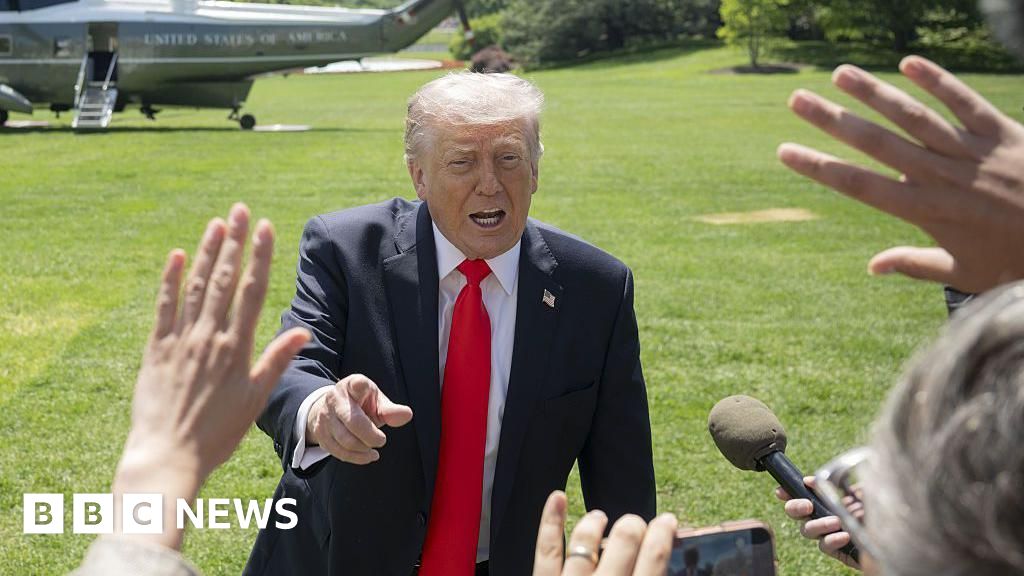
President Donald Trump has informed Congress that the 60-day legal deadline to secure legislative authorization for military operations in Iran is no longer applicable, arguing that hostilities have effectively ended. In a letter sent to lawmakers on Friday, May 1, 2026, the administration asserted that the conflict has been terminated
, a move that allows the White House to bypass the requirement for a formal vote of approval from the U.S. Congress according to reports from the Associated Press.
The move comes as a fragile ceasefire remains in place between the United States and Tehran. By declaring the war terminated, the Trump administration is attempting to navigate the constraints of the War Powers Resolution, which mandates that a president must either obtain congressional approval or withdraw forces within 60 days of initiating military action. The May 1 deadline marked the end of that window for the current operations in Iran as detailed by Al Jazeera.
Despite the claim that hostilities have ceased, U.S. Armed forces maintain a significant presence in the region. This discrepancy has sparked a debate over the legal definition of terminated hostilities
and whether the administration is utilizing the ceasefire as a legal loophole to maintain military leverage without legislative oversight. The administration’s position is that the ceasefire fundamentally changes the nature of the engagement, rendering the original 60-day clock obsolete.
Republican lawmakers have largely signaled their support for the president’s approach. Many in the GOP have stated they will continue to defer to President Trump during this period, avoiding a confrontation over the War Powers deadline although the ceasefire holds according to NPR.
The War Powers Resolution and the 60-Day Deadline
The War Powers Resolution of 1973 was designed to check the executive branch’s ability to commit U.S. Forces to overseas conflicts without the consent of Congress. Under the law, the president must notify Congress within 48 hours of committing armed forces to hostilities. Once that notification is made, the president has a 60-day window to receive a formal authorization or a joint resolution of approval. If neither occurs, the law requires the president to terminate the use of those forces within an additional calendar day.
In the case of the military operations in Iran, the 60-day limit expired on Friday, May 1, 2026. The administration’s strategy to declare the war terminated
is a direct response to this deadline. By claiming the war is over, the White House argues that there is no longer an unauthorized war
to be approved, thereby removing the legal necessity for a congressional vote as analyzed by CNN.
Legal scholars and critics argue that the mere existence of a ceasefire does not equate to the termination of hostilities, especially when troops remain deployed in a combat-ready posture. The core of the dispute rests on whether the “termination” of active fighting is sufficient to reset or erase the legal obligations triggered by the initial deployment of forces.
Political Fallout and Congressional Response
The reaction within the Capitol has been split along partisan lines. While Republicans have opted to defer to the executive branch, Democratic lawmakers have questioned the legality of the administration’s interpretation of the War Powers Act. The central concern for critics is that this precedent could allow future administrations to avoid congressional oversight simply by declaring a temporary lull in fighting as a formal termination of war.
During recent proceedings, including a Senate Armed Services Committee hearing, officials such as Secretary of Defense Pete Hegseth and Chairman of the Joint Chiefs of Staff Air Force Gen. Danial Caine have been tasked with managing the operational realities of the region while the political battle over authorization continues according to NPR.
The administration maintains that its primary goal is the stability of the ceasefire and the protection of U.S. Interests. From the White House’s perspective, forcing a congressional vote during a delicate diplomatic window could jeopardize the peace and signal instability to Tehran.
Key Takeaways: The US-Iran Legal Standoff
- The Deadline: The 60-day War Powers Resolution deadline for congressional approval of the Iran war expired on May 1, 2026.
- The Strategy: The Trump administration claims the war is
terminated
due to a ceasefire, arguing that congressional authorization is no longer required. - The Presence: U.S. Forces remain in the region despite the claim that hostilities have ended.
- Political Alignment: Republican lawmakers have generally agreed to defer to the president’s judgment on the matter.
- Legal Conflict: Critics argue that a ceasefire is not a legal termination of hostilities and that the administration is bypassing constitutional checks and balances.
What This Means for Future Military Engagements
The outcome of this standoff could have long-term implications for how the U.S. Government handles military interventions. If the administration’s interpretation of terminated hostilities
is accepted without a legal challenge or a congressional resolution, it may broaden the president’s authority to conduct military operations without explicit legislative approval, provided a ceasefire can be claimed.
This shift would move the U.S. Further away from the intent of the 1973 War Powers Resolution, which sought to ensure that the decision to enter a war remained a collective decision involving both the executive and legislative branches. The tension between executive agility in foreign policy and legislative oversight remains the focal point of this constitutional struggle.
For those following the legal developments, official updates on the status of the ceasefire and any subsequent congressional filings can be monitored through the official Congress.gov portal, where any potential resolutions of disapproval or authorizations would be recorded.
The next critical checkpoint will be the continued monitoring of the ceasefire’s stability and whether any member of Congress introduces a formal challenge to the administration’s claim that hostilities have terminated. Further updates are expected as the Senate Armed Services Committee continues its oversight of the Department of Defense’s regional strategy.
We invite our readers to share their perspectives on the balance of power between the presidency and Congress in the comments below.