
The geopolitical landscape of Latin America is currently witnessing a high-stakes balancing act as Argentina attempts to navigate the intensifying rivalry between Washington and Beijing. At the center of this diplomatic tightrope is Santiago Caputo, a key advisor to President Javier Milei, whose recent interactions with United States officials have highlighted a striking paradox in modern diplomacy: the gap between official strategic warnings and the pragmatic realities of superpower negotiations.
For months, the United States has maintained a consistent line of communication with its partners in the region, issuing cautionary guidance regarding the expansion of Chinese influence in critical infrastructure and strategic sectors. These warnings are part of a broader U.S. Effort to limit Beijing’s footprint in the Western Hemisphere, focusing specifically on telecommunications, space exploration and debt sustainability. However, the delivery of these warnings has coincided with a surprising shift in the personal diplomacy of the 47th U.S. President.
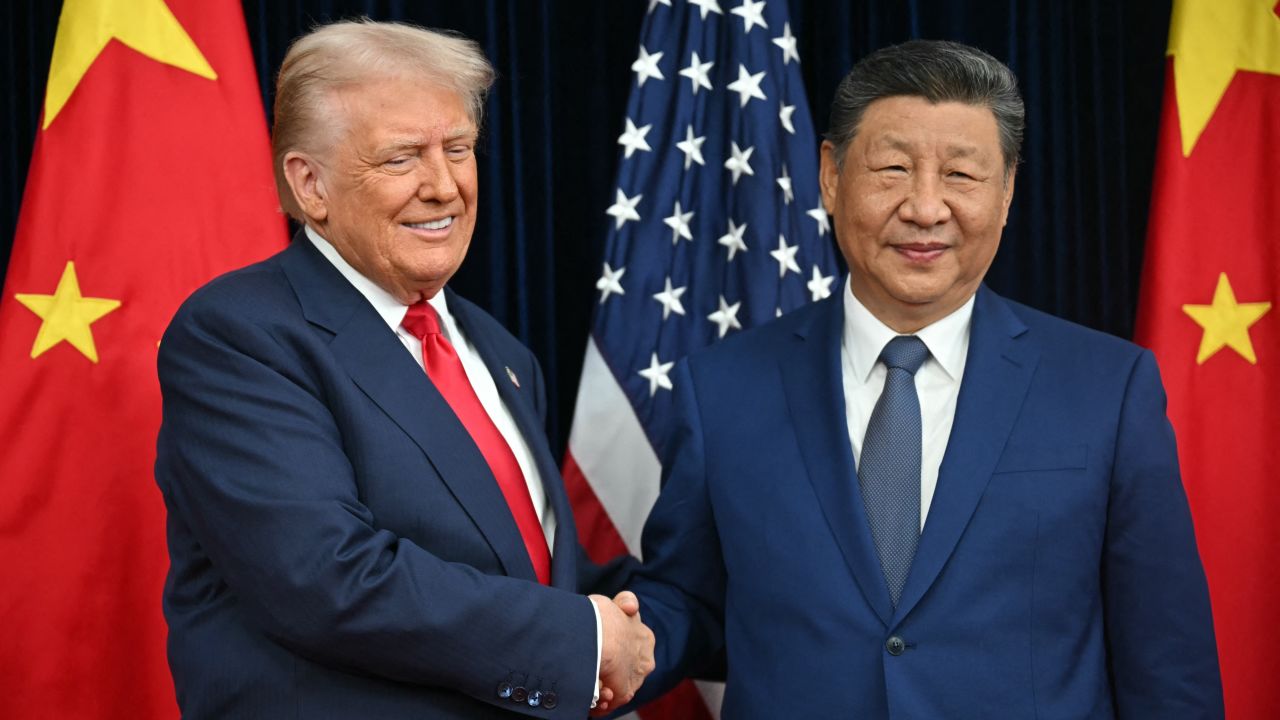
The tension reached a focal point during a period of overlapping diplomatic missions. While U.S. Representatives continued to caution the Argentine government about the long-term risks of deepening ties with China, President Donald Trump embarked on a high-profile visit to Beijing. The sight of the U.S. President meeting with President Xi Jinping to negotiate bilateral deals created a confusing signal for allies like Argentina, who are being asked to distance themselves from a partner that the U.S. Executive is simultaneously engaging in direct, high-level diplomacy.
This dynamic places Santiago Caputo in a challenging position. As a primary architect of President Milei’s international strategy, Caputo must reconcile the ideological drive to align Argentina firmly with the United States and the “West” with the economic necessity of maintaining a functional relationship with China, Argentina’s second-largest trading partner. The result is a diplomatic environment where warnings of “Chinese encroachment” are weighed against the visible pragmatism of the Trump administration’s “deal-making” approach to Beijing.
The Strategic Weight of Santiago Caputo’s Mission
Santiago Caputo has emerged as one of the most influential figures in the current Argentine administration, serving as a bridge between President Javier Milei’s disruptive domestic agenda and the nuanced requirements of international relations. His role involves not only managing the image of the presidency but also coordinating with foreign governments to secure investment and political support during a period of severe economic volatility in Argentina.
Caputo’s recent engagements in the United States were designed to reinforce Argentina’s commitment to a pro-market, pro-Western orientation. Under Milei, Argentina has shifted its rhetoric sharply away from the previous administration’s leaning toward “South-South” cooperation, instead seeking a “strategic alliance” with the United States. This shift is intended to attract Foreign Direct Investment (FDI) and potentially secure a more favorable relationship with the International Monetary Fund (IMF), where the U.S. Holds significant sway.
However, the “warnings” mentioned by diplomatic sources typically center on specific points of vulnerability. The U.S. Has expressed concerns over Chinese-funded projects in Argentina, including the potential for 5G infrastructure provided by Huawei and the use of Argentine territory for Chinese space tracking stations. From the U.S. Perspective, these are not merely commercial agreements but strategic assets that could be used for intelligence gathering or military purposes.
The Paradox of the Trump-Xi Dynamic
The complexity of the current situation is exacerbated by the distinct style of President Donald Trump’s foreign policy. While the U.S. State Department and intelligence community continue to push a policy of containment regarding China’s global influence, President Trump often operates on a transactional basis. His recent visit to Beijing and subsequent meetings with Xi Jinping underscore this approach.
For the Argentine government, this creates a “diplomatic dissonance.” On one hand, they are told that China represents a strategic threat to the regional order; on the other, they see the leader of the free world engaging in cordial greetings and high-level negotiations with the very leader they are cautioned against. This paradox suggests that the U.S. Strategy is bifurcated: a systemic competition managed by the bureaucracy, and a transactional relationship managed by the presidency.
This duality provides Argentina with a narrow window of maneuverability. If the U.S. President is willing to strike deals with Beijing, the Argentine government may feel less pressure to completely sever economic ties that are vital for its survival. The currency swap lines between the Central Bank of Argentina and the People’s Bank of China, for instance, have been critical in managing Argentina’s dwindling foreign exchange reserves.
Economic Necessity vs. Ideological Alignment
To understand why the U.S. Warnings are so critical—and why they are often ignored—one must look at the economic data. China remains a cornerstone of Argentina’s export economy, particularly for soy and beef. Any abrupt pivot away from Beijing could trigger a domestic economic crisis that President Milei’s administration cannot afford while it is already implementing aggressive austerity measures.
The U.S. Warnings are often framed as a choice between “short-term gain and long-term sovereignty.” Washington argues that Chinese loans and infrastructure projects often come with “hidden strings” that can lead to debt traps or political concessions. This narrative is a cornerstone of U.S. Policy across the Global South, aimed at preventing countries from becoming economically dependent on the Chinese state.
Argentina’s challenge is that the “long-term sovereignty” offered by the U.S. Often lacks the immediate, tangible financial injections provided by China. While the U.S. Offers political alignment and security guarantees, China offers hard currency and infrastructure investment. Santiago Caputo’s task is to convince the U.S. That Argentina can be a reliable ally without committing economic suicide by alienating Beijing.
Key Geopolitical Tensions in the Region
| Influence Vector | United States Approach | China Approach |
|---|---|---|
| Economic | Focus on private investment and IMF stability. | State-led loans and currency swap agreements. |
| Infrastructure | Emphasis on transparency and open bidding. | Direct funding for dams, railways, and energy. |
| Technology | Warnings against 5G/Huawei for security. | Provision of affordable, integrated tech stacks. |
| Political | Ideological alignment with democratic values. | Policy of “non-interference” in internal affairs. |
What So for the Future of Latin American Diplomacy
The interactions between Santiago Caputo and U.S. Officials, set against the backdrop of the Trump-Xi meetings, signal a new era of “multi-aligned” diplomacy. Countries in Latin America are increasingly unwilling to choose a side in a new Cold War. Instead, they are adopting a strategy of “strategic autonomy,” where they seek the best possible deal from both superpowers.
The U.S. Approach of issuing warnings while the executive pursues deals may actually encourage this behavior. When allies see that the U.S. Is willing to negotiate with China for its own benefit, they feel justified in doing the same for theirs. This undermines the moral and strategic weight of the “containment” narrative.
For Argentina, the path forward will likely involve a carefully calibrated approach. They will continue to use the rhetoric of “freedom” and “western values” to please Washington, while quietly maintaining the essential economic pipelines to Beijing. Santiago Caputo will remain a central figure in this balancing act, translating the needs of a struggling economy into a language that resonates with the transactional nature of the current U.S. Administration.
Practical Implications for Stakeholders
For international investors and diplomatic observers, the situation in Argentina serves as a case study in the volatility of current geopolitical alignments. Those looking to invest in Argentina must account for the risk that a sudden shift in U.S.-China relations could force the Milei government to make a definitive choice, potentially impacting contracts or regulatory environments.
Observers should monitor the following indicators to gauge the direction of this relationship:
- IMF Negotiations: Any new agreements or conditions imposed by the IMF often reflect U.S. Political priorities.
- Infrastructure Contracts: The approval or cancellation of Chinese-funded projects in the energy or tech sectors.
- Bilateral Visits: The frequency and tone of meetings between Santiago Caputo and U.S. State Department officials.
- Trade Data: Shifts in the volume of exports to China versus the U.S. And the EU.
As Argentina continues to navigate these waters, the “paradox” of the U.S. Position—warning against China while shaking hands with it—will likely remain a defining feature of the relationship. The success of the Milei administration’s foreign policy depends on its ability to turn this contradiction into an advantage, securing support from Washington without losing the lifeline provided by Beijing.
The next critical checkpoint for this diplomatic dance will be the upcoming quarterly review of Argentina’s economic targets with the IMF and the scheduled bilateral trade talks between the U.S. And Argentina later this year. These events will reveal whether the “warnings” from Washington are turning into requirements or if the “deal-making” spirit of the current U.S. Presidency will allow Argentina more room to breathe.
We invite our readers to share their perspectives on this geopolitical balancing act in the comments below. Do you believe a “multi-aligned” strategy is sustainable for Latin American nations, or will the pressure from superpowers eventually force a definitive choice?