
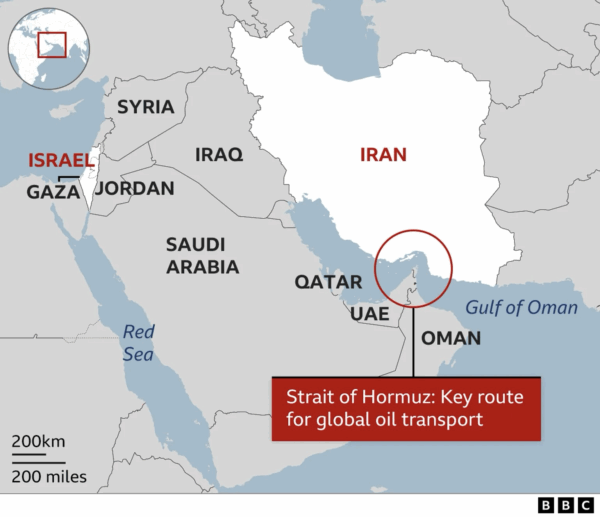
The global energy market is currently facing a period of extreme volatility as the Strait of Hormuz—the world’s most critical maritime chokepoint—has been effectively closed for nearly four weeks. This blockade, driven by Iranian threats and attacks on vessels, has thrown international oil markets into chaos and created a deepening energy crisis that is being felt across Europe and Asia.
The current crisis centers on a high-stakes geopolitical standoff involving the United States and Iran. While U.S. President Donald Trump has touted diplomatic efforts to resolve the blockade, the administration is simultaneously moving to deploy thousands more troops to the Middle East and evaluating the use of U.S. Navy escorts for oil tankers to ensure the flow of energy products.
At the heart of the conflict is a narrow waterway that serves as the only sea passage from the Persian Gulf to the open ocean. Because of its geography, the Strait of Hormuz blockade has created a bottleneck that threatens not only oil and liquefied natural gas (LNG) but also the transport of fertilizers essential for global crop production CNN.
For the global economy, the stakes are immense. During the 2023–2025 period, approximately 25% of seaborne oil trade and 20% of the world’s LNG passed through this strait annually Wikipedia. With the waterway now largely impassable, the risk of severe supply shortages is mounting for several Gulf nations, including Qatar, Kuwait, Bahrain, and the United Arab Emirates.
The Geography of a Global Chokepoint
To understand why the Strait of Hormuz is so susceptible to disruption, one must look at its physical constraints. The waterway separates Iran to the north from the Musandam Peninsula of Oman and the United Arab Emirates to the south Wikipedia. The strait is roughly 104 miles (167 km) long, but its width varies significantly, narrowing to just 21 nautical miles (about 24 miles or 39 km) at its tightest point Wikipedia.
This narrowness is compounded by the fact that almost all commercial maritime traffic is concentrated into two main shipping lanes, which further squeeze the available space for transit CNN. This concentration makes the strait an ideal target for asymmetric warfare, where a small number of obstacles can halt a massive volume of global trade.
Iran’s strategic advantage in this region is rooted in both geography and unconventional military capabilities. Iranian forces utilize cheap drones and sea mines to raise the risk of transit to a level that has stopped almost all traffic CNN. These methods make it significantly more difficult for the United States or other international coalitions to defend individual vessels or secure the entire length of the strait militarily.
Economic Fallout and Energy Security
The closure of the strait is not merely a regional military issue; This proves a direct threat to Europe’s energy security. As a major source of petroleum products for both Asia and Europe, any prolonged disruption leads to immediate price spikes in oil and gas markets Wikipedia.
Beyond energy, the blockade impacts global food security. The strait is a primary conduit for fertilizers; a disruption in these shipments can lead to reduced crop yields globally, potentially triggering food price inflation CNN.
the crisis has introduced a new, opportunistic economic element. Iranian officials have stated they will continue to charge fees for the safe passage of certain tankers. This claim was supported by a report from Lloyd’s List Intelligence released on March 23, which indicated that at least two vessels had paid large sums of money to cross the strait during the blockade CNN.
Key Impact Summary
| Sector | Verified Impact/Statistic |
|---|---|
| Oil Trade | 25% of seaborne oil trade passes through annually (2023-2025) Wikipedia |
| Natural Gas | 20% of world’s LNG passes through annually (2023-2025) Wikipedia |
| Agriculture | Disruption of fertilizer shipments impacting global crops CNN |
| Regional Trade | Only maritime route for UAE, Qatar, Kuwait, and Bahrain Wikipedia |
U.S. Response and Diplomatic Maneuvering
The United States is currently balancing a dual-track strategy of military deterrence and diplomatic negotiation. President Donald Trump’s administration has increased the military footprint in the region, deploying thousands of additional troops to deter further Iranian aggression and protect critical infrastructure CNN.

A primary point of contention is the security of oil tankers. The U.S. Navy is currently exploring the feasibility of providing direct escorts for tankers to bypass the risks posed by Iranian drones and mines CNN. However, the effectiveness of such escorts is debated, as the narrow shipping lanes make vessels vulnerable even with naval protection.
Despite these military movements, the U.S. Continues to pursue diplomatic channels to end the blockade. The goal is to restore the free flow of commerce without escalating the situation into a full-scale regional conflict, though the “upper hand” currently remains with Iran due to its ability to disrupt the waterway with relatively low-cost assets CNN.
The situation remains fluid, with the international community watching closely to see if diplomatic efforts can override the strategic advantages Iran has leveraged through its control of the coastline and unconventional warfare tactics.
The next critical development will be the outcome of the current diplomatic efforts and the potential deployment of U.S. Navy escorts for commercial tankers. We will continue to monitor official updates from the U.S. Department of Defense and international maritime authorities.
Do you believe diplomatic efforts are sufficient to resolve this crisis, or is a stronger military presence the only way to secure the strait? Share your thoughts in the comments below.