
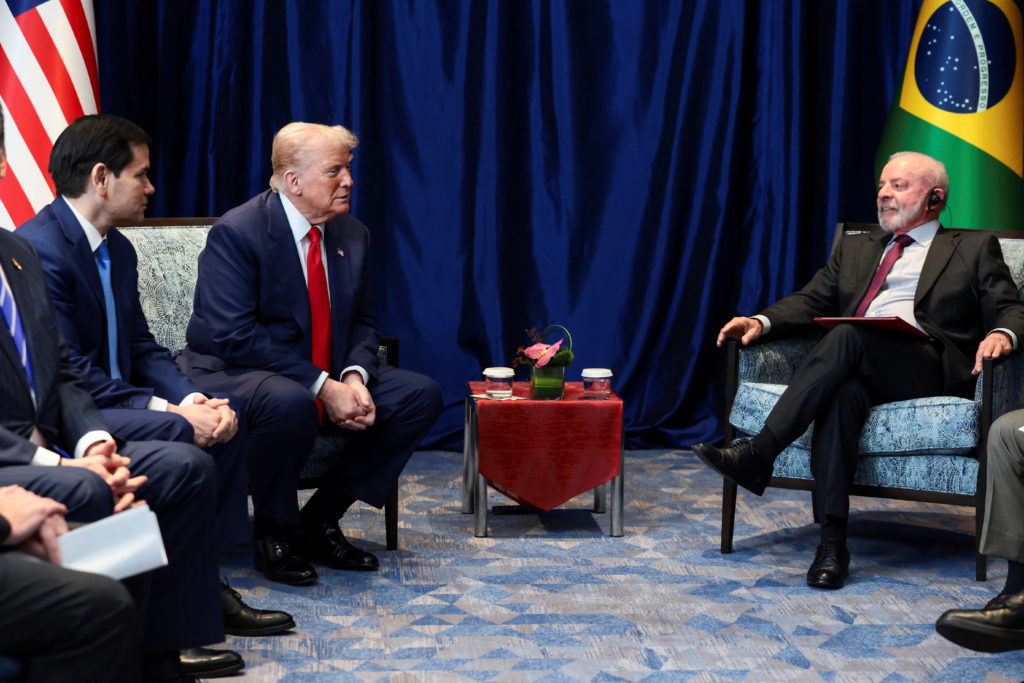
The landscape of international security policy is undergoing a significant shift as the U.S. Government evaluates the status of transnational criminal syndicates operating within the Western Hemisphere. Recent reports indicate that the U.S. State Department is actively considering the designation of Brazil’s two most prominent criminal factions—the First Capital Command (PCC) and the Red Command (CV)—as Foreign Terrorist Organizations (FTOs). Such a move would represent a departure from traditional drug-trafficking enforcement, signaling a new era of aggressive counter-terrorism strategy aimed at disrupting the financial and operational networks that fuel systemic instability in South America.
As a financial journalist, I have spent nearly two decades analyzing how economic policy and geopolitical security intersect. The prospect of labeling these groups as FTOs is not merely a symbolic gesture; it carries profound implications for global financial compliance, asset freezing, and international judicial cooperation. However, the move has ignited a complex diplomatic debate, with stakeholders in Brasilia raising concerns regarding the limits of extraterritorial authority and the potential for unintended political repercussions within the Brazilian sovereign state.
To understand the gravity of this development, one must look at the legal framework governing these designations. Under the Immigration and Nationality Act (INA), the Secretary of State is empowered to designate a group as an FTO if it is a foreign organization that engages in, or retains the capability and intent to engage in, terrorist activity that threatens the security of U.S. Nationals or the national security of the United States, as detailed by the U.S. Department of State’s official overview of the FTO designation process. This legal mechanism carries heavy weight, triggering immediate sanctions, including the blocking of assets held in U.S. Financial institutions and the prohibition of providing “material support or resources” to these entities.
The Evolution of Transnational Criminal Networks
The First Capital Command (PCC) and the Red Command (CV) have long moved beyond simple street-level drug distribution. According to reports from the InSight Crime research center, these organizations have evolved into sophisticated, quasi-corporate entities with deep roots in international logistics, money laundering, and illicit arms trafficking. By controlling vast swaths of the cocaine supply chain from the Andean region to the ports of Europe and Africa, these groups have effectively become major players in the global shadow economy.
The U.S. Interest in these organizations is largely driven by the convergence of narcotics trafficking and regional instability. When criminal groups attain the level of territorial control and coercive power seen in the favelas of Rio de Janeiro and São Paulo, they begin to undermine the rule of law in ways that parallel the tactics of traditional insurgent groups. The designation process seeks to address this by treating the groups as threats to international security rather than merely internal law enforcement challenges.
However, the transition from “criminal enterprise” to “terrorist organization” is fraught with legal and diplomatic complexity. In Brazil, government officials have signaled a cautious, if not skeptical, response. The concern, as articulated by various legal analysts in the region, is that such a designation could be interpreted as an encroachment on Brazil’s sovereign right to manage its internal security affairs. The challenge for the Biden administration—or any future U.S. Executive branch—is to balance the need for heightened security measures with the necessity of maintaining a constructive partnership with South America’s largest economy.
Economic and Legal Implications of the FTO Label
For global investors and financial institutions, the designation of an FTO is a high-stakes event. Compliance departments are required to conduct rigorous “Know Your Customer” (KYC) checks against the Office of Foreign Assets Control (OFAC) Specially Designated Nationals and Blocked Persons List. If the PCC or CV are added to this list, any entity—regardless of its location—that knowingly facilitates a transaction involving these groups could face severe civil and criminal penalties.
This creates a ripple effect throughout the banking sector. Financial institutions operating in Brazil or those with significant exposure to Brazilian markets must ensure that their anti-money laundering (AML) protocols are robust enough to identify and filter out funds potentially linked to these syndicates. The economic cost of compliance is significant, but the alternative—fines, reputational damage, and loss of banking licenses—is often far greater.
the designation would grant the U.S. Government enhanced tools for surveillance and intelligence sharing. By classifying these groups as terrorist organizations, the U.S. Can leverage its broader counter-terrorism intelligence network to track the movement of illicit capital across borders. This shift underscores a growing trend where states are using the “terrorist” label to address the threat of transnational organized crime that has become too large for local authorities to contain alone.
Key Factors Influencing the Decision
- Territorial Control: The degree to which these organizations exercise governance over specific regions, effectively challenging state authority.
- Financial Sophistication: The ability to move, hide, and legitimize billions of dollars in illicit profits through global financial systems.
- Geopolitical Impact: The extent to which these groups destabilize neighboring countries and affect the security of U.S. Trade routes.
- Human Rights Concerns: The use of extreme violence as a tool for enforcing discipline and suppressing competition, which often leads to regional humanitarian crises.
Diplomatic Friction and the Path Forward
The friction between Washington and Brasilia regarding this potential designation is not entirely unprecedented. Throughout the history of U.S.-Brazil relations, there have been periods of tension regarding the appropriate scope of U.S. Intervention in regional security matters. Brazilian authorities emphasize that they are already engaged in long-term efforts to dismantle these syndicates through domestic judicial processes and police operations.
Critics of the potential U.S. Designation argue that labeling these groups as terrorist organizations might inadvertently boost their standing, providing them with a “prestige” factor that could complicate local efforts to de-radicalize or reintegrate low-level members. There is the risk that such a designation could complicate existing bilateral extradition agreements and intelligence-sharing protocols. As noted by the Wilson Center’s Latin American Program, effective regional security relies on deep, trust-based collaboration rather than unilateral policy shifts that may catch regional partners off guard.
As we look toward the coming weeks, the international community will be watching for official statements from the U.S. Department of State and the Brazilian Ministry of Foreign Affairs. Any formal announcement will likely be accompanied by a detailed legal justification, which will be essential for financial regulators and multinational corporations to digest.
What Readers Should Monitor
For those following this story, the next phase will involve monitoring the U.S. Federal Register for any official notices regarding the designation. It is also critical to observe the response from the Financial Action Task Force (FATF), which provides international standards for combating money laundering and terrorist financing. Their assessment of the situation will likely influence how global banks adjust their risk models regarding Brazil-linked assets.
We are currently in a period of high-level deliberation. There is no confirmed date for a final decision beyond the general timelines suggested in recent diplomatic briefings. As this situation develops, I encourage our readers to stay informed through official government portals and to remain cautious of speculative reporting. Understanding the intersection of organized crime and national security is essential for anyone navigating the current global economic climate.
What are your thoughts on this potential shift in U.S. Policy? Does the designation of criminal syndicates as terrorist organizations help or hinder the fight against transnational crime? I invite you to share your perspectives in the comments section below, and please subscribe to our newsletter for further updates as this story unfolds.