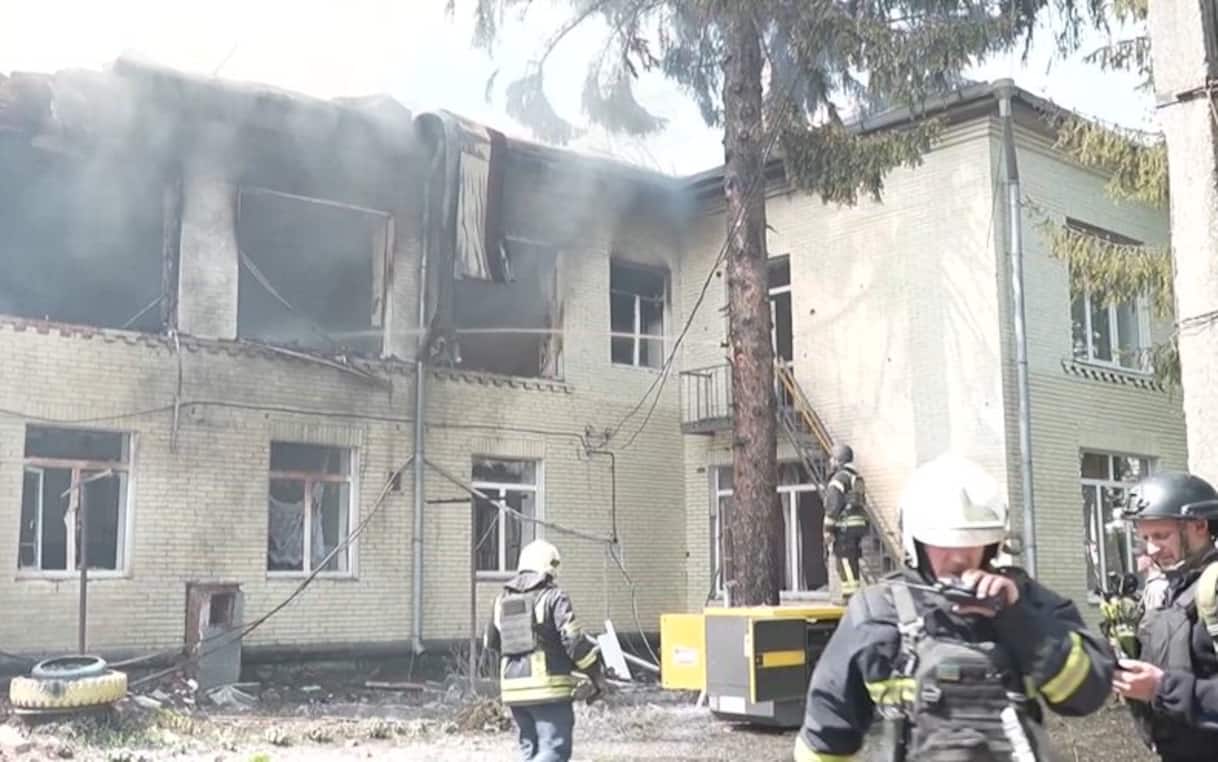
At least five people died following Ukrainian missile strikes targeting a military facility in the Voronezh region of Russia, according to reported updates from local authorities and news agencies. The strikes triggered a significant fire at a military-linked factory, signaling a continued expansion of Ukraine’s ability to conduct long-range operations within Russian territory.
The attack in Voronezh occurred amid a broader pattern of escalating cross-border strikes. While the specific identity of the victims has not been released by all official channels, regional reports confirm the fatalities and the destruction of industrial infrastructure. This development follows a series of targeted operations by Kyiv aimed at disrupting Russian military logistics and energy production.
The incident in Voronezh is part of a wider humanitarian crisis reported by international monitors. As Ukrainian forces strike deeper into Russian logistics hubs, the Russian military has intensified its aerial campaign against Ukrainian population centers. The United Nations has recently highlighted the rising toll on non-combatants during these exchanges.
How many died in the Voronezh missile strike?
Local reports from the Voronezh region indicate that five individuals lost their lives during the missile strikes. The projectiles reportedly struck a facility identified by observers as a military-industrial site. The impact caused a large-scale fire that necessitated an emergency response from regional firefighting services to prevent further spread to adjacent industrial zones.
Russian officials have acknowledged the strike but often provide limited details regarding the specific nature of the damaged facility or the exact circumstances of the casualties. However, the scale of the fire and the confirmed deaths suggest a significant hit on a site of strategic importance. Ukrainian officials have generally maintained a policy of not claiming direct responsibility for specific strikes on Russian soil, though they have frequently stated that such operations are necessary to degrade Russia’s ability to wage war.
The strike on Voronezh highlights the vulnerability of Russia’s border regions. Voronezh, located approximately 150 to 200 kilometers from the Ukrainian border, serves as a critical transit and manufacturing hub for the Russian military. By targeting these sites, Ukraine aims to disrupt the supply chains that feed the front lines in eastern and southern Ukraine.
What is the UN reporting regarding civilian casualties in Ukraine?
While the strikes in Voronezh have caused loss of life on the Russian side, the human cost within Ukraine remains a central focus for international human rights organizations. The United Nations has issued urgent warnings regarding the impact of Russian missile and drone attacks on Ukrainian civilians.
According to reports from the United Nations Human Rights Monitoring Mission in Ukraine (HRMMU), at least 40 civilians were killed during a series of intense Russian air raids over a single weekend. These strikes targeted various residential areas, causing significant damage to civilian infrastructure and increasing the psychological and physical toll on the population.
The UN has consistently called for the protection of non-combatants and the adherence to international humanitarian law. The mission’s findings suggest a pattern of strikes that often hit areas with little to no military presence, raising questions about the precision and targeting protocols used by Russian forces. The surge in civilian deaths coincides with increased Russian efforts to degrade Ukraine’s energy grid, a strategy that often results in collateral damage to residential neighborhoods.
Why is Ukraine targeting Russian energy infrastructure?
A key component of Ukraine’s current military strategy involves a “war on oil” and energy. Kyiv has increasingly utilized long-range drones and missiles to strike Russian oil refineries, fuel depots, and storage facilities. These operations are designed to achieve two primary objectives: reducing the revenue available to the Kremlin and limiting the fuel supplies necessary for Russian armored vehicles and aircraft.
Recent reports have indicated that these strikes are reaching targets far beyond the immediate border regions. Some strikes have reportedly hit refineries located as far as 2,000 kilometers from the Ukrainian frontier, reaching deep into the Russian interior and toward Siberian resource hubs. By hitting these high-value economic assets, Ukraine seeks to impose a direct cost on the Russian war economy.
The strategic impact of these energy strikes is twofold:
- Economic Disruption: Reducing Russia’s ability to export refined petroleum products limits the hard currency flowing into the Russian state budget.
- Logistical Attrition: Disrupting the domestic supply of diesel and gasoline creates bottlenecks for the Russian military’s movement and logistics.
This campaign has turned Russia’s vast energy landscape into a frontline. While Russia has attempted to bolster its air defenses, the sheer number and variety of incoming drone threats have proven difficult to intercept consistently across such a massive geographic area.
What role does the Kerch Bridge play in the conflict?
The Kerch Bridge, which connects mainland Russia to the occupied Crimean Peninsula, remains one of the most critical and contested pieces of infrastructure in the conflict. Ukraine views the bridge as both a vital military supply artery for Russian forces in Crimea and a symbol of illegal occupation.
Recent nocturnal operations have resulted in explosions and fires on the bridge, as reported by various news outlets. These raids are intended to sever the primary land-link used by Russia to move heavy equipment, ammunition, and troops into southern Ukraine. Even when the bridge remains structurally intact, repeated strikes force Russian logistics to rely on more vulnerable ferry crossings and the “land bridge” through occupied territories in southern Ukraine.
The focus on the Kerch Bridge is part of a broader strategic goal to “suffocate Crimea.” By cutting off the peninsula from direct Russian mainland support, Ukraine aims to isolate Russian garrisons and make the defense of occupied territories increasingly unsustainable. The bridge’s vulnerability serves as a constant reminder of the reach of Ukrainian long-range capabilities.
Comparative Impact of Recent Strikes
The following table summarizes the different types of targets currently being engaged by both sides in the conflict, based on recent reported developments.

| Target Type | Primary Location(s) | Strategic Objective | Reported Impact |
|---|---|---|---|
| Military Factories | Voronezh, Russia | Disrupt defense manufacturing | Fatalities and industrial fires |
| Oil Refineries | Russian Interior / Siberia | Degrade war economy/fuel supply | Reduced production capacity |
| Civilian Infrastructure | Ukrainian Cities | Degrade energy/morale | High civilian casualties |
| Logistics Bridges | Kerch Bridge, Crimea | Isolate occupied territories | Supply chain disruption |
The data reflects a highly asymmetrical conflict where both sides utilize long-range assets to strike at the other’s vulnerabilities. While Russia focuses on the destruction of Ukraine’s ability to function as a modern state through energy strikes, Ukraine is increasingly focusing on the economic and logistical foundations that sustain the Russian military machine.
The escalation in Voronezh and the continued targeting of energy and logistics hubs suggest that the conflict is entering a phase of intensified long-range attrition. As both nations seek to gain leverage through economic and logistical disruption, the risk of collateral damage and civilian impact remains high.
The international community continues to monitor these developments, with the United Nations and various human rights groups providing regular updates on the humanitarian consequences of the ongoing aerial campaigns. Future updates are expected as more details regarding the Voronezh casualties and the full extent of the refinery damages become available through official government channels.
Next Checkpoint: Monitoring of official Russian regional reports for casualty identification and UN updates on civilian protection metrics in Ukraine.
Please share this report and join the conversation in the comments below. What are your thoughts on the shifting dynamics of long-range strikes in this conflict?
Keep reading
- Saudi Arabia, Turkey, and Pakistan Sign Makkah Joint Defense Agreement Amid Regional Reactions
- UCLA Professor Launches “OnlyMarms” OnlyFans for Marmots
- Iran School Attack: Was the US Strike a War Crime? (newsdirectory3.com)
- Stuart Blaik Condemns Potential Early Release of PC Andrew Harper Killers (archyworldys.com)