
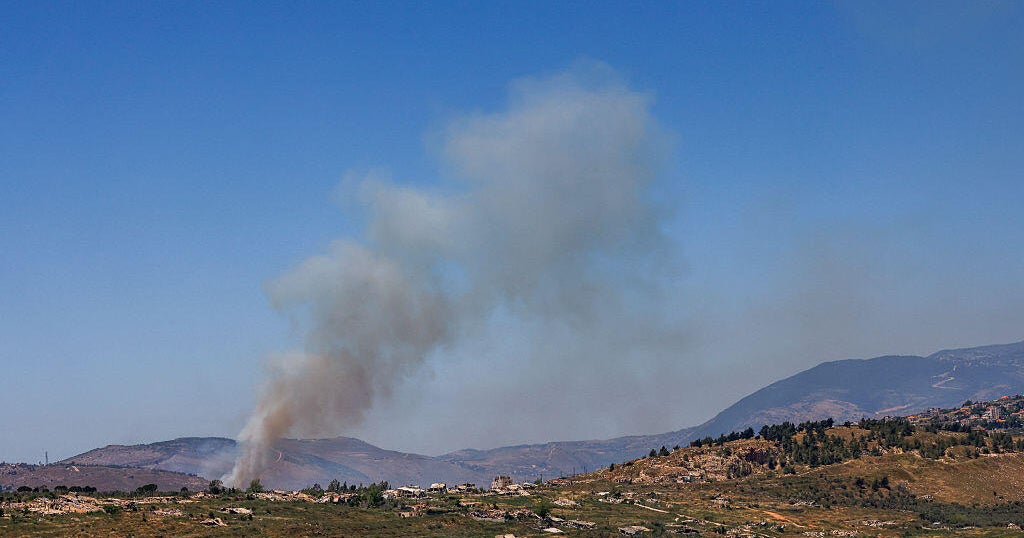
The delicate geometry of Middle Eastern diplomacy is being fundamentally reshaped by a dual-track crisis that threatens to derail years of indirect negotiation. As active hostilities intensify between Israel and the Lebanon-based group Hezbollah, the prospects for a meaningful diplomatic breakthrough between the United States and Iran appear increasingly obscured by the smoke of regional combat.
For months, diplomats in Washington and various international capitals have sought a pathway to stabilize the volatile relationship between the U.S. And Tehran. However, the Israel-Hezbollah fighting on the northern border of Israel has introduced a volatile variable that neither side seems able—or willing—to decouple from the broader geopolitical struggle. What began as localized skirmishes has evolved into a significant regional flashpoint, creating a cycle of escalation that makes the quiet work of high-level diplomacy nearly impossible.
The central tension lies in the interconnectedness of the region’s security architecture. Hezbollah, an Iranian-backed organization, remains a primary actor in what many analysts describe as Iran’s “Axis of Resistance.” As long as the fighting between Israel and Hezbollah persists, any attempt to negotiate a broader security or nuclear arrangement between the U.S. And Iran faces the reality that the “street” and the “frontline” are moving much faster than the negotiating table.
The Escalation on the Northern Front
The conflict between Israel and Hezbollah has transitioned from periodic exchanges of fire into a sustained and high-intensity confrontation. This fighting is characterized by frequent rocket and drone attacks launched from Southern Lebanon into northern Israel, met by significant Israeli airstrikes and artillery barrages targeting Hezbollah infrastructure within Lebanese territory. Reuters reports on the ongoing volatility in the region, noting how these border clashes have displaced thousands of civilians on both sides of the Blue Line.

For Israel, the primary objective remains the security of its northern residents and the neutralization of Hezbollah’s ability to launch precision strikes. The Israeli military has consistently stated that its operations are necessary to push Hezbollah’s assets away from the border, thereby creating a buffer zone. Conversely, Hezbollah maintains that its actions are a direct response to Israeli military activities in Lebanon and the broader Palestinian territories, framing its involvement as a matter of regional solidarity.
This localized conflict carries immense weight because of the asymmetry of the combatants. Hezbollah is not a traditional state military but a highly disciplined, well-armed non-state actor with significant tactical expertise and advanced weaponry, including anti-tank guided missiles and long-range rockets. This capability allows the group to exert disproportionate pressure on Israel, forcing the Israeli Defense Forces (IDF) to commit significant resources to a secondary front that could, at any moment, expand into a full-scale regional war.
The Diplomatic Impasse: Washington and Tehran
While the border burns, the diplomatic channels between the United States and Iran remain in a state of profound uncertainty. The U.S. Has long sought to address several core issues with Tehran, including the proliferation of Iran’s nuclear program, the provision of advanced weaponry to regional proxies, and the broader stability of the Persian Gulf. However, the U.S.-Iran negotiations are currently being held hostage by the kinetic reality of the Israel-Hezbollah conflict.
From the American perspective, a deal with Iran is often viewed as a prerequisite for regional de-escalation. The logic suggests that if the primary patron of the “Axis of Resistance” can be brought into a framework of containment or cooperation, the activity of groups like Hezbollah might be curtailed. Yet, the current reality is inverted: the active fighting on the Israel-Lebanon border serves as a powerful deterrent to any U.S. Administration seeking to offer concessions to Iran. Any perceived “softness” toward Tehran while Hezbollah is actively striking Israel would be politically untenable in Washington.
For Iran, the conflict provides a layer of strategic depth, and leverage. By supporting Hezbollah, Tehran can exert pressure on Israel and its Western allies without engaging in a direct, conventional war with the United States. This “gray zone” warfare allows Iran to signal its influence and ability to disrupt regional stability, effectively using Hezbollah as a tool to influence the terms of any potential deal with the U.S.
The “Axis of Resistance” Factor
To understand why the Israel-Hezbollah fighting is so damaging to peace prospects, one must understand the strategic utility of the “Axis of Resistance.” This network, which includes Hezbollah in Lebanon, various militias in Iraq and Syria, and the Houthi movement in Yemen, functions as a decentralized but coordinated mechanism for Iranian influence.
The presence of this network means that a “deal” is never just about two nations; it is about an entire ecosystem of actors. Even if the U.S. And Iran were to reach an agreement on nuclear limits, the question of how to manage the behavior of these proxies remains unanswered. The current fighting demonstrates that these groups can act independently of—or in tandem with—Tehran’s immediate diplomatic goals, often creating “accidental” escalations that neither the U.S. Nor Iran may be prepared to handle.
Why Proxy Warfare Stalls Direct Diplomacy
The fundamental problem for diplomats is the “decoupling” challenge. Can the U.S. And Iran negotiate a bilateral agreement that is insulated from the actions of Hezbollah? Current events suggest the answer is a resounding no. In the modern Middle East, security is an indivisible commodity. A breakthrough in nuclear diplomacy does not automatically translate to a cessation of hostilities on the Lebanese border.
You’ll see three primary ways the fighting prevents progress:
- Political Capital: The domestic political cost of negotiating with a state that is perceived as the architect of regional chaos is extremely high for U.S. Leaders.
- Verification and Trust: The active use of advanced weaponry by Iranian-backed groups undermines any “trust-building” measures proposed by diplomats.
- Escalation Dominance: The fear that a diplomatic concession might be met with a sudden, massive escalation by Hezbollah forces both sides to adopt more hawkish, defensive postures.
As The Associated Press has noted in various reports on Middle Eastern security, the speed of military developments often outpaces the sluggish pace of international diplomacy, leaving negotiators perpetually reacting to the latest headline rather than setting the agenda.
Key Takeaways: The Intersection of War and Diplomacy
| Conflict Axis | Primary Drivers | Impact on Diplomacy |
|---|---|---|
| Israel-Hezbollah | Border security, rocket fire, Lebanese sovereignty. | Creates immediate volatility; forces reactive military stances. |
| U.S.-Iran | Nuclear program, sanctions, regional influence. | Stalled by the need to address proxy behavior and regional security. |
| The “Proxy” Link | Iranian support for Hezbollah and other groups. | Connects local combat to high-level geopolitical negotiations. |
Looking Ahead
The path forward requires a level of coordination that currently seems absent. For a deal to be viable, there must be a mechanism to ensure that regional combatants do not inadvertently—or intentionally—sabotage the diplomatic process. This might require a multi-lateral approach involving regional powers like Egypt, Jordan, and Saudi Arabia, rather than a purely bilateral U.S.-Iran dialogue.
Until the Israel-Hezbollah fighting reaches a sustainable level of containment, the “cloud” over U.S.-Iran relations will likely remain. The risk is not just a failure of diplomacy, but a descent into a wider conflict that neither side’s leadership can easily control once the first domino falls.
Next Checkpoint: Observers are looking toward the upcoming United Nations Security Council sessions, where the humanitarian situation in Lebanon and the security of the Blue Line are expected to be central topics of debate. Official statements from the U.S. State Department regarding any renewed indirect contact with Tehran are also being closely monitored by regional analysts.
What do you think is the most effective way to decouple regional proxy conflicts from bilateral diplomacy? Share your thoughts in the comments below and share this article to join the conversation.