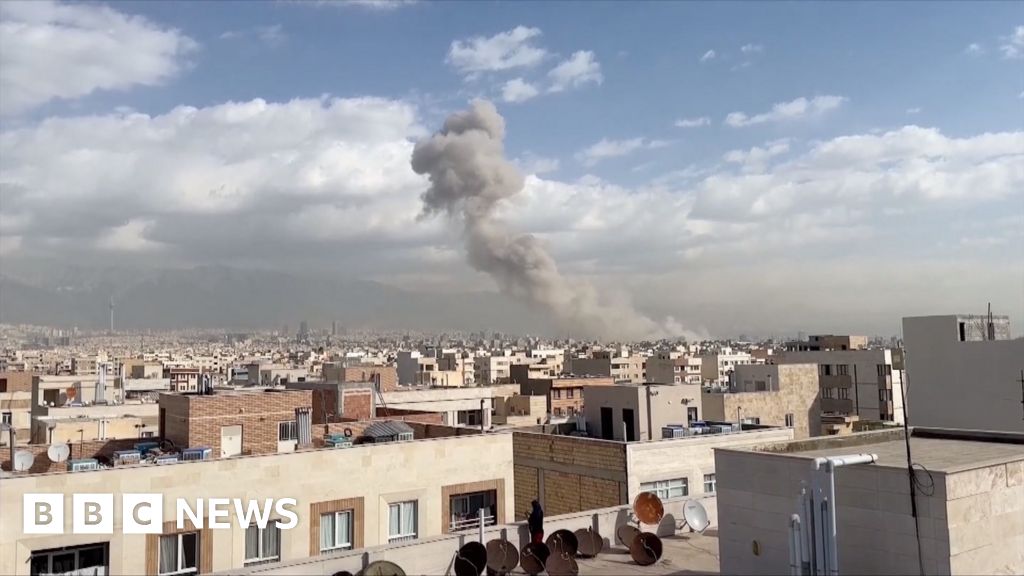
Tehran, Iran – A significant escalation of tensions in the Middle East unfolded on Saturday, February 28, 2026, as the United States and Israel launched coordinated strikes against targets within Iran. The attacks, described by U.S. President Donald Trump as “major combat operations,” come after months of heightened rhetoric and pressure on Tehran regarding its nuclear program and amid growing internal dissent within the country. The situation remains fluid, with Iran responding with counterattacks targeting Israel, and U.S. Military installations in the region.
The strikes represent a dramatic shift in the long-standing geopolitical dynamics of the region. President Trump’s announcement, coupled with confirmation from Israeli Defence Minister Israel Katz that his country initiated a “pre-emptive” attack, signals a willingness to directly confront Iran’s military capabilities. The stated aim, according to Trump, is to dismantle Iran’s ability to develop nuclear weapons and to encourage a change in the Iranian government. The timing of these actions follows recent, unsuccessful U.S.-Iran talks aimed at curbing Iran’s nuclear ambitions, with the U.S. Simultaneously increasing its military presence in the region through the deployment of warships. PBS NewsHour reports that Trump had been pressuring Tehran for a deal to constrain its nuclear program.
Initial Reports of Attacks and Casualties
Early reports indicate widespread damage across Iran, with strikes targeting Revolutionary Guard command facilities, air defense systems, missile and drone launch sites, and military airfields. The U.S. Military has confirmed these targets, stating that the attacks were carefully planned over months in collaboration with Israel. One of the initial targets reportedly included a compound belonging to Supreme Leader Ayatollah Ali Khamenei. Smoke was seen rising over Tehran, as documented in images released by Reuters, and reports emerged of projectiles being intercepted over Jerusalem. The BBC reported seeing a projectile being shot down in the skies above east Jerusalem.
Tragically, the attacks have resulted in a significant number of casualties. Iranian state media, citing the Red Crescent, reported at least 201 people killed and over 700 injured as of Saturday evening. A particularly devastating incident occurred at a girls’ school in southern Iran, where more than 80 people were reportedly killed and dozens wounded, according to Iranian state TV. The U.S. Military has stated it is investigating reports of civilian casualties, acknowledging the gravity of the situation. These reports, whereas deeply concerning, are still being verified by independent sources.
Iranian Response and Regional Implications
Iran has swiftly retaliated, launching drone and missile attacks against Israel and striking at U.S. Military installations in Bahrain, Kuwait, and Qatar. This escalation marks a dangerous turn in the conflict, raising fears of a wider regional war. The exchanges of fire continued throughout the night, indicating a sustained and determined response from Iran. The potential for miscalculation and further escalation is high, prompting international calls for de-escalation and restraint.
The attacks also come at a time of internal unrest within Iran. The country’s theocracy has been grappling with growing dissent, fueled by economic hardship and widespread anti-government protests. These protests, which began over economic concerns, have evolved into broader calls for political change. President Trump’s call for Iranians to “take over your government” suggests a belief that the current situation presents an opportunity for regime change, though the feasibility and consequences of such an outcome remain highly uncertain. The internal political landscape of Iran, already fragile, is likely to be further destabilized by these events.
International Reaction and Concerns
The international community has reacted with a mix of concern and calls for restraint. While some nations have expressed support for the U.S. And Israel’s right to defend themselves, others have urged all parties to avoid further escalation and to return to diplomatic solutions. The United Nations Security Council is expected to convene an emergency session to discuss the situation, though the potential for a unified response is limited given the differing geopolitical interests of its members. The European Union has issued a statement calling for de-escalation and emphasizing the importance of preserving the Iran nuclear deal, formally known as the Joint Comprehensive Plan of Action (JCPOA).
The attacks raise serious questions about the future of the JCPOA, which has been under strain since the United States withdrew from the agreement in 2018. The current escalation could effectively dismantle any remaining prospects for a negotiated settlement, potentially leading to a further acceleration of Iran’s nuclear program. The implications for regional stability are profound, with the potential for a protracted conflict that could draw in other actors and exacerbate existing tensions.
The Road Ahead: Uncertainty and Potential Scenarios
The immediate future remains highly uncertain. The extent of the damage inflicted by the attacks, the effectiveness of Iran’s retaliatory measures, and the response of the international community will all play a crucial role in shaping the trajectory of the conflict. Several scenarios are possible, ranging from a limited exchange of fire to a full-scale regional war. A key factor will be whether the attacks are seen as a one-time event or as the beginning of a sustained campaign. The potential for further escalation is particularly high if either side miscalculates the other’s intentions or if the conflict spills over into neighboring countries.
The situation is further complicated by the involvement of non-state actors, such as Hezbollah and other Iran-backed militias, who could potentially launch attacks against U.S. And Israeli interests in the region. The U.S. Military is reportedly on high alert, preparing for potential contingencies and reinforcing its presence in the Middle East. The coming days and weeks will be critical in determining whether the current crisis can be contained or whether it will spiral into a wider and more devastating conflict. The attacks on Iran represent a significant turning point in the region, with far-reaching consequences for global security.
The U.S. State Department is expected to hold a press briefing on Monday, March 2, 2026, to provide further updates on the situation and outline the administration’s response. Readers are encouraged to follow official government channels and reputable news sources for the latest information. We will continue to provide comprehensive coverage of this developing story as it unfolds.
This represents a developing story and will be updated as more information becomes available.
Keep reading