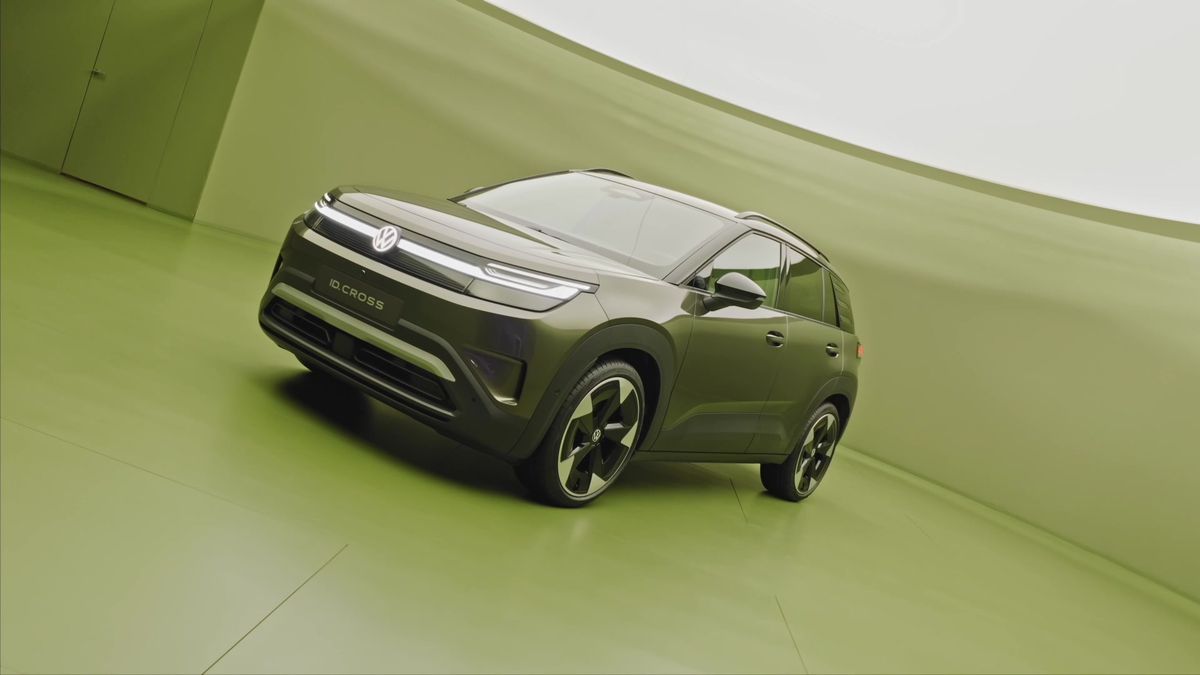
Volkswagen continues to expand its battery-electric vehicle portfolio, with recent industry reports highlighting the development of new crossover models designed for broader urban and suburban utility. As part of the manufacturer’s ongoing transition toward an all-electric lineup, these upcoming additions to the ID. family aim to address market demand for versatile, space-efficient vehicles that prioritize accessibility and daily usability over performance-heavy specifications. According to official company disclosures, the expansion of the ID. platform is central to Volkswagen’s strategy to maintain competitiveness in the European and global electric vehicle sectors, where compact SUVs remain the highest-selling vehicle category.
The strategic focus on a more accessible electric crossover reflects Volkswagen’s broader “Accelerate” brand strategy, which emphasizes modular production to lower consumer costs. By utilizing the MEB (Modular Electric Drive Matrix) architecture, which has underpinned models like the ID.3 and ID.4, the company can streamline manufacturing processes. This approach is intended to provide a more consistent user experience while maintaining the interior space advantages inherent to electric vehicle platforms, such as a flat floor and extended wheelbase relative to the vehicle’s total footprint. For prospective buyers, this signifies a shift toward vehicles that balance range, charging speed, and interior ergonomics without the premium pricing often associated with larger luxury EVs.
Platform Utility and Design Philosophy
At the core of the upcoming ID. crossover developments is the refinement of the MEB platform to better serve the needs of urban drivers. Unlike traditional internal combustion engine SUVs, which often compromise cabin space for mechanical components, the electric crossover design prioritizes passenger volume. Engineering reports from Volkswagen indicate that the focus remains on “smart packaging,” ensuring that the exterior dimensions remain manageable for city parking while the interior provides storage capacity comparable to traditional compact SUVs. This design philosophy is essential for the European market, where narrow streets and limited parking availability are primary considerations for vehicle owners.

The interior design is expected to follow the minimalist aesthetic introduced in the ID. series, featuring a central infotainment interface that consolidates most vehicle controls. By reducing physical buttons, Volkswagen aims to lower production complexity while providing software-driven updates that can improve vehicle functionality over time. According to the Volkswagen Group corporate press portal, the company is investing heavily in its “Software-defined vehicle” initiative, which is intended to ensure that new models remain current through over-the-air (OTA) updates. This shift is a critical component of their commitment to long-term vehicle support for customers.
Market Positioning and Consumer Impact
The introduction of a crossover positioned below or alongside the ID.4 serves a specific market segment: consumers who require the utility of a higher seating position but do not necessitate the size or price point of a full-sized electric SUV. Industry analysts have noted that as charging infrastructure continues to mature, the primary barrier to entry for many consumers has shifted from “range anxiety” to price parity. By offering a vehicle that is more affordable to produce, Volkswagen is attempting to capture the mid-market segment, which is currently dominated by legacy internal combustion engines.
According to the European Automobile Manufacturers’ Association (ACEA), electric vehicle adoption rates are heavily influenced by the availability of affordable, segment-appropriate models. Volkswagen’s strategy to introduce more crossover options aligns with this data, as the crossover body style has seen consistent growth in market share across the European Union. The ability to offer a vehicle that is both “sympathetic” to urban environments—meaning it is easy to maneuver and park—while maintaining the robustness required for weekend travel is viewed as a necessary step for mass-market electrification.
Technical Specifications and Future Updates
While specific technical details regarding battery chemistry and motor output for the latest crossover iterations are subject to final production tuning, the use of the established MEB architecture suggests a high degree of commonality with existing models. This includes support for fast-charging capabilities, which are essential for long-distance travel. Furthermore, the company has indicated that future iterations will likely benefit from the next generation of battery technology, which aims to improve energy density and reduce charging times. Interested parties can track official updates through the Volkswagen UK official newsroom for regional release schedules and specific trim-level availability.

As the automotive industry moves toward 2030, the pressure to meet stringent emissions standards remains a primary driver for manufacturers. Volkswagen’s commitment to this crossover-focused strategy is a direct response to both regulatory frameworks and consumer demand for practical, sustainable transportation. The company is scheduled to provide further updates on its product roadmap during the next quarterly earnings call, where investors and consumers alike expect more clarity on production timelines and regional rollouts. We encourage readers to share their thoughts on the evolution of the ID. series in the comments section below as more information becomes available.
Keep reading