
Mass layoffs are sweeping Volkswagen and the broader German automotive industry as management targets up to 100,000 job cuts and plant closures, compounding historic manufacturing declines and reshaping labor relations across Europe’s largest economy, according to reports published in December 2024.
The threat of massive structural downsizing at the Volkswagen Group reflects an escalating global offensive by major automakers to slash industrial employment and reorganize production for trade war and rearmament. Plans put forward by corporate leadership target up to 100,000 job cuts across the entire group, alongside the closure of four German plants that employ roughly 40,000 workers.
These prospective closures arrive on the heels of 35,000 German job reductions already agreed upon in December 2024 by Volkswagen, the IG Metall union, and internal works councils. Management now seeks to double its previous target of 50,000 total cuts globally by the year 2030.
Production Capacity Cuts and Global Layoffs
Beyond eliminating positions, Volkswagen intends to scale back its annual worldwide production capacity from 10 million vehicles currently down to 9 million. That target marks a significant drop from the roughly 12 million vehicles produced annually prior to the COVID-19 pandemic. To achieve this, the company plans to eliminate up to half of its model lineup and streamline administration, development, and shared services through digitization and artificial intelligence.
While Volkswagen’s supervisory board rejected CEO Oliver Blume’s comprehensive proposal, previously negotiated capacity reductions remain in force. Management continues trimming models and dismantling parallel structures while negotiating future rounds with labor leaders.
Manufacturing Pressures Across Germany and North America
Germany stands at the epicenter of a wider international contraction in manufacturing. More than 100,000 jobs in the German auto and supplier sectors have vanished since 2019, while the German Association of the Automotive Industry projects an additional 125,000 losses by 2035. Last year alone saw the destruction of 124,000 manufacturing jobs nationwide.
Similar contractions are unfolding across North America. Stellantis has indefinitely mothballed its facility in Brampton, Ford’s plant in Oakville has remained idle for years, General Motors has ended vehicle production at CAMI, and the Oshawa plant has lost its third shift. Automakers across the United States are increasingly deploying automated systems to strip labor out of assembly and logistics operations.
The Electric Vehicle Transition Burden
Automobile manufacturers are compelling workers to absorb the financial impact of weaker-than-expected electric vehicle sales. Volkswagen completely rebuilt its Zwickau facility as an EV showcase, only for the plant to face potential closure. In the United States, General Motors promoted Factory Zero as the anchor of an American electric vehicle renaissance, but the facility now operates with a skeletal workforce while management introduces roughly 50 additional robots to the floor.
Technology companies and industrial employers globally announced staggering reductions last year, driven by corporate strategies that deploy artificial intelligence and automation to slash labor expenses. Governments, meanwhile, divert public wealth toward rearmament and military budgets.
Labor Resistance and Historical Parallels
Opposition to the corporate restructuring has sparked independent organizing. An independent Volkswagen Action Committee, established by rank-and-file workers in opposition to management and the IG Metall bureaucracy, has called for coordinated resistance.
The Action Committee has advocated for coordinated strikes at all sites and action up to and including the occupation of plants and departments threatened with closure. Critics argue that IG Metall’s institutional integration through co-determination leaves labor apparatuses aligned too closely with corporate goals and government stakeholders.
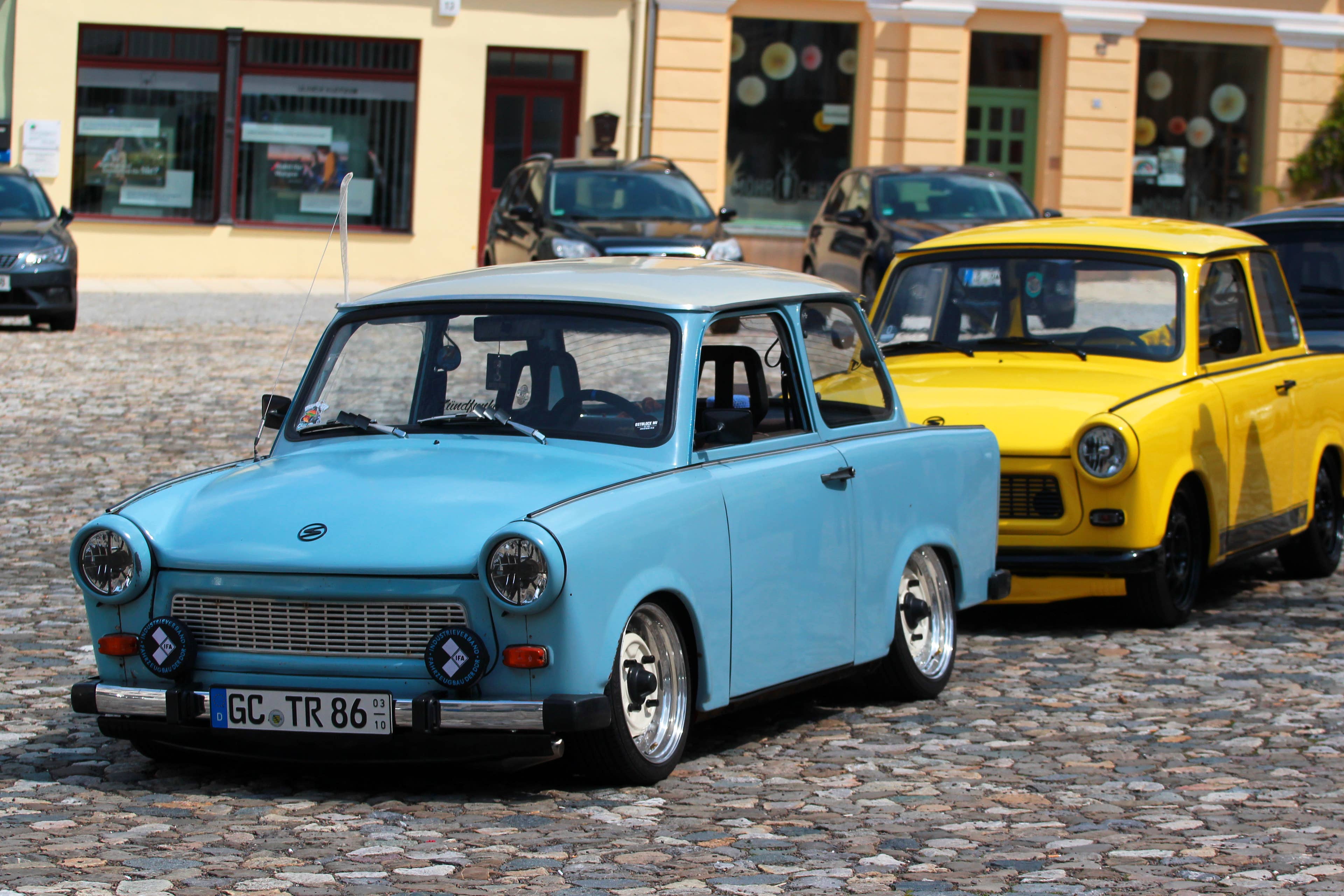
This modern industrial crisis contrasts sharply with the region’s complex historical background. Following the end of World War II in 1945, Germany’s partition placed the eastern manufacturing sector under Soviet occupation. Decades of reparations saw the dismantling and transport of industrial infrastructure to the USSR, followed by sweeping nationalization under the Industrieverband Fahrzeugbau (IFA) state-owned umbrella.
Iconic East German vehicles such as the Sachsenring-produced Trabant—which reached 3.1 million units between 1957 and 1991—symbolized both affordable basic transportation and the rigid limitations of the Soviet-era engineering economy before the fall of the Berlin Wall in 1989 exposed the vast technological gap between the nation’s partitioned industrial sectors.
Keep reading