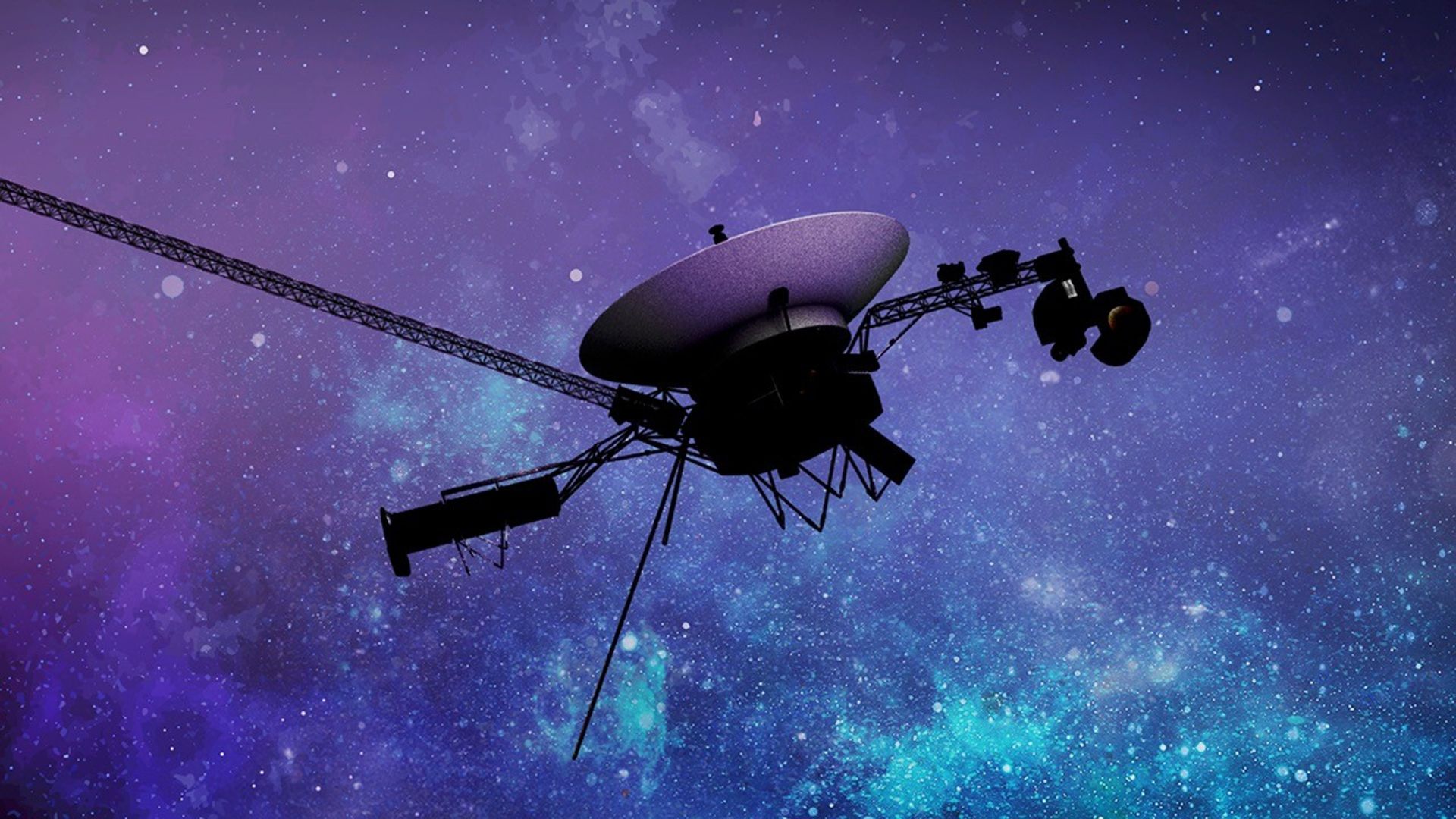
NASA has powered down another scientific instrument on Voyager 1, the agency announced on April 20, 2026, as part of an ongoing effort to conserve the spacecraft’s dwindling nuclear power supply and extend its historic mission into interstellar space. The Low-Energy Charged Particles (LECP) experiment was shut off on Friday, April 17, 2026, leaving Voyager 1 with just two working science instruments. This latest reduction comes after the spacecraft’s energy levels unexpectedly dropped during a maneuver in late February, prompting mission managers to take precautionary steps to retain the 49-year-old probe operational.
The decision to deactivate LECP was not made lightly, according to Kareem Badaruddin, Voyager mission manager at NASA’s Jet Propulsion Laboratory in California. “While shutting down a science instrument is not anybody’s preference, This proves the best option available,” Badaruddin said in a statement released by the agency. “The team remains focused on keeping both Voyagers going for as long as possible.” The move reflects a broader strategy employed since the late 1980s, where NASA has been systematically turning off non-essential systems to manage the gradual decline of the spacecraft’s radioisotope thermoelectric generators, which produce less power each year as their plutonium fuel decays.
Voyager 1, launched in September 1977, is currently more than 15.78 billion miles from Earth and traveling at over 51,000 miles per hour. It crossed the heliopause—the boundary where the Sun’s influence wanes and interstellar space begins—in August 2012, becoming the first human-made object to enter the space between stars. Its twin, Voyager 2, launched a few weeks earlier, followed suit in November 2018 and is now over 13 billion miles from Earth. Together, the two probes remain the only spacecraft to have directly sampled the interstellar medium, providing unprecedented data on cosmic rays, magnetic fields, and plasma environments beyond our solar system.
The LECP instrument, which had been operating almost continuously since Voyager 1’s launch, was designed to measure low-energy ions and electrons from both solar and interstellar sources. Its data has helped scientists understand how charged particles behave at the edge of the Sun’s influence and how they interact with the surrounding interstellar wind. With LECP now offline, Voyager 1 retains its Magnetometer (MAG) and Plasma Wave Subsystem (PWS), both of which remain active and continue to return valuable measurements about the interstellar magnetic field and plasma oscillations.
Other instruments have already been sacrificed to power constraints over the decades. The Imaging Science Subsystem (ISS) cameras were turned off in 1990 after capturing the iconic “Family Portrait” of the solar system, including the Pale Blue Dot image of Earth. The Infrared Interferometer Spectrometer and Radiometer (IRIS) was powered down in 1998, and the Photopolarimeter Subsystem (PPS) ceased operations in 2007 due to degraded performance. More recently, the Plasma Science (PLS) instrument was shut off in September 2024 to save power, and the Cosmic Ray Subsystem (CRS) on Voyager 1 was deactivated in February 2025. Voyager 2 has followed a similar power-saving sequence, though its instruments have been shut down on a slightly different timeline.
Despite these losses, the Voyager mission continues to yield scientific insights. Data from the remaining instruments has revealed that the interstellar medium is more dynamic than previously thought, with unexpected variations in plasma density and magnetic field orientation. These findings challenge existing models of how the Sun’s heliosphere interacts with the surrounding galactic environment and have implications for understanding cosmic ray propagation and space weather throughout the galaxy.
Engineers at JPL monitor the spacecraft’s health weekly, using the Deep Space Network to send commands and receive telemetry. Because of Voyager 1’s immense distance, a one-way radio signal now takes over 23 hours to reach Earth. This delay complicates real-time troubleshooting, making preemptive power management essential. The mission team has implemented a series of automated fault-protection routines and carefully sequences instrument operations to avoid exceeding the available power budget.
As of April 2026, Voyager 1 is generating approximately 240 watts of power, down from about 470 watts at launch. The remaining margin is tight, and engineers estimate that without further conservation measures, the spacecraft may not have enough power to operate its instruments and maintain antenna pointing toward Earth beyond 2030. Each instrument shutdown buys additional months or years of data collection, though the trade-off is a gradual reduction in the diversity of scientific measurements.
The Voyagers carry golden records containing sounds and images selected to portray the diversity of life and culture on Earth, intended as a message to any extraterrestrial intelligence that might encounter them. While the likelihood of such an encounter is infinitesimally tiny, the records remain a cultural artifact of humanity’s early steps into the cosmos. Both spacecraft are expected to continue drifting through the Milky Way long after their instruments fall silent, serving as silent emissaries of human curiosity.
NASA has not announced any planned end date for the Voyager mission, but officials regularly emphasize that the focus is on maximizing the scientific return while the spacecraft remain viable. The next major milestone will be when Voyager 1 reaches one light-day from Earth—approximately 16 billion miles—expected to occur later in 2026. At that distance, even minor timing errors in navigation or data interpretation become significant, underscoring the need for precise modeling and continued monitoring.
For updates on the Voyager mission’s status, instrument operations, and distance from Earth, NASA provides real-time tracking through its Eyes on the Solar System visualization tool and periodic mission updates on the NASA Science website. The agency encourages public engagement with the mission’s ongoing journey, highlighting its role as one of humanity’s most enduring explorations.
As Voyager 1 ventures further into the unknown, its quiet persistence stands as a testament to decades of engineering foresight and scientific ambition. Each bit of data returned from the edge of the solar system reminds us that, even in the vast silence between stars, human ingenuity can still reach out and listen.
Stay informed about the Voyager mission and other space exploration developments by following World Today Journal’s Health and Science sections. Share your thoughts on this historic journey in the comments below.
Worth a look