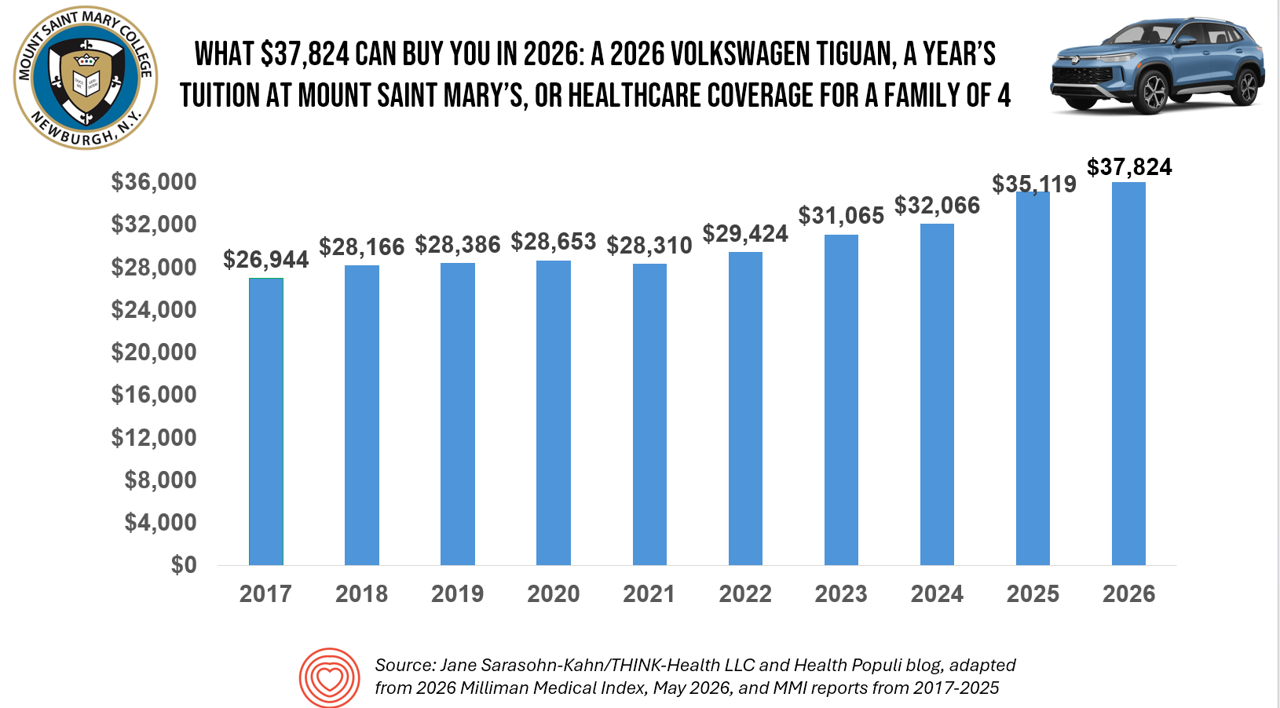
If you were handed an extra $37,824 today, how would you prioritize your household budget? For many American families, this figure represents a significant financial crossroads. It is the cost of a mid-sized SUV, the price of a year of tuition at a private college, or, increasingly, the annual cost of healthcare for a family of four. As inflation continues to influence kitchen-table economics, understanding where these funds are directed has become a critical exercise in financial literacy and long-term planning.
As a physician, I have spent over a decade observing the intersection of medical necessity and financial reality. The “Milliman Medical Index” (MMI), a long-standing analytical tool developed by actuaries and health analysts at Milliman, provides a recurring snapshot of these costs. While the concept of a “typical” family—modeled as two parents and two young children—may vary across the diverse landscape of modern American households, the index serves as a vital barometer for the rising financial burden placed on workers and their employers. According to the 2026 forecast, the cost of healthcare for such a family has reached a level that rivals major capital investments, such as a new vehicle or a full year of higher education expenses.
The Rising Cost of Coverage
The financial architecture of American healthcare is complex, often shifting the burden of cost-sharing directly onto the patient. For the 2026 calendar year, the MMI indicates that employees are expected to contribute approximately $2,300 toward their health plans, supplemented by an additional $1,266 in out-of-pocket expenses per person. When calculated for a family of four, this results in a total annual expenditure of roughly $14,244. These figures highlight the “financial toxicity” that can occur when medical bills compete with other essential household line items, such as housing, transportation and nutrition.

The growth of these costs is not uniform across all medical services. Analysis of the 2026 data reveals that personal medical inflation is being driven by specific segments:
- Pharmacy Costs: Net of rebates, prescription drug costs saw the fastest growth, increasing by nearly 15%.
- Outpatient Facility Care: This segment experienced a 7.5% increase in costs.
- Professional Services: Doctor visits and related professional consultations rose by 6.0%.
- Inpatient Facility Care: Hospital-based inpatient services showed the slowest growth rate at 4.0%.
the methodology used in this annual study identified an aggregate healthcare cost growth of 7.9% for the average person. This represents the highest year-over-year increase in the index in more than a decade, excluding the volatile period associated with the global COVID-19 pandemic. For further context on how healthcare spending is tracked and analyzed, you may consult the official Milliman Medical Index report.
Balancing the Household Budget
The challenge for many families is that healthcare costs do not exist in a vacuum. They are part of a broader inflationary environment where the cost of living—including fuel, utilities, and food—is also trending upward. When medical expenses consume a larger share of the household budget, families are forced to make difficult trade-offs. This phenomenon is often referred to by economists as “crowding out,” where essential spending on health insurance and care limits the ability to invest in other areas of life, such as savings or education.
The impact of external global factors, such as supply chain disruptions or geopolitical tensions affecting the cost of imported goods and energy, further complicates this landscape. When these costs rise, the “food and nutrition” line item in a family budget often comes under pressure, creating a cycle where financial stress can manifest as a public health concern. Medical debt is not merely a financial issue; it is a structural barrier to health and wellness, as individuals may delay necessary care to avoid out-of-pocket costs.
What Happens Next?
As we move through the remainder of 2026, the focus for policymakers and healthcare advocates remains on transparency and cost containment. Families are encouraged to review their employer-sponsored benefit packages carefully during open enrollment periods to understand their potential exposure to out-of-pocket costs. Keeping an eye on federal and state-level healthcare policy updates—which are often released by the Centers for Medicare & Medicaid Services (CMS)—can provide insights into broader legislative efforts aimed at curbing medical inflation.

Understanding these macro-economic trends is the first step toward navigating the complexities of the modern healthcare system. Whether you are planning for future medical needs or managing current expenses, being informed about the factors driving these costs is essential. We invite our readers to share their experiences with managing healthcare budgets in the comments section below. How have these rising costs changed the way your family approaches medical care? Join the conversation as we continue to track these developments throughout the year.
Keep reading