
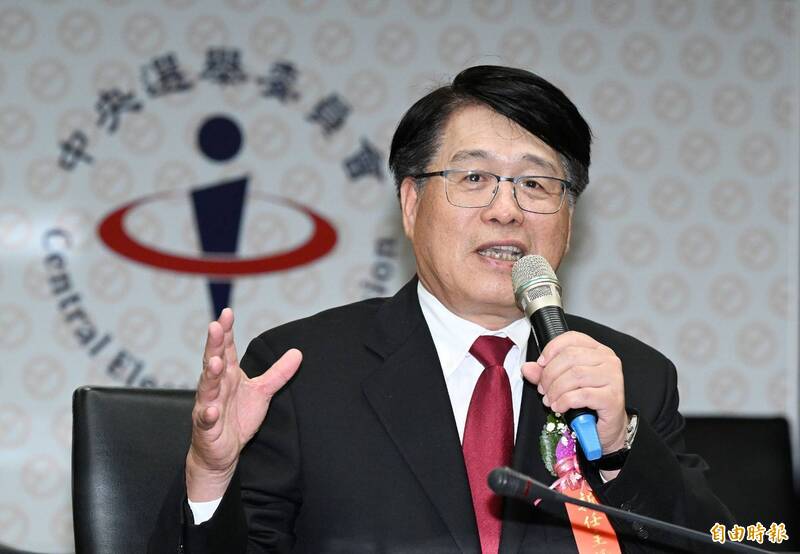
Taiwan’s newly appointed Central Election Commission (CEC) chairperson, Cheng Ying-lung, outlined six major challenges facing the electoral body during his inauguration ceremony on April 27, 2026. Speaking at the handover event attended by Executive Yuan Secretary-General Chang Dun-yuan and three newly appointed commissioners, Cheng emphasized the commission’s dual mandate of overseeing the 2026 nine-in-one local elections and the 2028 presidential and legislative elections even as addressing systemic issues that have long affected Taiwan’s electoral integrity.
Among the challenges Cheng highlighted, the handling of political participation rights for spouses from mainland China — commonly referred to as “mainland spouses” or “China spouses” — drew particular attention. He directly referenced the case of former Taiwan People’s Party legislator Li Ching-hsiu, stating that applying the Nationality Act to assess her eligibility for political office under current circumstances is “forced” and lacks solid legal grounding. Cheng warned that Li’s case is unlikely to be the last of its kind, suggesting that without constitutional or legal clarification, similar disputes will continue to arise.
The controversy stems from Li Ching-hsiu’s 2024 legislative campaign, during which her eligibility was questioned due to her status as a spouse of a mainland Chinese citizen. Although she was ultimately allowed to run, the debate over whether existing immigration and nationality laws adequately address the political rights of such individuals has persisted. Cheng argued that relying on the Nationality Act alone to resolve these matters creates legal inconsistencies and fails to reflect the evolving demographic reality of Taiwan’s society, where cross-strait marriages have develop into increasingly common over the past two decades.
Beyond the mainland spouse issue, Cheng identified five additional challenges confronting the CEC. First, the reinstatement of the practice of pairing national referendums with presidential and legislative elections — a system restored by legislative amendment in November 2025 — presents logistical and procedural tensions. While public opinion generally supports the consolidation of votes, concerns remain about potential voter fatigue and the administrative burden on election officials tasked with managing both processes simultaneously.
Second, overseas voting mechanisms for Taiwan’s citizens living abroad continue to face scrutiny. As election types have been consolidated over recent years, voters now participate in multiple electoral events within short intervals, complicating absentee ballot logistics. Cheng noted that the current system, designed for less frequent elections, struggles to keep pace with the heightened frequency of national votes, raising concerns about accessibility and timely ballot delivery.
Third, the proliferation of artificial intelligence-generated deepfake content poses a growing threat to electoral integrity. Cheng warned that synthetic media capable of mimicking political figures or distorting public statements could undermine public trust, particularly during campaign periods. He called for improved monitoring mechanisms and public awareness campaigns to help voters distinguish authentic information from manipulated media.
Fourth, allegations of foreign interference — particularly from the People’s Republic of China — remain a persistent concern. Cheng cited ongoing efforts by external actors to influence Taiwan’s electoral environment through disinformation campaigns, economic coercion and covert political messaging, underscoring the need for heightened vigilance and interagency coordination with national security bodies.
Fifth, the CEC must restore public confidence after a 174-day operational hiatus caused by political deadlock over commissioner appointments. The commission had been unable to convene quorums since late 2025, delaying preparations for the 2026 local elections. Cheng stressed that time is critically short, with the nine-in-one vote scheduled for November 28, 2026 — exactly seven months from his inauguration — leaving little room for delay in finalizing voter rolls, training poll workers, and securing logistical resources.
In response to these challenges, Cheng pledged to lead the CEC toward becoming a “guardian of Taiwan’s democratic elections,” emphasizing independence, impartiality, and technical competence. He expressed gratitude to President Lai Ching-te, Premier Cho Jung-tai, and legislative leaders for their support during the appointment process and vowed to uphold the commission’s constitutional duty to ensure free, fair, and transparent elections.
Looking ahead, Cheng confirmed that the CEC’s immediate priorities include finalizing preparations for the November 2026 local elections — which will elect mayors, county magistrates, city councilors, and township officials across all 22 subnational jurisdictions — and beginning groundwork for the 2028 presidential and legislative contests. He urged commission staff and local election offices nationwide to adopt an accelerated work pace, describing the approach as “taking three steps while others take two” to compensate for lost time.
As Taiwan approaches another pivotal election cycle, the CEC’s ability to navigate these complex challenges will be closely watched by domestic stakeholders and international observers alike. The outcome of ongoing debates over electoral law reform, particularly regarding the political rights of mainland spouses and the regulation of AI-driven content, could shape the future of Taiwan’s democratic governance for years to come.
For official updates on election schedules, voter registration procedures, and commission announcements, readers are encouraged to visit the Central Election Commission’s website at www.cec.gov.tw.