
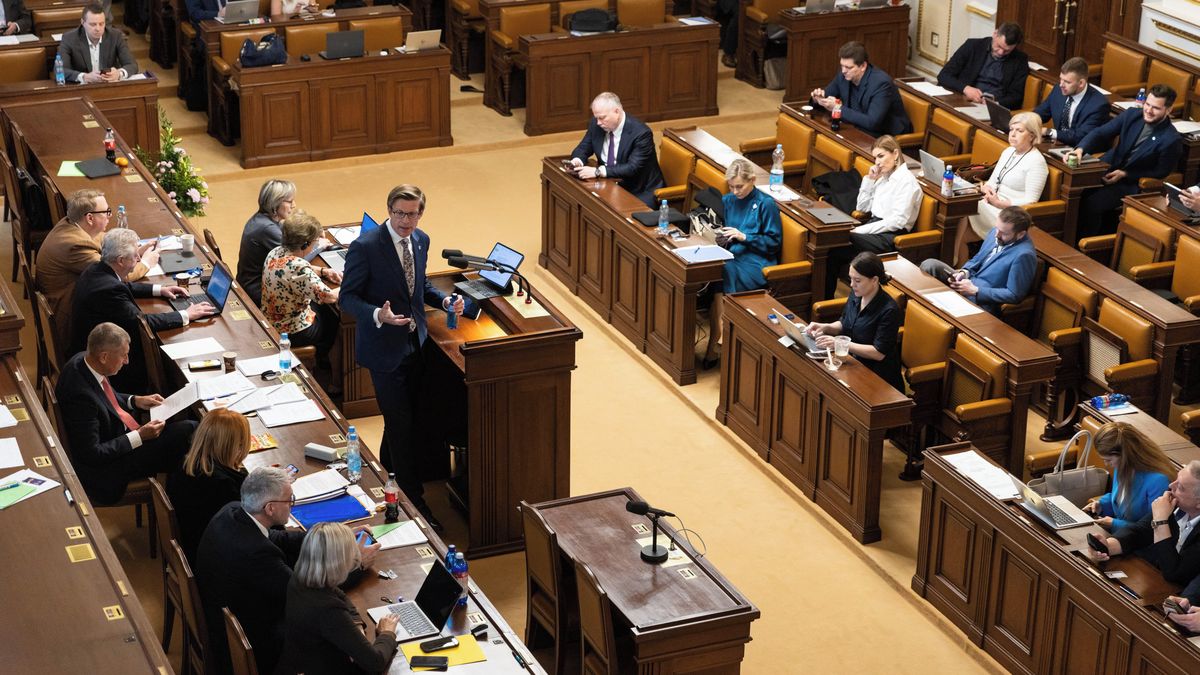
The Czech Republic’s Chamber of Deputies has given preliminary backing to a proposal that would expand the legal definition of the criminal offense of non-payment of alimony, according to legislative proceedings reported on April 21, 2026. The move comes amid ongoing debate over how best to enforce child support obligations while balancing concerns about the effectiveness of criminal penalties in securing actual payments. Supporters argue the change sends a clear societal message about parental responsibility, while critics warn that incarceration rarely leads to recovered funds and may harm children’s interests.
The proposal, introduced by members of the governing coalition, seeks to reverse a recent narrowing of the law that took effect in January 2026, which currently limits criminal liability to cases where non-payment places the recipient in immediate danger of poverty. Under the existing standard, only situations creating a tangible risk of destitution are prosecutable. The coalition’s amendment would broaden the criteria to once again allow prosecution in a wider range of non-payment scenarios, though not as extensively as the version in force prior to the 2025 reforms.
During the initial debate in the Chamber of Deputies, opposition lawmakers successfully blocked an accelerated approval process that would have allowed the bill to pass in its first reading. However, efforts by the Civic Democratic Party (ODS) to reject the proposal outright were unsuccessful. The bill has now been referred to the Committee on Constitutional Law and Legal Affairs for further review, where it will undergo detailed examination before any potential subsequent readings.
Former Justice Minister Eva Decroix of the ODS led the opposition’s resistance to rapid passage, arguing that while non-payment of alimony remains a serious issue requiring attention, imprisoning parents does not guarantee financial recovery for children. “Putting people in prison does not lead to payment of alimony,” she stated during the proceedings, adding that such measures ultimately harm the child’s best interests. Fellow ODS lawmaker Jan Bureš echoed this sentiment, emphasizing that incarceration fails to serve either the financial or welfare needs of affected children.
In response, Taťána Malá, leader of the ANO party’s parliamentary faction, maintained that the legislation is not about incarceration but about reinforcing social norms. “This is not about wanting to put parents in prison,” she said. “It is a signal that it is normal to care for one’s children.” She suggested that alternatives such as home detention—allowing offenders to continue working while serving sentences—could be acceptable mechanisms to encourage compliance without removing individuals from the workforce.
Justice Minister Jeroným Tejc, also affiliated with ANO, offered a contrasting perspective, suggesting that the threat of criminal proceedings, including potential imprisonment, increases the likelihood that owed support will be paid. He cited prison labor statistics, noting that approximately 65 percent of employable inmates in the Czech Republic are engaged in function, and that average monthly earnings from such labor could contribute around 3,267 Czech koruna toward alimony obligations.
The legislative discussion unfolded against the backdrop of broader parliamentary proceedings, during which opposition attempts to remove the election of six members of the Czech Television Council from the session agenda were also unsuccessful. Debate continued on a separate government-backed proposal to repeal the so-called nomination law governing appointments to state and semi-state company boards, though no final resolution was reached before the session concluded at 11:00 p.m., with proceedings scheduled to resume the following morning.
As the bill advances to committee review, stakeholders including family law advocates, child welfare organizations, and legal experts will likely be consulted to assess the potential implications of expanding criminal liability for alimony non-payment. The outcome could influence not only enforcement practices but also ongoing conversations about the most effective mechanisms to ensure financial support for children in separated or divorced families.
The next formal step in the legislative process will be the consideration of the bill by the Committee on Constitutional Law and Legal Affairs, with no date yet specified for when that review will conclude or when the legislation might return to the full chamber for further debate.
For readers interested in following developments on this legislative initiative or related family law matters in the Czech Republic, official updates are available through the Chamber of Deputies’ website and the Ministry of Justice’s public announcements.
We welcome your thoughts on this story. Share your perspective in the comments below and help spread informed discussion by sharing this article with others.