
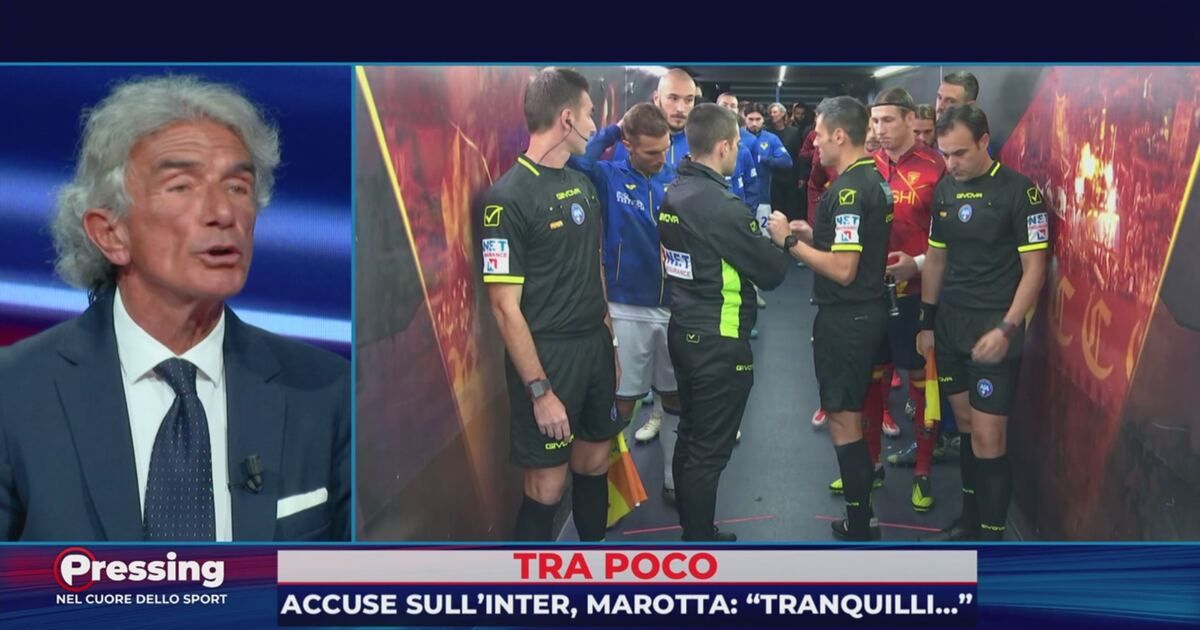
Italian football is facing renewed scrutiny over its refereeing system following comments from former Serie A referee Luca Marelli, who suggested that financial interests may be influencing decisions made by Italy’s refereeing designator, Gianluca Rocchi. The remarks, made during a recent appearance on Mediaset’s sports analysis program Pressing, have reignited debate about transparency and accountability in Serie A officiating, particularly amid ongoing investigations into potential conflicts of interest.
Marelli, who served as a referee in Italy’s top flight for over a decade before transitioning to a media role, stated during the broadcast that Rocchi “has many enemies among referees, and it’s because of money.” The comment was part of a broader discussion on the program about the pressures facing match officials and the perceived lack of impartiality in high-stakes games. Although Marelli did not elaborate on specific allegations, his remarks point to longstanding concerns within Italian football about how referee appointments are managed and whether club influence—particularly financial leverage—could be affecting those decisions.
The Italian Football Federation (FIGC) oversees the refereeing system through its National Refereeing Committee, which appoints match officials for Serie A and other professional leagues. Gianluca Rocchi, a former international referee, has held the position of designatore (referee appointor) since 2020, responsible for selecting referees for weekly matches across Italy’s top divisions. His role has come under increased examination in recent months due to allegations of improper communication with club representatives, which led to his temporary autosuspension in April 2024 pending an investigation by federal prosecutors.
According to verified reports from Italian judicial sources, Rocchi is under investigation for alleged sports fraud related to his interactions with certain Serie A clubs during the 2022-2023 season. Prosecutors in Rome have examined whether he shared confidential information about upcoming referee assignments in ways that could have provided competitive advantages. While no formal charges have been filed as of April 2026, the investigation remains active, and Rocchi has maintained his innocence, asserting through legal representatives that he has committed no wrongdoing.
The controversy has highlighted broader structural issues in Italian football governance. Critics argue that the close relationship between club executives and refereeing authorities creates inherent conflicts of interest, particularly when financial stakes are high. Serie A clubs collectively generate billions of euros annually in revenue, with broadcasting rights, sponsorships, and matchday income creating powerful incentives for favorable outcomes. In this environment, any perception of bias—whether real or perceived—can undermine public trust in the integrity of the competition.
Former referee and current commentator Luca Marelli has been vocal about the need for reform in how referees are appointed and monitored. In previous interviews, he has advocated for greater transparency in the designator’s decision-making process, including the publication of rationale behind controversial appointments. Marelli has also supported the idea of introducing independent oversight mechanisms to review potential conflicts of interest, similar to models used in other European leagues such as England’s Professional Game Match Officials Limited (PGMOL).
The FIGC has acknowledged concerns about referee impartiality and has implemented several reforms in recent years aimed at improving standards. These include enhanced training programs, stricter enforcement of ethical guidelines, and the introduction of Video Assistant Referee (VAR) technology to reduce clear errors. However, critics maintain that structural reforms addressing the relationship between clubs and refereeing authorities have been insufficient, leaving room for ongoing skepticism about impartiality.
As of late April 2026, the federal investigation into Rocchi’s conduct continues, with no public timeline for its conclusion. Legal experts familiar with Italian sports law note that such proceedings can extend over multiple months, particularly when they involve complex analyses of communication patterns and intent. Until the investigation concludes, Rocchi remains suspended from his duties as designatore, with interim responsibilities being managed by senior members of the National Refereeing Committee.
The situation underscores the challenges facing sports governance in an era of heightened commercialization. As football leagues worldwide grapple with balancing financial growth and competitive integrity, Italy’s experience serves as a case study in how financial pressures can permeate even the most foundational aspects of sporting administration—such as the appointment of match officials. For fans, players, and clubs alike, the outcome of this inquiry may have lasting implications for how referee accountability is understood and enforced in Italian football.
For official updates on the investigation, readers are encouraged to consult the Italian Federal Prosecutor’s Office for Sports Justice and the FIGC’s official communications channel. Both institutions provide periodic statements on ongoing proceedings and regulatory developments within Italian football.
We welcome your thoughts on this developing story. Share your perspective in the comments below, and assist keep the conversation going by sharing this article with others interested in sports governance and integrity.