
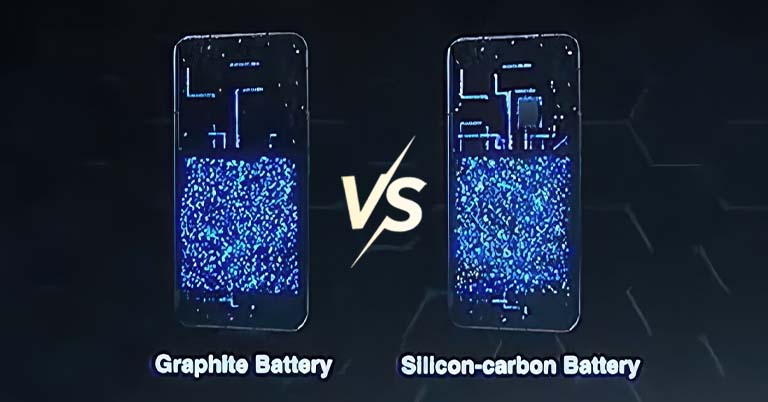
Samsung may be poised to deliver its most significant battery advancement in years with the upcoming Galaxy S27 series, according to multiple credible leaks. Reports indicate the company is actively testing silicon-carbon battery technology, a potential upgrade that could finally increase capacity beyond the 5,000mAh ceiling that has defined its Ultra models since the Galaxy S20 Ultra in 2020.
The shift represents a meaningful departure from Samsung’s recent strategy of relying on software optimizations to eke out incremental battery life gains. While the company has maintained the same 5,000mAh capacity across six generations of Galaxy S Ultra devices, internal testing suggests the Galaxy S27 Ultra could break that pattern with a silicon-carbon anode design capable of storing more lithium in the same physical space.
Silicon-carbon batteries still operate on lithium-ion chemistry but replace or supplement the traditional graphite anode with silicon, which has a much higher theoretical capacity for lithium storage. However, past attempts to employ high-silicon anodes have faced challenges with durability, as silicon expands and contracts significantly during charge cycles, leading to faster degradation. Samsung’s reported focus on silicon-carbon composites aims to mitigate this issue by combining silicon with carbon materials to improve structural stability.
Leaked internal documents cited by tech blog Schrodinger Intel indicate Samsung SDI is testing silicon-carbon packs targeting approximately 1,500 full-charge cycles before reaching end-of-life state of health. This figure compares to 2,000 cycles for the Galaxy S25 Ultra and a drop to 1,200 cycles for the Galaxy S26 Ultra, according to EU energy label data referenced in the leaks. The reduction in cycle life for the S26 Ultra may reflect earlier experimentation with higher-silicon formulations that sacrificed longevity for capacity.
If realized, the Galaxy S27 Ultra could see a battery capacity ranging from 5,500mAh to 6,700mAh, depending on the source and specific formulation being tested. This would mark the first meaningful increase in battery size for Samsung’s flagship line since the transition from 4,500mAh to 5,000mAh with the Galaxy S20 Ultra. In contrast, the standard Galaxy S27 and S27+ models are expected to receive only modest upgrades, with capacities projected around 4,300mAh and 4,900mAh respectively, suggesting Samsung may initially limit the silicon-carbon technology to its premium Ultra variant.
The potential upgrade aligns with public comments from Sung-Hoon Moon, Samsung’s executive vice president and head of smartphone R&D, who in February acknowledged the company had fallen behind in battery innovation. Moon stated internally that Samsung was “a bit un-innovative on that front” but confirmed ongoing work on silicon-carbon technology, noting it had not yet passed the company’s “very rigorous validation standards.” His remarks, reported by multiple outlets including Tom’s Guide, underscore the strategic importance Samsung places on finally addressing a long-standing criticism of its flagship devices.
Silicon-carbon batteries began appearing in Chinese smartphones as early as 2023, with Honor announcing plans to feature the technology in a device launched at MWC 2023. While early implementations delivered modest gains, Samsung’s approach appears focused on achieving a more substantial leap in energy density without compromising safety or longevity—factors that have historically slowed adoption of silicon-heavy anodes in the industry.
Should the Galaxy S27 series debut with silicon-carbon batteries, it would represent a rare instance of Samsung leading rather than following in battery technology adoption. The move could also influence broader industry trends, particularly if the technology demonstrates reliable performance at scale. For consumers, the upgrade promises longer usage between charges—a practical benefit that addresses one of the most persistent pain points in smartphone usage.
As of now, Samsung has not officially confirmed plans for silicon-carbon batteries in the Galaxy S27 line. All details remain based on leaked internal documents and reports from Korea-based tipsters, including the blogger known as yeux1122 who first shared insights via Schrodinger Intel. Until Samsung provides an official statement or the devices are unveiled, the specifics of capacity, cycle life and rollout across the S27 lineup remain subject to change.
The next confirmed checkpoint for official information will be Samsung’s typical Unpacked event schedule, which historically unveils the Galaxy S series in early February. Based on past patterns, the Galaxy S27 series is expected to be announced around February 2027, at which point Samsung will likely disclose detailed battery specifications and technology choices for its upcoming flagship lineup.
What are your thoughts on Samsung’s potential shift to silicon-carbon battery technology? Would a meaningful battery upgrade influence your decision to upgrade to the next Galaxy S device? Share your perspective in the comments below and pass this article along to others following the latest in mobile innovation.