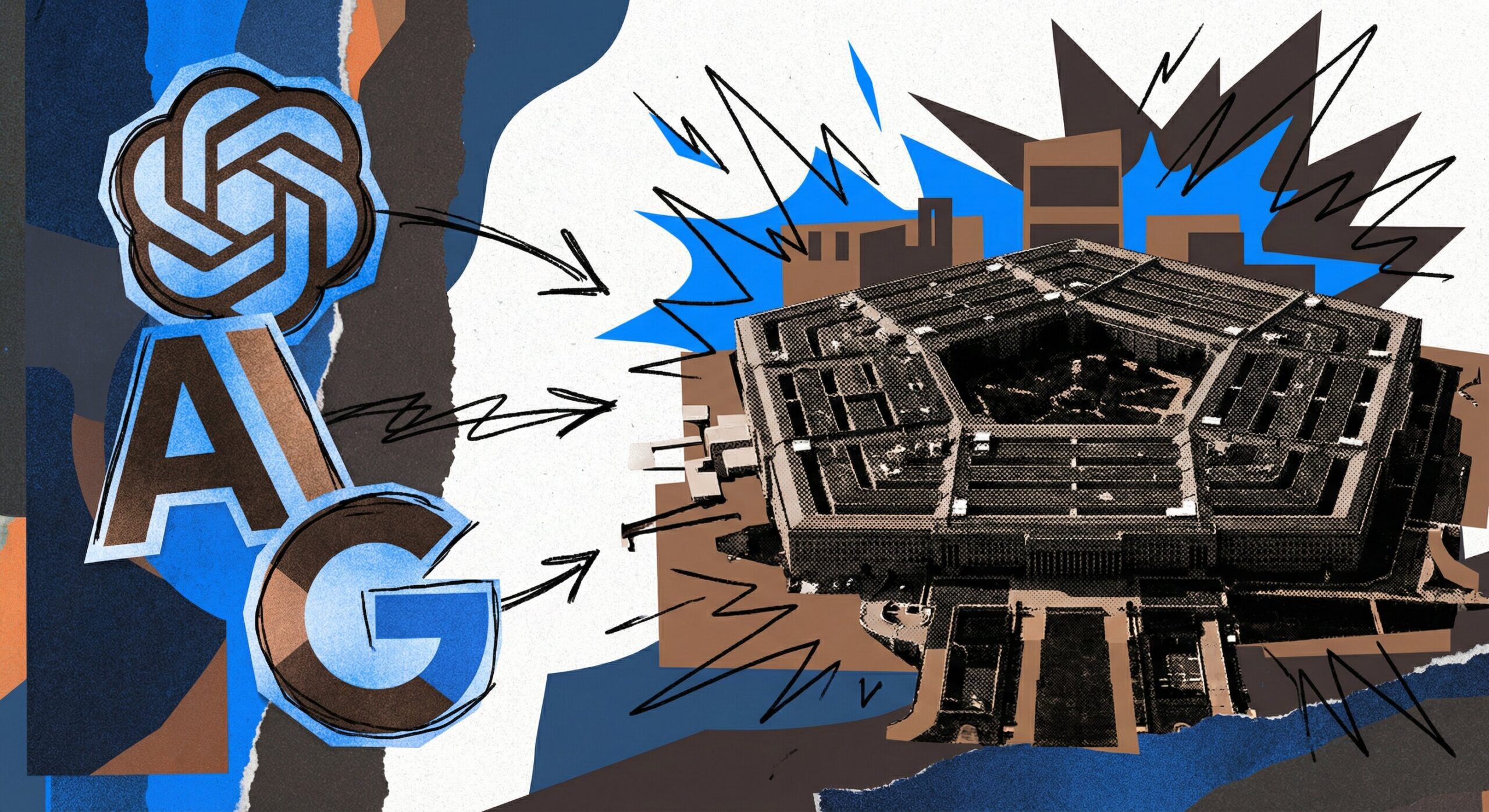
Google Signs Classified AI Deal With Pentagon Despite Employee Protests
In a move that has ignited internal dissent and raised ethical questions about the militarization of artificial intelligence, Google has signed a contract with the U.S. Department of Defense (DoD) allowing the Pentagon to use its AI models for classified military applications. The deal, finalized on April 28, 2026, expands an existing agreement from November 2025 that previously limited Google’s AI tools to unclassified tasks. The timing of the signing—coinciding with a public letter from over 600 Google employees demanding the company reject classified military work—has drawn sharp criticism from workers, legal experts, and digital rights advocates.
A spokesperson for Google Public Sector confirmed the deal to The Information, stating that the latest contract permits the Pentagon to use Google’s AI models for “any lawful government purpose.” Whereas the company has included safeguards in the agreement—such as clauses prohibiting mass surveillance and autonomous weapons—legal analysts argue these provisions are legally unenforceable. Unlike competitors such as OpenAI, which has maintained stricter policies against military use, Google has also agreed to adjust its AI safety filters at the request of the U.S. Government, further blurring the line between commercial and defense applications.
The backlash from employees, many of whom work at Google’s DeepMind AI research lab, underscores a growing rift between Silicon Valley’s ethical concerns and its expanding role in national security. In their open letter to CEO Sundar Pichai, the workers wrote: “We seek AI to benefit humanity, not to be used in ways that are inhumane or extremely harmful.” The protest reflects broader industry tensions over the dual-use nature of AI—tools that can drive medical breakthroughs or optimize logistics can also be repurposed for lethal autonomous systems, predictive policing, or cyber warfare.
The Deal: What’s in the Contract?
The agreement, described by a source familiar with the matter, allows the Pentagon to integrate Google’s AI models into classified operations, including intelligence analysis, logistics planning, and potentially battlefield decision-making. While the exact scope of the applications remains undisclosed due to the classified nature of the work, the contract’s language—“any lawful government purpose”—grants the DoD significant latitude. This marks a departure from Google’s earlier stance in 2018, when it withdrew from Project Maven, a DoD initiative to improve drone targeting, following employee protests.
Silicon Valley The Pentagon Unlike
Legal experts have raised alarms about the enforceability of the contract’s safeguards. A group of technology and human rights lawyers, cited in reporting by The Decoder, argue that the clauses prohibiting mass surveillance and autonomous weapons lack operational teeth. “These are aspirational statements, not binding constraints,” said one attorney familiar with the contract. “The government can always argue that a specific use case falls under ‘lawful purposes,’ and there’s no mechanism to challenge that in real time.”
Google’s willingness to modify its AI safety filters for the Pentagon is particularly contentious. Unlike OpenAI, which has explicitly banned military and warfare applications, Google’s contract includes a provision allowing the DoD to request adjustments to the models’ ethical guardrails. This could enable the military to bypass restrictions designed to prevent harmful outputs, such as generating disinformation or enabling autonomous targeting.
Employee Protest: A Moral Reckoning for Big Tech
The internal dissent at Google mirrors a larger reckoning in Silicon Valley over the ethical responsibilities of tech companies. The 600+ employees who signed the open letter represent a cross-section of Google’s workforce, with many hailing from DeepMind, the company’s London-based AI lab known for its focus on ethical AI development. Their letter, published on the same day as the contract signing, framed the issue as a moral imperative:
“We believe that the development and deployment of AI should be guided by principles that prioritize human well-being, transparency, and accountability. Classified military work undermines these principles by its very nature—it is secretive, often unaccountable, and can lead to applications that harm rather than aid humanity.”
Sundar Pichai The Pentagon
The protest is the latest in a series of employee-led actions at Google over its defense contracts. In 2018, thousands of workers walked out over the company’s handling of sexual misconduct allegations, and in 2020, employees protested Google’s cloud computing deal with the Israeli military. The current backlash reflects a growing frustration among tech workers who sense their employers are prioritizing profit and government partnerships over ethical considerations.
Sundar Pichai, Google’s CEO, has not publicly responded to the letter. But, in a 2018 blog post outlining Google’s AI principles, he wrote: “We will not design or deploy AI in… weapons or other technologies whose principal purpose or implementation is to cause or directly facilitate injury to people.” The Pentagon deal appears to test the boundaries of that commitment, as it enables AI applications that could indirectly support military operations.
Legal and Ethical Concerns: Can Safeguards Work?
The controversy surrounding the Google-Pentagon deal highlights a fundamental challenge in regulating AI: the gap between ethical guidelines and enforceable legal standards. While companies like Google can include safeguards in their contracts, these provisions often lack the specificity and oversight mechanisms needed to prevent misuse. For example:
Mass Surveillance: The contract prohibits the use of Google’s AI for mass surveillance, but experts argue that the term is too vague to be enforceable. “What constitutes ‘mass surveillance’?” asked Amie Stepanovich, executive director of the AI Policy Hub at the University of California, Berkeley. “Is it 10,000 people? A million? Without clear definitions, these clauses are meaningless.”
Autonomous Weapons: The contract also bans the use of Google’s AI in autonomous weapons systems, but critics point out that the DoD’s definition of “autonomous” is fluid. The Pentagon’s 2020 AI principles allow for “human judgment” to be applied at some stage of decision-making, which could be interpreted loosely to permit semi-autonomous systems.
Adjustable Safety Filters: Google’s agreement to modify its AI safety filters at the government’s request raises concerns about the potential for misuse. “If the DoD can request changes to the filters, what’s to stop them from removing safeguards against harmful outputs?” said Lucy Suchman, a professor of anthropology of science and technology at Lancaster University. “This sets a dangerous precedent for other companies to follow.”
The deal also arrives amid heightened scrutiny of Big Tech’s role in national security. In January 2025, the Electronic Privacy Information Center (EPIC) filed a complaint with the Federal Trade Commission, alleging that Google had shared sensitive data about Americans with foreign adversaries, including China. While unrelated to the Pentagon deal, the complaint underscores the growing unease over Google’s data-sharing practices and its expanding partnerships with government agencies.
Industry Reactions: A Divided Tech Sector
The Google-Pentagon deal has sparked a debate within the tech industry about the role of AI in military applications. Some companies, like OpenAI, have taken a hard line against military use, while others, such as Microsoft and Amazon, have embraced defense contracts. The divide reflects broader questions about the responsibilities of tech companies in an era of great-power competition and rapid AI advancement.
Founder Of Moms Demand Action: We're Only As Safe As Closest State With Weakest Gun Laws
Proponents of the deal argue that AI can enhance military efficiency and reduce human casualties by improving logistics, intelligence analysis, and decision-making. “AI has the potential to save lives on the battlefield by enabling faster, more accurate responses to threats,” said Paul Scharre, a senior fellow at the Center for a New American Security and author of Army of None: Autonomous Weapons and the Future of War. “The key is ensuring that these systems are used responsibly and with appropriate oversight.”
Critics, however, warn that the militarization of AI could accelerate an arms race, increase the risk of unintended escalation, and erode public trust in technology. “Once AI is integrated into military systems, it becomes nearly impossible to control how it’s used,” said Meredith Whittaker, president of the Signal Foundation and a former Google employee. “This deal sets a precedent that could normalize the use of AI in warfare, with little regard for the long-term consequences.”
The controversy has also reignited calls for stronger government regulation of AI. In the U.S., lawmakers have introduced several bills aimed at establishing ethical guidelines for AI development, including the AI Research and Development Act and the National AI Commission Act. However, progress has been slow, leaving companies like Google to self-regulate through internal policies and contractual safeguards.
What’s Next: Oversight and Accountability
As the Google-Pentagon deal moves forward, several key questions remain unanswered:
Will Google face further internal backlash? The 600+ employees who signed the open letter represent a fraction of Google’s 190,000-person workforce, but their protest could galvanize broader opposition. Past employee actions at Google have led to policy changes, including the company’s withdrawal from Project Maven in 2018.
How will the DoD use Google’s AI? The classified nature of the work means the public may never know the full extent of the applications. However, watchdog groups and congressional committees could demand transparency through hearings or Freedom of Information Act (FOIA) requests.
Will other tech companies follow suit? Google’s deal could embolden other AI developers to pursue similar contracts with the Pentagon. Microsoft, which has a $22 billion contract to provide augmented reality headsets to the U.S. Army, is already a major player in defense AI. If Google’s deal proves lucrative, competitors may feel pressure to enter the market.
What role will regulators play? The Federal Trade Commission (FTC) and the Department of Justice (DOJ) have both signaled interest in regulating AI. The FTC, in particular, has warned companies about the risks of deceptive AI practices, while the DOJ has focused on antitrust concerns. However, neither agency has yet addressed the specific ethical and legal challenges posed by military AI applications.
Key Takeaways
Google’s deal with the Pentagon expands the company’s AI tools to classified military applications, despite internal protests from over 600 employees.
Legal safeguards in the contract—such as bans on mass surveillance and autonomous weapons—are widely seen as unenforceable by experts.
Google’s willingness to adjust AI safety filters for the Pentagon sets it apart from competitors like OpenAI, which have stricter policies against military use.
The backlash reflects broader industry tensions over the ethical responsibilities of tech companies in an era of AI-driven warfare.
Regulatory oversight remains limited, leaving companies to self-regulate through internal policies and contractual clauses.
What Happens Next?
The next major checkpoint for this story will likely come in the form of congressional hearings or regulatory actions. The House Armed Services Committee has already scheduled a hearing for June 2026 to examine the ethical implications of AI in military applications, where Google’s deal is expected to be a focal point. Advocacy groups such as the Electronic Frontier Foundation (EFF) and the American Civil Liberties Union (ACLU) have indicated they may file lawsuits or complaints to challenge the deal’s legality.
For now, the Google-Pentagon deal serves as a stark reminder of the ethical dilemmas posed by AI’s dual-use potential. As Dr. Olivia Bennett, Chief Editor of the Business section at World Today Journal, notes: “This story is not just about Google or the Pentagon—it’s about the future of technology and who gets to decide how it’s used. The choices made today will shape the role of AI in society for decades to come.”
We encourage readers to share their thoughts on this issue in the comments below. How should tech companies balance ethical concerns with government partnerships? What safeguards, if any, would make military AI applications acceptable? Join the conversation.