
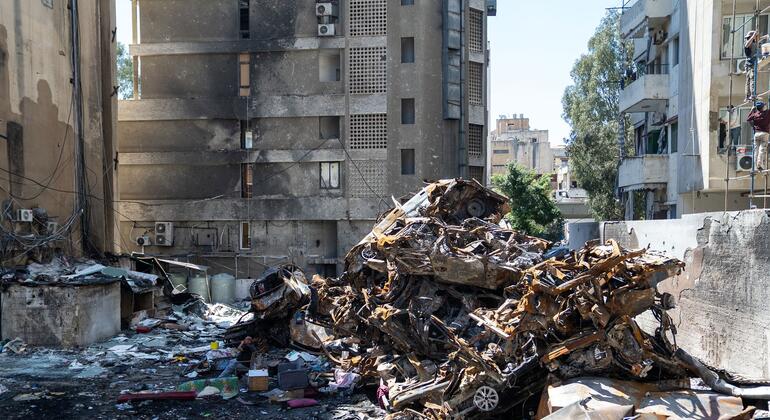
Southern Lebanon is facing a deepening crisis as ongoing hostilities exacerbate existing humanitarian challenges, driving up hunger and straining already fragile public services. Recent reports indicate a significant escalation in violence, with at least nine people killed on Thursday, adding to a mounting toll that has stretched the country’s resources to the breaking point. The situation underscores the urgent necessitate for increased humanitarian assistance and a renewed push for de-escalation in the region.
The United Nations Relief and Coordination Office (OCHA) reported that Lebanese authorities have documented at least 13 injuries in multiple airstrikes and military activities across southern towns. According to OCHA, between April 17th and 28th alone, 48 people were killed and 183 injured, bringing the total number of fatalities since the escalation began on March 2nd to over 2,500, with more than 7,800 wounded. This grim statistic highlights the devastating impact of the conflict on civilian populations.
Escalating Violence and Humanitarian Access Challenges
Despite an extended ceasefire, the situation in southern Lebanon remains “fragile and volatile,” OCHA stated. Continued violence is significantly hindering humanitarian access and impeding recovery efforts. Aid agencies have managed to conduct 100 assisted missions to hard-to-reach areas through a UN-coordinated notification system, providing some relief to communities under immense strain. Though, the scale of the need far outweighs the current capacity for assistance.
The ongoing conflict is not occurring in a vacuum. Lebanon has been grappling with a severe economic crisis for years, which has already left a significant portion of the population vulnerable. The hostilities are further exacerbating these existing vulnerabilities, pushing more people into poverty and food insecurity. The disruption of supply chains and rising costs are compounding the challenges faced by Lebanese citizens.
Worsening Food Insecurity
Insecurity, coupled with the economic fallout from the conflict, is severely impacting livelihoods and driving up food prices. Estimates now indicate that nearly a quarter of Lebanon’s population is facing acute hunger. A recent alert from the UN-backed global food security tracker, the Integrated Food Security Phase Classification (IPC), warned on Wednesday that the situation is deteriorating rapidly. The IPC report estimates that around 1.2 million people could face high levels of acute food insecurity between now and August.
The World Food Programme (WFP) emphasized the human cost behind these numbers, stating, “Behind every number are families struggling to meet their food needs consistently.” The WFP is scaling up its assistance efforts in partnership with other organizations to address the growing food crisis. However, sustained and increased funding is crucial to meet the escalating demand.
Strain on Public Services and Displacement
The humanitarian situation is further complicated by widespread displacement and the collapse of essential public services. The conflict has forced many people to flee their homes, placing additional pressure on already overburdened infrastructure. Healthcare facilities, schools, and other vital services are struggling to cope with the increased demand.
The Office of the High Commissioner for Human Rights (OHCHR) reported in March that at least 886 people have been killed since March 2nd, including at least 111 children. According to the OHCHR, Israeli airstrikes have destroyed hundreds of homes and critical civilian infrastructure, including healthcare facilities. Simultaneously, Hezbollah fighters have launched attacks, contributing to the overall instability and civilian casualties.
The Impact on Healthcare
The destruction of healthcare facilities is particularly concerning, as it limits access to essential medical care for those injured in the conflict and those suffering from chronic illnesses. Doctors Without Borders (MSF) has reported witnessing a “total disregard for civilian lives and for the protection of health care” in Lebanon. MSF teams are responding to the medical needs of affected communities, but the challenges are immense.
The ongoing hostilities are creating a complex humanitarian crisis that requires a comprehensive and coordinated response. Addressing the immediate needs of those affected, protecting civilians, and working towards a sustainable resolution to the conflict are paramount. The international community must step up its efforts to provide assistance and support to Lebanon during this demanding time.
Key Takeaways
- Escalating Violence: The conflict in southern Lebanon has resulted in a significant increase in civilian casualties and injuries, with over 2,500 killed and 7,800 wounded since March 2nd.
- Worsening Food Security: Nearly a quarter of Lebanon’s population is now facing acute hunger, and approximately 1.2 million people are projected to experience high levels of food insecurity by August.
- Strained Public Services: The conflict is exacerbating the existing economic crisis in Lebanon, placing immense strain on public services and infrastructure.
- Humanitarian Access Challenges: Continued violence is hindering humanitarian access, making it difficult to deliver aid to those in need.
The situation in Lebanon remains highly volatile. The next key development to watch for is the outcome of ongoing diplomatic efforts to secure a lasting ceasefire and facilitate increased humanitarian access. The UN Security Council is scheduled to discuss the situation in Lebanon on May 7th, 2026. Readers are encouraged to share their thoughts and perspectives on this critical issue in the comments below.