
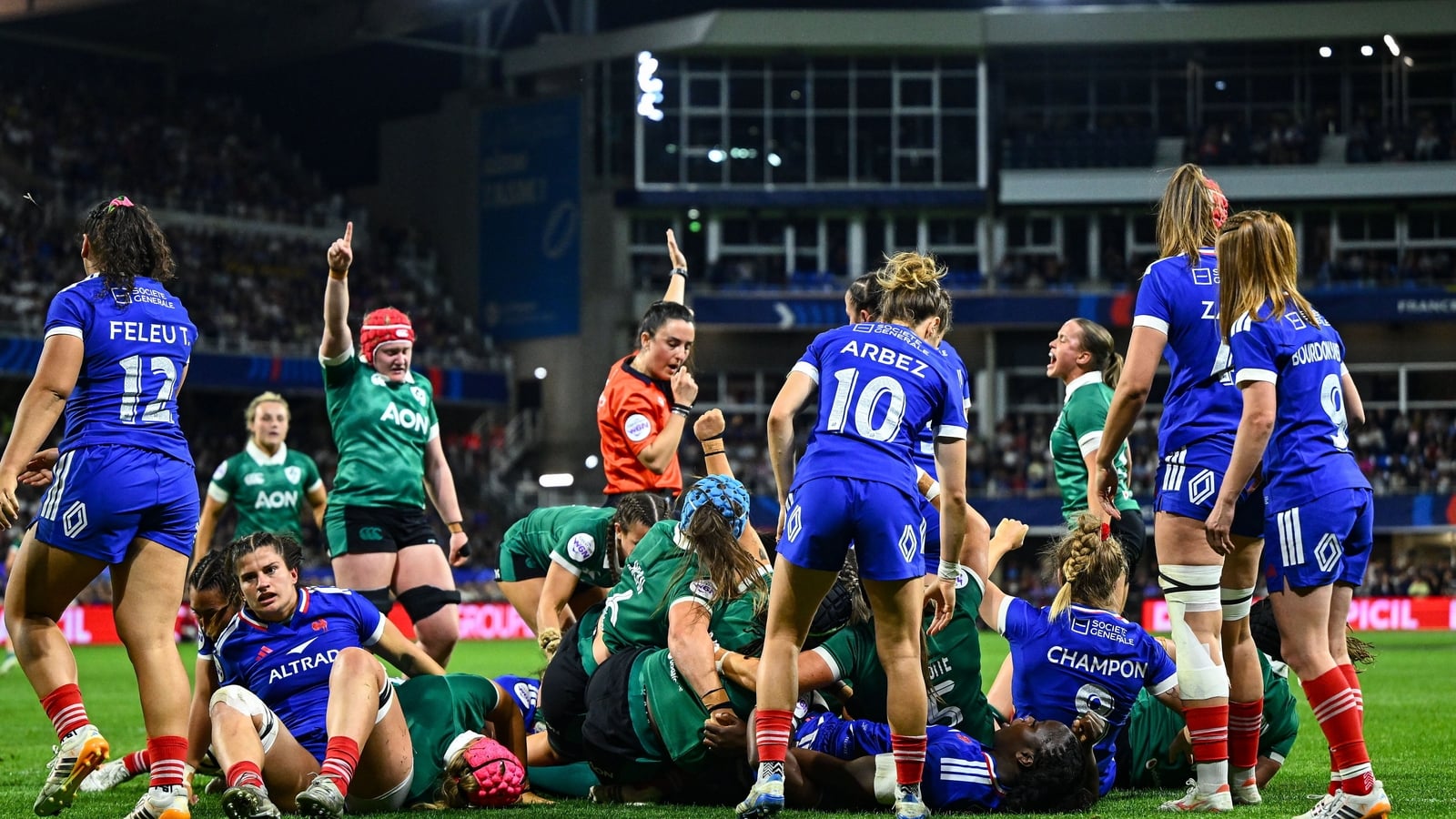
Ireland captain Erin King has spoken of optimism and growth following her team’s narrow defeat to France in the Women’s Six Nations clash at Stade Marcel-Michelin in Clermont-Ferrand on Saturday, April 25, 2026. Despite falling short in what she described as a “game of inches,” King emphasized the positive takeaways from the experience, stating the squad would “get better and better” from the challenge posed by one of Europe’s strongest sides.
The match, which took place on the eve of the tournament’s final weekend, saw Ireland push France close in a tightly contested encounter that ultimately ended in defeat for the visitors. Speaking to RTÉ Sport’s Neil Treacy after the game, King acknowledged the missed opportunity to secure a historic victory but framed the performance as a stepping stone for future development. Her comments came as Ireland looked to build on their campaign after being eliminated by France in the quarter-finals of the previous year’s Rugby World Cup.
King, who has led Ireland through a period of transition and ambition, highlighted the value of competing against top-tier opposition in front of a passionate home crowd. The Stade Marcel-Michelin, known for its intimidating atmosphere and strong support for Clermont Auvergne, provided a stern test for the Irish side. Despite the result, King expressed belief in the team’s trajectory, noting that exposure to such high-stakes environments would accelerate their progress.
The encounter formed part of Ireland’s ongoing Women’s Six Nations campaign, which has seen them face formidable opponents including England, Scotland, Wales, Italy and France. While the team has yet to secure a win against France in recent seasons, King’s message focused on resilience and incremental improvement rather than dwelling on the outcome. Her leadership has been central to fostering a culture of accountability and long-term vision within the squad.
Verified reports from the match indicate that Ireland demonstrated improved defensive organization and tactical discipline compared to previous encounters with France, particularly in the first half where they managed to contain the hosts’ attacking threats. Key moments, including a missed penalty opportunity and a turnover inside the French 22-meter line, were cited by analysts as pivotal in determining the narrow margin of defeat.
King’s post-match reflections align with broader statements made by head coach Scott Bemand, who has consistently emphasized process over results in building a sustainable competitive program. Bemand, in his second year as Ireland’s head coach, has prioritized player development, cohesion, and adaptability as cornerstones of the team’s evolution. The Clermont-Ferrand performance was viewed by the coaching staff as evidence of growth in execution under pressure.
The Women’s Six Nations continues to serve as a critical platform for Ireland to measure themselves against the elite of European rugby. With France remaining one of the sport’s powerhouses — having won multiple Grand Slams and consistently ranking among the world’s top teams — any competitive performance against them is regarded as a positive indicator of progress. King’s framing of the defeat as a learning opportunity reflects a strategic mindset aimed at closing the gap over successive campaigns.
Looking ahead, Ireland’s focus will shift to final preparations for upcoming fixtures and continued investment in grassroots and high-performance programs. The Irish Rugby Football Union (IRFU) has outlined a long-term strategy to increase participation, improve coaching standards, and enhance support structures for female athletes. These efforts are intended to create a deeper talent pool and sustain competitiveness at the international level.
As the team regroups following the Clermont-Ferrand encounter, King’s message of optimism serves as a rallying point for players and supporters alike. Her emphasis on getting “better and better” underscores a commitment to continual improvement, a philosophy that has become increasingly central to Ireland’s approach in women’s rugby. The next confirmed checkpoint for the squad is their return to training camp ahead of the autumn international series, scheduled to begin in June 2026.
For ongoing coverage of Ireland’s Women’s Six Nations journey and updates on team developments, readers are encouraged to follow official channels including the IRFU website and verified sports news outlets. Share your thoughts on the team’s progress and what it means for the future of women’s rugby in the comments below.