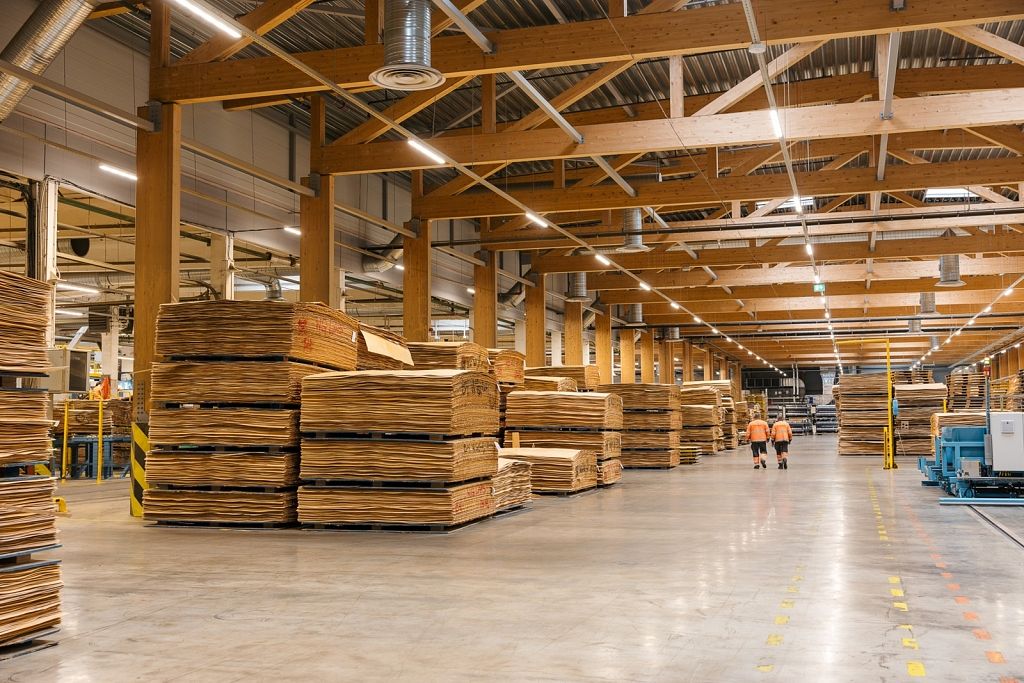
Latvijas Finieris, one of Latvia’s leading plywood manufacturers, has announced a major investment of 100 million euros to expand its production capacity. This significant financial commitment underscores the company’s strategy to strengthen its position in the European wood products market amid growing demand for sustainable building materials.
The investment will focus on modernizing existing facilities and increasing output at Latvijas Finieris’s primary production sites. Company officials indicate that the expansion aims to enhance efficiency, reduce environmental impact through advanced technology and meet rising customer demand for certified plywood products used in construction, furniture, and transportation industries.
As part of Latvia’s broader forestry and wood processing sector, Latvijas Finieris operates within an industry that contributes substantially to the national economy. According to data from Latvijas Valsts Meži (LVM), the state forest management agency, Latvia’s wood processing exports reached over 2 billion euros in recent years, with plywood and laminated veneer lumber representing a growing share of value-added products.
The 100-million-euro investment aligns with national priorities to promote high-value wood manufacturing and support innovation in the bioeconomy. Latvian government policies have increasingly emphasized sustainable forestry practices and the development of advanced wood-based materials as part of the country’s climate and industrial strategy.
Latvijas Finieris has long been certified under the Programme for the Endorsement of Forest Certification (PEFC), ensuring that its raw materials come from responsibly managed forests. This certification remains central to its market appeal, particularly in Western European countries where environmental standards for building materials are stringent.
The expansion is expected to create new skilled jobs in production, engineering, and logistics, particularly in the regions where Latvijas Finieris operates. While specific hiring numbers have not been disclosed, similar investments in Latvia’s wood sector have historically led to workforce growth of 50 to 150 positions per major facility upgrade.
Industry analysts note that the timing of this investment reflects broader European trends toward reshoring supply chains and reducing reliance on imported construction materials. With energy costs stabilizing and demand for eco-friendly building solutions rising, Latvia’s plywood producers are positioning themselves to capture greater market share in the Nordic and Baltic regions.
Environmental considerations are integral to the project’s design. Latvijas Finieris has stated that the new production lines will incorporate energy-efficient machinery, waste heat recovery systems, and closed-loop water usage where feasible. These measures aim to lower the carbon footprint per unit of output and comply with tightening EU regulations on industrial emissions.
The company sources its primary raw material—birch and softwood veneer—from Latvian state and private forests, maintaining long-term supply agreements with Latvijas Valsts Meži and other forest managers. This vertical integration helps ensure consistent quality and traceability from forest to finished product.
Latvijas Finieris exports approximately 80% of its output, with key markets including Germany, Poland, the United Kingdom, and Scandinavian countries. The expansion is expected to strengthen its ability to fulfill large-volume orders from international distributors and retail chains seeking FSC- or PEFC-certified plywood for green building projects.
No official timeline for completion has been publicly released, but industry sources suggest that phased implementation over 24 to 36 months is typical for investments of this scale in the wood processing sector. Updates on permitting, construction milestones, and commissioning are expected to be shared through Latvijas Finieris’s official channels and regulatory filings.
As Latvia continues to develop its reputation as a hub for sustainable wood manufacturing, investments like this one signal confidence in the sector’s long-term viability. For stakeholders across the forestry value chain—from forest owners to end-users—the expansion represents a step toward greater industrial resilience and environmental stewardship.
Readers seeking official updates on Latvijas Finieris’s operations, sustainability reports, or PEFC certification details can visit the company’s website or consult the PEFC International database. Similarly, information on Latvia’s forestry sector and wood exports is regularly published by the Ministry of Agriculture and the Central Statistical Bureau of Latvia.
What does this investment mean for Latvia’s economy and the future of sustainable construction? Share your thoughts in the comments below, and aid spread awareness by sharing this article with others interested in green industry developments.