
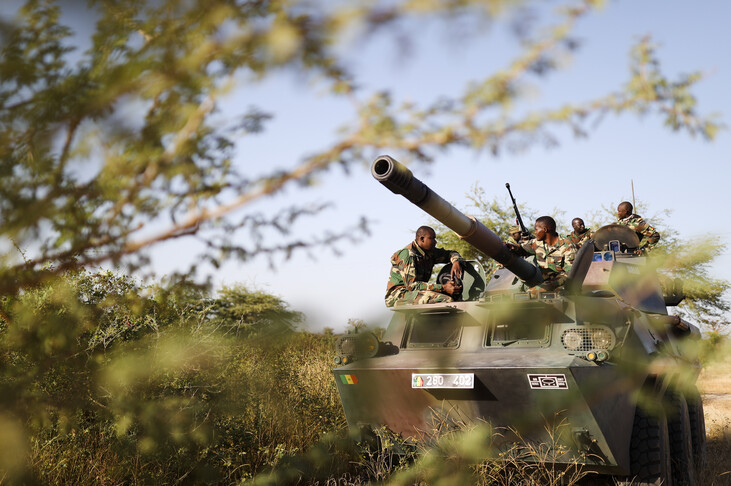
In the wake of a series of coordinated attacks across Mali, the Economic Community of West African States (ECOWAS) has issued a strong condemnation, describing the violence as “odious terrorist attacks” and calling for a regional mobilization to address the escalating crisis. The statement, released by the regional bloc on Sunday, April 26, 2026, comes amid widespread fighting that has engulfed multiple regions of the country, including the capital Bamako and key northern cities such as Gao and Kidal.
The attacks, which began on Saturday, April 25, 2026, involved simultaneous assaults by jihadist militants and separatist groups targeting military installations, government facilities, and civilian areas. According to reports from international news agencies including Reuters and the Associated Press, the violence erupted in the early hours near Mali’s main military base at Kati, located just outside Bamako, where heavy gunfire and explosions were reported. The assault quickly spread to other locations, including the towns of Sévaré and Mopti in central Mali, and the northern cities of Gao and Kidal.
Among the most significant developments was the killing of Mali’s Defense Minister, General Sadio Camara, whose residence near Bamako was struck by a suicide vehicle bomb. Malian state television confirmed his death several hours after the attack, stating he died of wounds sustained while engaging with attackers. Government spokesman Issa Ousmane Coulibaly said Camara exchanged fire with the assailants and managed to neutralize some of them before being overwhelmed. The attack likewise resulted in the destruction of his home and a nearby mosque, where several worshippers were killed.
ECOWAS’s statement emphasized the need for coordinated action among member states to counter the growing threat posed by extremist and separatist factions. The bloc urged for enhanced intelligence sharing, joint military coordination, and humanitarian support for affected populations. While the statement did not announce specific military interventions, it underscored the regional body’s commitment to restoring stability in Mali, which has faced prolonged insecurity due to insurgencies linked to al-Qaeda and Islamic State-affiliated groups, as well as longstanding tensions with Tuareg-led separatist movements such as the Azawad Liberation Front (FLA).
In the northern city of Kidal, reports indicate that Malian forces and their Russian mercenary allies withdrew after two days of intense clashes with FLA fighters, who claimed to have taken control of the city and surrounding areas. This development marks a significant setback for Mali’s military junta, which has relied heavily on Russian private military companies to counter insurgent threats in the north. The withdrawal was confirmed by FLA representatives, though independent verification remains limited due to restricted access to the region.
The violence has also drawn international concern, with the European Union issuing a separate condemnation of the attacks and calling for restraint and dialogue. The United Nations has similarly urged all parties to protect civilians and adhere to international humanitarian law, noting reports of civilian casualties and displacement resulting from the fighting.
As of Sunday evening, Malian military officials stated that the situation was “under control” but emphasized that sweeping operations were ongoing to root out remaining threats. Although, analysts warn that the scale and coordination of the attacks suggest a significant escalation in the capabilities of opposing groups, raising questions about the durability of the current security arrangement in Bamako and the broader Sahel region.
The coming days will be critical in determining whether ECOWAS’s call for regional mobilization translates into concrete action. No date has been set for an emergency summit of the bloc, but member states are expected to consult on potential responses in the near future. For updates on the situation, readers are encouraged to follow official communications from ECOWAS, the Malian government, and trusted international news outlets.
If you found this informative, please consider sharing it to assist others stay informed. Your thoughts and perspectives are welcome in the comments below.