
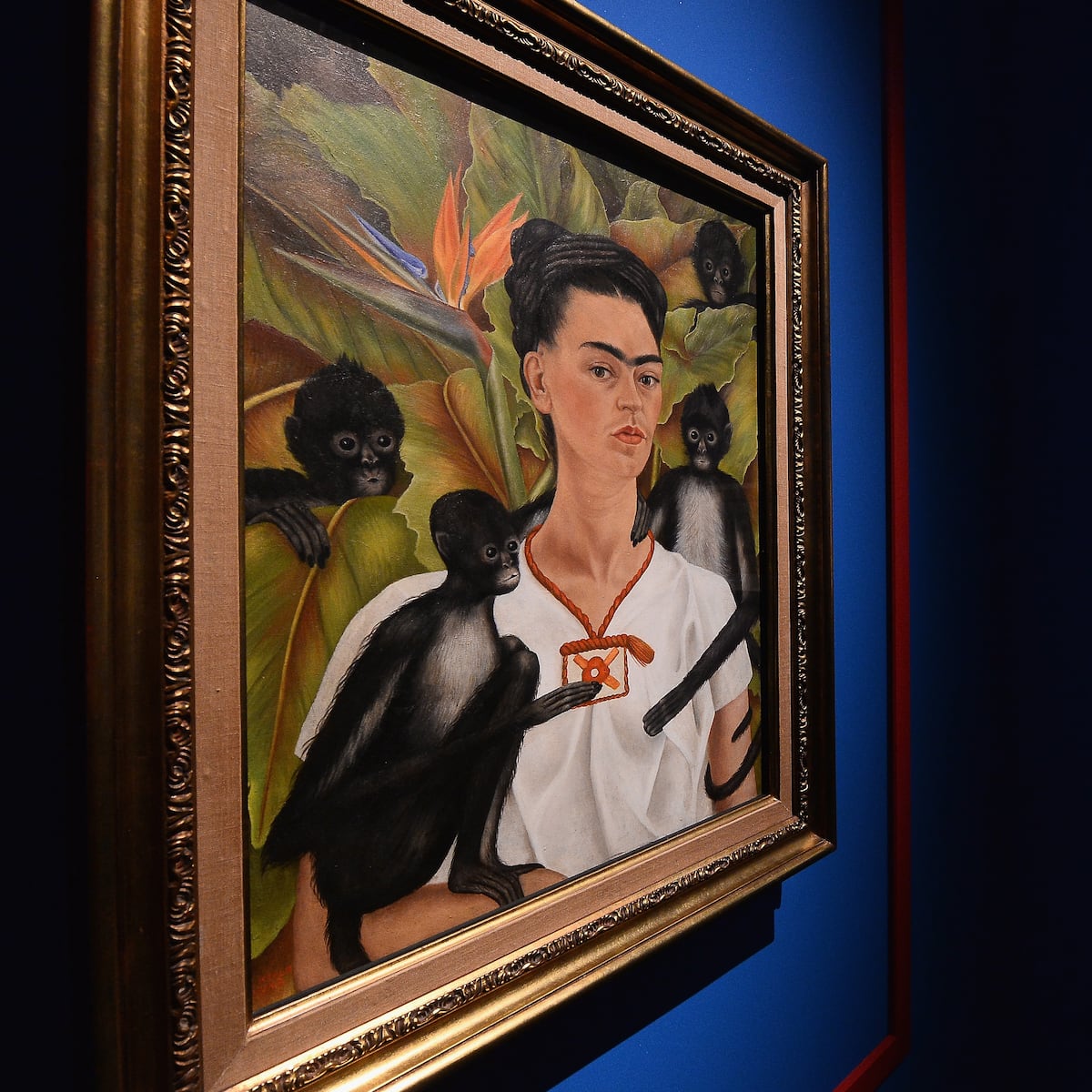
The Gelman Collection, one of the most significant private assemblages of 20th-century Mexican modern art, has reemerged onto the global stage after two decades away from public view. Currently on display at Mexico City’s Museo de Arte Moderno (MAM), the exhibition titled “Relatos modernos. Obras emblemáticas de la Colección Gelman Santander” features 68 works by iconic Mexican artists, including 10 paintings by Frida Kahlo, alongside pieces by Diego Rivera, José Clemente Orozco, David Alfaro Siqueiros, Rufino Tamayo, and María Izquierdo. The showing marks the first major public presentation of the collection in Mexico since 2008.
According to Alejandra de la Paz, director of Mexico’s National Institute of Fine Arts and Literature (INBAL), the collection represents “one of the most important private collections of modern Mexican art.” She emphasized that while the artworks are currently in the custody of the Zambrano family of Monterrey—owners of Cemex—they remain protected under Mexican federal law. Specifically, 28 of the 68 works on display have been declared Monumento Artístico, a designation that prohibits their permanent export from Mexico, even as the collection prepares for an international tour.
The Gelman Collection’s journey has been shaped by decades of legal complexity and shifting ownership. Originally assembled by Jacques Gelman, a Russian-born film producer, and his wife Natasha, who hailed from Moravia (now part of the Czech Republic), the collection includes over 160 works spanning paintings, drawings, and photographs by major figures in Mexican modernism. After Natasha’s death, the European portion of the collection was bequeathed to the Metropolitan Museum of Art in New York, while the Mexican works became the subject of a protracted inheritance dispute.
That dispute was ultimately resolved in favor of Robert Litmann, whom Natasha had named both executor and heir. However, in recent years, the Mexican-held portion of the collection was acquired by the Zambrano family, who entered into a management agreement with Banco Santander. Under this arrangement, the bank handles logistics, insurance, transportation, and curatorial coordination for the collection’s global tour, which began with the MAM exhibition and is scheduled to continue for at least five years, including a stop in Santander, Spain, where it will inaugurate the new Faro Santander cultural institution in the historic Edificio Pereda.
El País reported in April 2026 that the collection is valued at approximately $356 million, a figure that has intensified public and governmental scrutiny over its stewardship. The outlet noted that Banco Santander extended a $150 million loan to Marcelo Zambrano, a third-generation member of the family and Cemex executive, with 156 works from the collection pledged as collateral. This financial structure has raised questions about the balance between private ownership and cultural patrimony, particularly given the legal protections afforded to the Monumento Artístico-designated pieces.
INBAL has clarified that while ownership of such works may change, their status as protected cultural heritage prevents irreversible removal from the country. “The owner can change, but the artwork cannot leave Mexico permanently,” a principle rooted in the Federal Law on Monuments and Archaeological, Artistic, and Historical Zones. This legal framework aims to ensure that Mexico’s artistic legacy remains accessible to its people, even as private collections travel internationally under strict supervision.
The current MAM exhibition has drawn significant public interest, with over 50,000 visitors recorded in its opening weeks. For many Mexicans, seeing the Gelman works again represents a reconnection with a cultural patrimony that had been largely absent from national museums for twenty years. The display includes not only Kahlo’s deeply personal self-portraits but also Rivera’s monumental sketches, Orozco’s expressive drawings, and Tamayo’s lyrical abstractions—each offering a window into the turbulent, transformative decades of post-revolutionary Mexican art.
As the collection prepares to leave Mexico for its Spanish debut, cultural officials and private stakeholders alike are monitoring how the agreement between the Zambranos, Banco Santander, and INBAL will uphold both the legal safeguards and the public trust embedded in the stewardship of national heritage. The next phase of the tour will begin after the MAM showing concludes, with official dates for the Santander exhibition pending confirmation from Faro Santander and the bank’s cultural division.
For ongoing updates on the Gelman Collection’s international tour and its implications for cultural property law in Mexico, visitors are encouraged to consult the official websites of the Museo de Arte Moderno, INBAL, and Banco Santander’s cultural initiatives.
We invite our readers to share their thoughts on the role of private collections in preserving national art heritage. Have you seen the Gelman exhibition at MAM? What does it indicate for art to be both privately owned and culturally protected? Join the conversation in the comments below and share this article with others interested in the intersection of art, law, and legacy.