
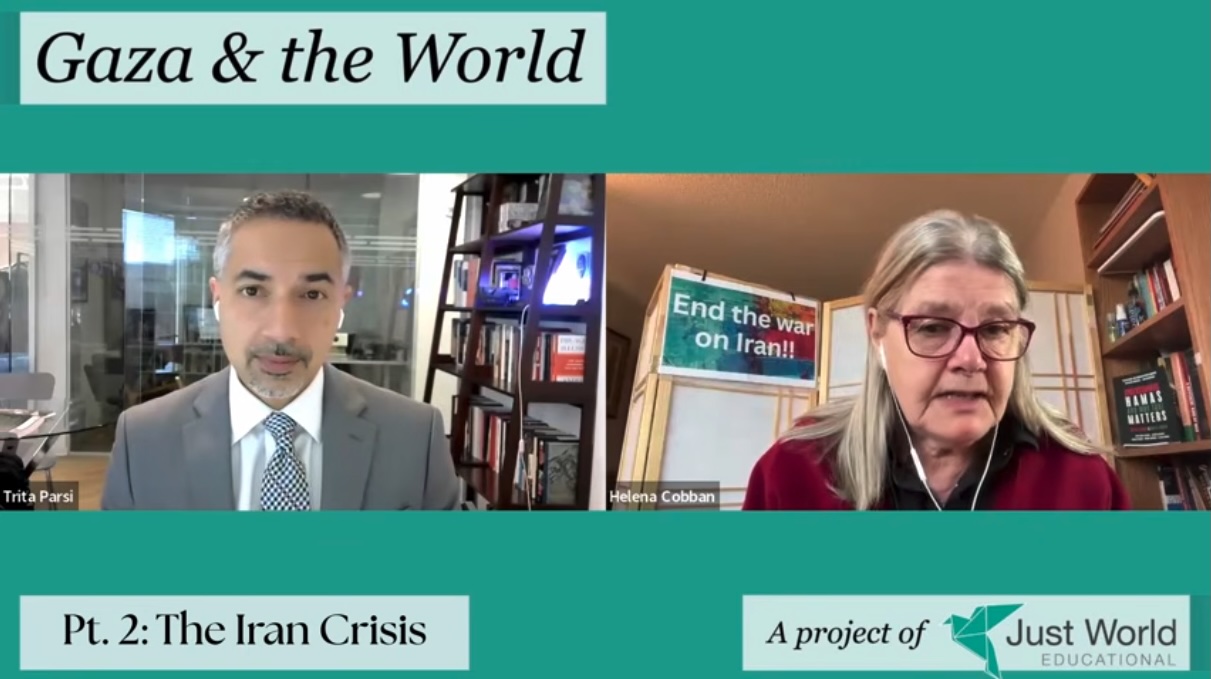
Trita Parsi Assesses U.S.-Iran Ceasefire Prospects as Deadline Nears
As the two-week U.S.-Iran ceasefire approaches its expiration on Wednesday, April 22, 2026, veteran Iran scholar Trita Parsi has outlined a sobering assessment of the diplomatic landscape. In a conversation with Helena Cobban, president of Just World Educational, Parsi indicated that the most probable outcome is not a formal peace agreement but a “recent non-negotiated status quo” that would halt hostilities without resolving underlying disputes. He assigned this scenario a 70% likelihood, with only a 25% chance of a genuine negotiated breakthrough and a 5% risk of renewed large-scale U.S. Military action against Iran.
Parsi, a prominent voice on Iranian affairs and U.S. Foreign policy, shared these insights approximately 30 hours before the ceasefire deadline, noting that while talks in Pakistan remain a possibility, he has grown increasingly skeptical due to the Trump administration’s perceived inability to negotiate credibly or assure Iran of follow-through on any agreement. He emphasized that erratic messaging and inconsistent public statements from Washington have eroded Tehran’s trust in U.S. Intentions, making substantive progress difficult to envision before the ceasefire ends.
Analysis of Trump’s Motivations and Constraints
A central theme in Parsi’s analysis is President Trump’s desire to avoid a costly military entanglement, even if he played a role in initiating the current tensions. Parsi suggested that Trump now views the conflict with Iran as a strategic misstep, having been “sold this war” by Israeli officials who framed it as a swift and low-risk operation — a characterization Parsi likened to the flawed “cakewalk” narrative used to promote the Iraq War. According to Parsi, Trump is coming to recognize that the Iran confrontation is neither simple nor easily resolved through military means.

Parsi further explained that Trump’s hesitation to escalate militarily stems from an understanding that the U.S. Lacks “escalation dominance” in the region. This means American strikes on Iranian infrastructure could provoke retaliation against Gulf oil facilities, U.S. Personnel, or vital shipping lanes such as the Strait of Hormuz. Parsi cited past instances where Trump issued threats — including against Iranian islands — that were later walked back by military advisors who warned such actions could exacerbate rather than resolve the crisis.
Sanctions Relief and Israeli Opposition
From Iran’s perspective, Parsi argued that any meaningful deal would require substantial sanctions relief — a concession Trump might not oppose in principle but which would trigger intense resistance from Israel. He stated that while Israel might tolerate an ambiguous standoff, a genuine agreement involving sanctions easing would be viewed as “the most disastrous outcome” for Israeli interests, as it would legitimize a regional order in which Iran is not fully isolated. This dynamic, Parsi noted, creates a significant barrier to diplomacy, even when both Washington and Tehran might otherwise find common ground.
Lebanon as a Test of U.S. Leverage Over Israel
One of the more notable points in the discussion was Parsi’s interpretation of Iran’s insistence on including Lebanon in the ceasefire framework. He described this demand as a deliberate test: to determine whether Trump could actually restrain Israel from resuming military operations in Lebanon and sustain that position over time. Parsi said Trump had “partially and belatedly” passed this test when he publicly declared that Israel was “prohibited” from resuming bombing campaigns in Lebanon — a statement Iran interpreted as evidence of limited but real U.S. Influence over its ally.
This exchange, Parsi suggested, underscores a broader Iranian strategy: seeking verifiable proof that the U.S. Can say no to Israel and uphold that boundary, rather than relying on assurances alone. The ability to constrain Israeli actions, particularly in Lebanon, has grow a key metric for Iran in evaluating the credibility of U.S. Commitments in any potential agreement.
Post-Ceasefire Scenarios and Risks
Looking beyond the immediate ceasefire, Parsi outlined three potential trajectories. The most likely (70%) involves a de facto end to fighting without a formal treaty — a “new non-negotiated status quo” characterized by no war, no sanctions relief, and no nuclear concessions, but also no immediate appetite on either side to resume large-scale combat. However, he warned this arrangement would be inherently unstable, prone to sudden escalation if U.S. Blockade measures against Iran intensify or if regional actors miscalculate.
The second scenario (25%) envisions a revival of diplomacy leading to a comprehensive agreement addressing nuclear, sanctions, and regional concerns. The third and least likely (5%) involves a decision by Washington to launch full-scale military operations against Iran — a path Parsi suggested would carry significant risks of broader regional conflict, including potential Iranian retaliation targeting American vessels or interests in the Red Sea.
Parsi identified two key wildcards that could disrupt even the most probable outcome: an independent Israeli decision to reignite hostilities, or a Trump administration move to maintain a naval blockade of Iran for domestic political signaling. Either action, he said, could provoke Iranian countermeasures, including attacks on commercial or military shipping, thereby increasing the likelihood of unintended escalation.
Regional and Domestic Political Implications
Beyond the immediate U.S.-Iran dynamic, Parsi noted shifting perceptions among U.S. Allies in the Gulf. He observed that Gulf states are increasingly questioning the reliability of American security guarantees and are likely to pursue diversified defense partnerships rather than depending solely on Washington. This erosion of confidence, he argued, could accelerate a broader realignment in regional security architecture.

Parsi also highlighted changing domestic attitudes toward Israel within the United States, pointing to declining support across the political spectrum — including among Democrats and segments of the America First-aligned MAGA base. He suggested this trend could influence upcoming midterm elections and the 2028 presidential contest, particularly as debates over U.S. Foreign policy priorities intensify.
Broader Implications for U.S. Foreign Policy
In his concluding remarks, Parsi framed the Iran debate as part of a larger conversation about the direction of American statecraft. He referenced the Quincy Institute’s advocacy for a foreign policy grounded in restraint rather than primacy or hegemony, emphasizing that such a shift would require bipartisan backing to be sustainable. According to Parsi, the Iran crisis has become a focal point in discussions about how the U.S. Exercises power, how much weight it gives to Israeli preferences, and whether future administrations will adopt a more disciplined, less militarized approach to global challenges.
He stressed that resolving these questions is not merely about managing one conflict but about defining the foundational principles of U.S. Engagement in a multipolar world — a debate that will shape American foreign policy for years to approach.
For ongoing developments regarding the U.S.-Iran ceasefire and diplomatic efforts, readers can consult official updates from the U.S. Department of State and the United Nations Security Council. The full transcript of Parsi’s conversation with Helena Cobban is available through Just World Educational’s Iran Crisis Project archive.
We encourage readers to share their perspectives in the comments below and to spread this article across social platforms to foster informed discussion on one of the most consequential geopolitical issues of our time.